Ham, and how good it is!
The Ham!
Who doesn't love ham? And that's true whatever form it takes: raw-cured, cooked, smoked… There's something for every taste. As for the flavour, this charcuterie takes the keenest food lovers to a…
12 min read· By Rémi Ledu
Ham: an exceptional charcuterie!
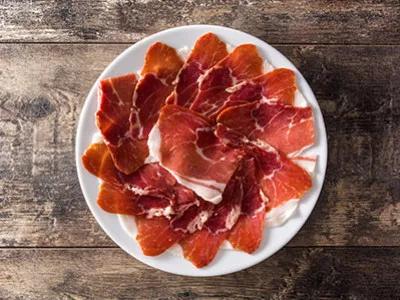
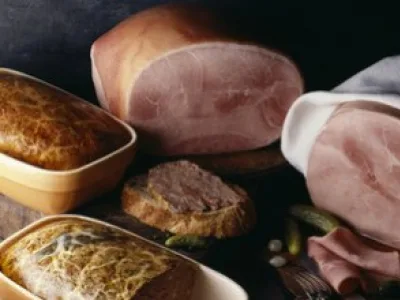
Who doesn't love ham? And that's true whatever form it takes: raw-cured, cooked, smoked… There's something for every taste. As for the flavour, this charcuterie takes the keenest food lovers to a dreamland: softness, meltingly tender, succulent. A blend of surprising and utterly astonishing flavour. Raw-cured ham is winning over more and more devotees these days. But do we really know the origins of this delicacy? In this article, we take you on a journey to discover this dish, the way it is produced, as well as the various hams available on the market.
History of Ham
The pig: everything you need to know about its origins
Salt, an essential element in ham-making
The history of ham around the world
Ham through history
Ham: a good understanding of production methods
The favourite hams of the French
History of Ham
Ham has carved out a place for itself in the world of French gastronomy. Its origins are rather varied, insofar as countries all over the world have contributed to its emergence in the field of artisanal charcuterie. And as you surely know, there is no ham without a pig. So the history of ham is closely tied to that of the pig.
The pig: everything you need to know about its origins
Raw-cured ham or cooked ham is made from pork. And who says pork, naturally says "pig". Although the origin of the pig is not entirely clear, zoologists believed it was a descendant of the wild boar, but raised as a domestic animal. However, new ideas have emerged, notably highlighting the fact that the wild boar is entirely different from domestic pigs. And this holds true regardless of their breed.
Lorsqu’il était question de choisir un animal domestique à élever, on choisissait toujours le cochon en dernier lieu. Pourquoi ? Tout simplement parce que les porcs sont bien connus pour leur sédentarité, tandis que les hommes se complaisaient à visiter tous les recoins de la planète en migrant d’une place à une autre. Puis, au fil des années, les hommes ont commencé à s’établir dans un endroit et à y rester de plus en plus longtemps. Ils préféraient mettre de côté la chasse et se mettaient à l’élevage et à l’agriculture. C’est de là qu’est alors venue l’idée de domestication des porcs.
Le sel un indispensable en matiere de fabrication de jambon
Lorsque les hommes ont commencé à élever des cochons, il s’est avéré que la découverte du sel a fait fuser dans les esprits les modes de transformation de la viande de porc pour lui donner un goût salé des plus intéressants.
Bien évidemment, au tout début, le sel permettait de conserver la nourriture comme le poisson ou la viande. Plus tard, lorsque les hommes ont découvert à quel point cette poudre blanche (ou ces morceaux en forme de cristaux) apportait du goût à leurs aliments, ils ont pensé à travailler la viande, la transformer et lui donner une tout autre saveur grâce au sel.
Et il faut savoir que le sel joue un rôle très important dans la production de jambon. Et même pour le fumage, afin de conserver encore plus longtemps les aliments, le sel apportait un goût unique au repas. Ainsi, les hommes ont continué à expérimenter les différents modes de production de charcuterie comme le jambon artisanal.
The history of ham across the world
The production of ham has travelled the whole world, from the Mediterranean to Gaul, taking in Greece, Rome and the Nordic countries along the way.
The Mediterranean: what place for the pig?
In the Mediterranean zone, certain places are much better suited to pig farming than others. Among these, we might mention, for instance, the Mediterranean coastline, whose climate and living conditions suit pigs perfectly. With the evolution of farming methods, the pig's diet allows it to grow quickly, giving rise to different types of charcuterie such as:
• Organic ham
• Saucissons
• Sausages
• Pâtés
• Mortadella
• Salami
These are but a few examples of charcuterie, but we all know just how varied this branch is, offering a whole range of choices for everyone's enjoyment, and especially for gourmands and hearty eaters.
What's more, the trees and forests that grow in this region allow the pig to feed itself, as it finds food very easily. All it needs to do is take the fruit that has fallen from the trees and the roots of plants. And of course, the pig can enjoy the shade of the trees to cool off a little.
Then, in desert areas, the local inhabitants unfortunately cannot enjoy pork. Indeed, the climate is not favourable to the pig's survival because of the intense heat there. So there are no pigs in this part of the Mediterranean. The same is true of the Near East, where deforestation has done for this animal. The species is therefore endangered there.
In Greece, however, the pig has found its place. Farming takes place mainly in the mountains or near forests. What's more, the Greeks use the pig as an offering to the goddess Demeter. And the climate makes it easier to rear pigs as well as to develop the different forms of ham.
Pigs and Rome
The pig was once an animal of great importance in Rome. It could be prepared in various ways to offer several different textures and flavours to try. At first, pig farming was all the rage there. But later, with the development of international trade, the Romans quickly turned to Iberian ham, originating from Gaul.
Ham in Gaul
Pig and boar in fact took up residence in Gaul. If you look at the famous cartoon “Asterix”, it shows us just how important pork was in the eyes of the Gaulish people. The lands of Gaul allowed for practical pig farming. The animals fed themselves, which made things easier for the Gauls.
Thus, since the population did not need to factor the animals' feed into production costs, they could easily make the most of all the benefits of pork meat in order to offer a whole range of products, notably ham, to the Romans.
The new flavours born from the ingenuity of the population made these hams unique and interesting in taste. Moreover, with the international trade that developed between countries, Gaul became a supplier of pigs to other countries and regions, notably Rome, thanks to the quality of their animals. Boar and pig remain a true pillar of Gaulish culture. These animals were revered there and represented on various emblems.
And what about the Nordic countries?
As the pig held such importance in the Nordic countries, which glorified this animal and traditionally placed it at the centre of everyone's interest, the production of ham then became a firmly established tradition within these countries. With abundant forests and mountainous areas, the Nordic countries could afford to make the most of every last piece of meat to make good ham.
Ham throughout history
In the Middle Ages, the authorities decided to keep the forests intact. As a result, pigs could survive quite easily. However, pig farming became very strict, precisely in order to protect and preserve the beautiful forests. Nevertheless, pork gained importance in people's diets. Butchers' shops then became more prosperous, giving people the opportunity to enjoy fresh meat as well as hams and other charcuterie on offer.
Over the years, forests began to be cut down to supply wood for the population and the navy. As a result, pigs became increasingly scarce. What's more, the oak trees that fed them also suffered from deforestation and land clearing. Thus, for pig farmers, the animals' feed had to be factored into the cost of ham production from then on. From that point, plain ham became the favourite of the French, to the detriment of salted ham.
However, Mayence ham and jambon de Bayonne still remained popular with the population. And with the enrichment of gastronomy and the advent of the Age of Enlightenment, ham found its rightful place once again at the tables of the Court nobility. Eating ham then represented a real treat.
During the French Revolution, ham was all the more sought after. Featured on menus to satisfy royalty, its unique and distinctive flavours made it increasingly prized by all. This is why, during the Industrial century, populations could benefit from the various types of ham produced throughout the world. At that time, local terroir products no longer interested people. Imported hams were preferred instead. Thus, a new industry (that of ham production) was born.
Ham: getting to know the production methods
Despite the fact that ham boasts an immeasurable wealth of history, its production method has not changed all that much. Once the pig is sufficiently fattened, farmers move on to the slaughtering stage. They carefully select the parts of the pig to be used in order to produce the finest ham possible. Naturally, nitrite-free ham is the most important to highlight.
Salting the meat then becomes a very important step. To salt the meat, farmers used the hand-rubbing method. This means the meat is coated by hand with dry sea salt. The choice of this type of curing product lies in the fact that it can easily penetrate every part of the meat, giving it an exquisite taste.
The salting period depends heavily on the weight of the cut of meat, shaped into a round. This could range from one to two weeks. The principle is to let the salt work for one day per kilo.
Next comes the resting period in the cold. The ham is kept in a room at a low temperature (below 6°C), but with high humidity. Once this period has passed, the producer can proceed with the steaming stage, meaning the ham will be put to the test of temperature. It is then washed in lukewarm water. This step removes the salt that has settled on the surface of the meat. Once the steaming is complete, the ham goes through maturation for at least two months, allowing the salt to spread evenly throughout the meat.
Drying is finally the last stage. This can take months. But the key point is that the drying should, at all costs, happen naturally, in the open air. The ham is therefore exposed to variations in ambient temperature. When the temperature rises, the ham may perspire. The fat will inevitably melt and gently seep deep into the meat. As night falls, this fat sets again. It is this characteristic that gives the ham its wonderfully unique flavour.
Once the ham finally emerges from the drying period, it can be kept in a room at room temperature. This is the ageing stage. During this time, it develops its final aromas and flavours. These are the fundamental steps in ham production. But each charcutier or butcher brings their own know-how and traditions to enhance the pork, resulting in a distinctive ham that stands apart from the rest.
The different hams favoured by the French
As there are many producers around the world, it is possible to find several types of ham available to consumers.
Savoie ham
It is considered to be the finest ham in France. Indeed, jambon de Savoie is produced in a specific way so as to give it a taste with distinct aromas (spices, grated garlic, cloves, juniper berries, pepper, etc.) and a melt-in-the-mouth, tender texture. Its low salt content also makes it rather special. You will find:
• Cured ham
• Cooked ham
• Ham smoked over beechwood
Jambon de Bayonne
This is a flavourful ham that you will easily come across in the Basque Country, particularly in the Pyrénées-Atlantiques and the Gers. The pig from which Basque ham is produced has a particular characteristic: it has very slender legs, and its distinctive fat sets it apart from other pig breeds. The fat is found not only within the muscle, giving it a marbled appearance, but also on the surface and on the muscle itself. Jambon de Bayonne is therefore beautifully melting, with particular aromas.
Jambon de Bigorre
Also known as black pork ham, jambon de Bigorre is in fact a dry-cured charcuterie made in Bigorre. This product, aged for 20 to 24 months, offers some fascinating aromas: chestnut and woodland notes. These scents are at once powerful and subtle. A true caress on the palate!
Gascon black pork ham, or jambon de Bigorre, holds AOP status. This ham is enjoyed as an aperitif, sliced thinly, with a glass of wine. Simply delicious. The meat is a deep red colour. You can find it vacuum-packed in supermarkets or from your local charcuterie or butcher.
Corsican ham
Corsican people are very fond of charcuterie. And Corsican ham, or Prisuttu, aged for 12 to 18 months, is among the best-selling products. And in France, we enjoy it too, given the flavour it offers: a hazelnut taste. The Corsican pig, or “Porcu Nustrale”, has a pointed pink snout and large drooping ears. It is raised outdoors for close to a year, feeding on pastures, acorns and chestnuts.
Bellota ham
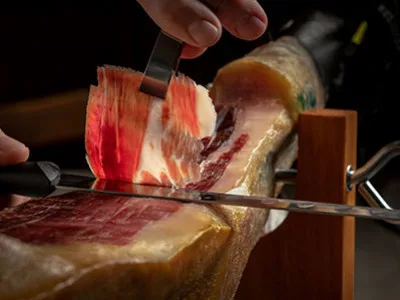
This ham comes from Spanish production. The Iberian pig breed, also known as “ pata negra”, is raised in a particular way. Its diet generally consists of acorns. This feed gives the ham from this pig a truly exceptional flavour. Bellota ham is considered by many to be one of the finest hams in the world.
Serrano ham
Spanish Serrano ham is made in the mountains. It can come from any breed of pig. It can be aged for up to 24 months. It is a dry-cured ham much loved for its tenderness and juiciness. For an aperitif or to accompany a gratin dish, this ham is ideal.
Ham can sometimes surprise us with the aromas that make it so special, but one thing is certain: everyone can find the product that suits them among the wide range on offer. Of course, you could also choose other hams, such as Ardèche ham, Iberian ham, Black Forest ham, or even San Daniele ham. In any case, we wish you a lovely tasting and bon appétit!