
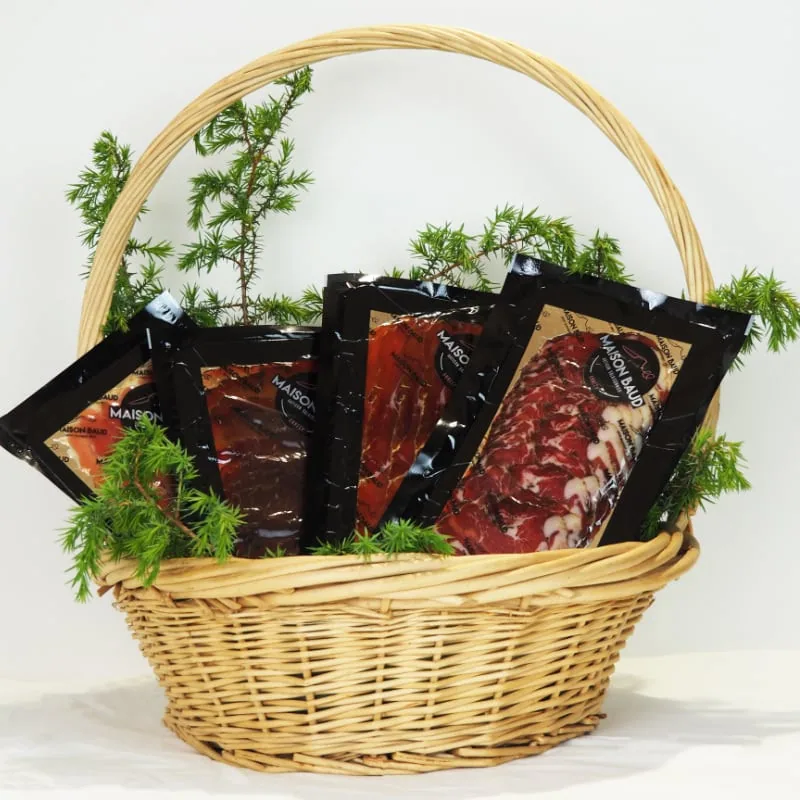
470 g
 Our favourite
€29.70
35 products
35 products
470 g
€29.70
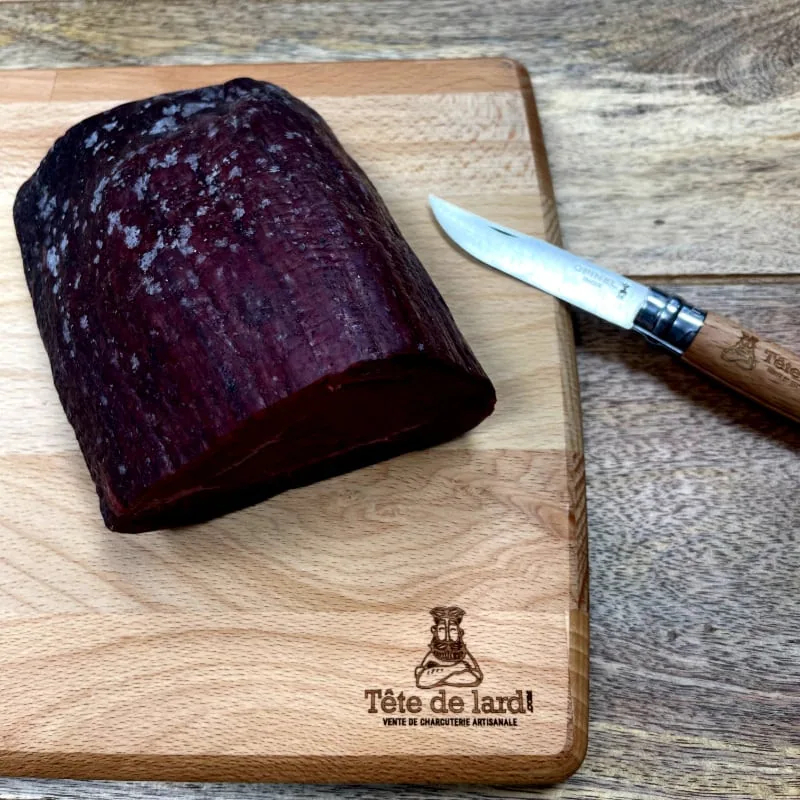
500 g
€24.90
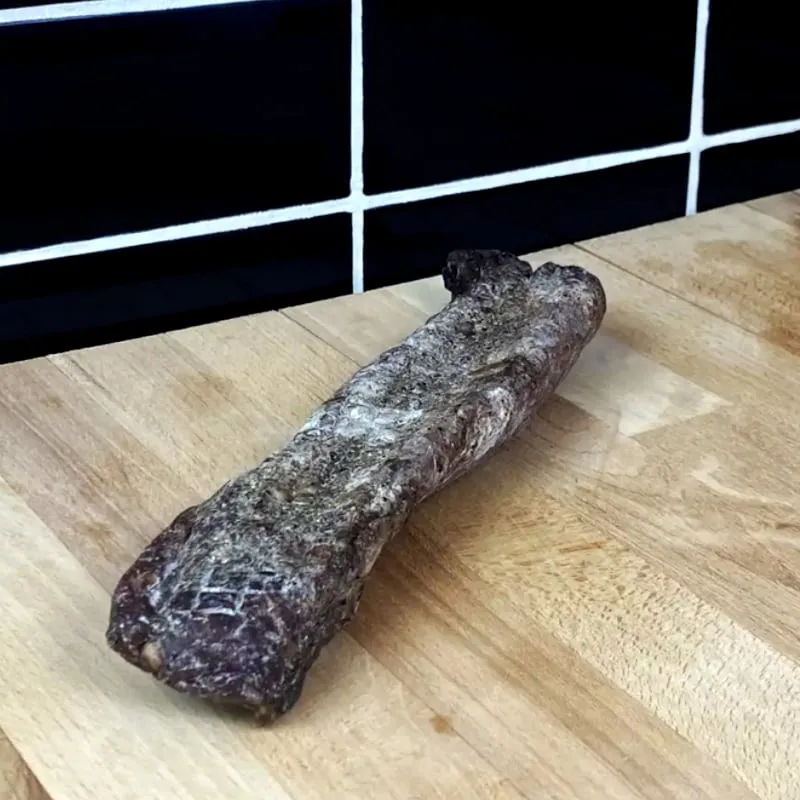
200 g
Maison Baud
€16.90
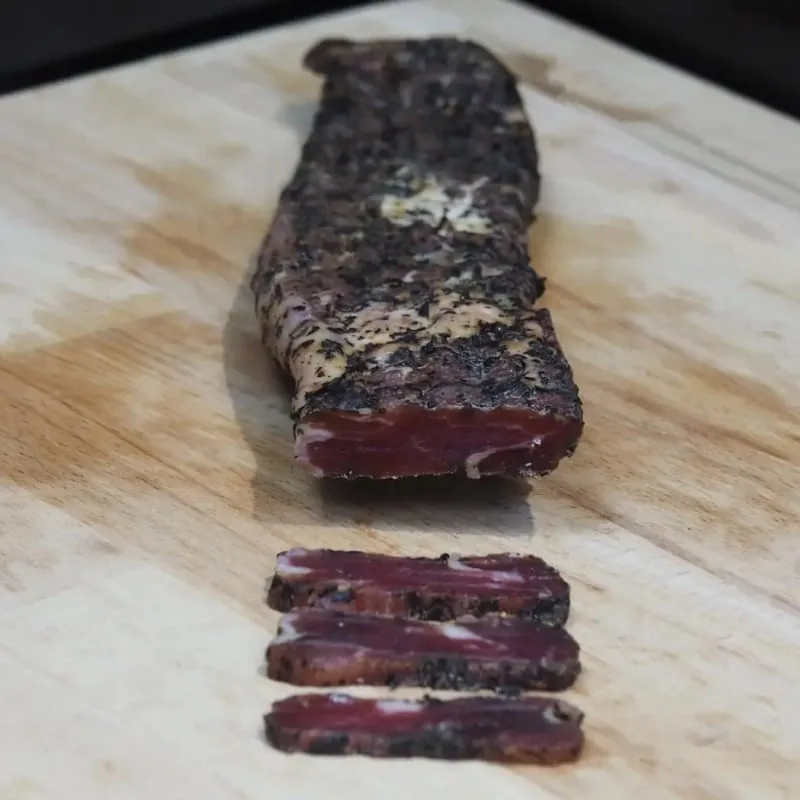
200 g
€16.90
350 g
€15.90
200 g
€14.90
90 g
€10.50
75 g
€8.90
400 g
€14.90
390 g
€12.90
360 g
€14.90
100 g
€7.90
200 g
€14.90
360 g
€14.90
800 g
€49.90
400 g
€14.90
360 g
€14.90
900 g
from€60.21
380 g
€14.90
1.1 kg
€44.90
380 g
€14.90
745 g
€49.90
1.1 kg
€79.90
700 g
€44.90
Products 1 to 24 of 35
What is it?
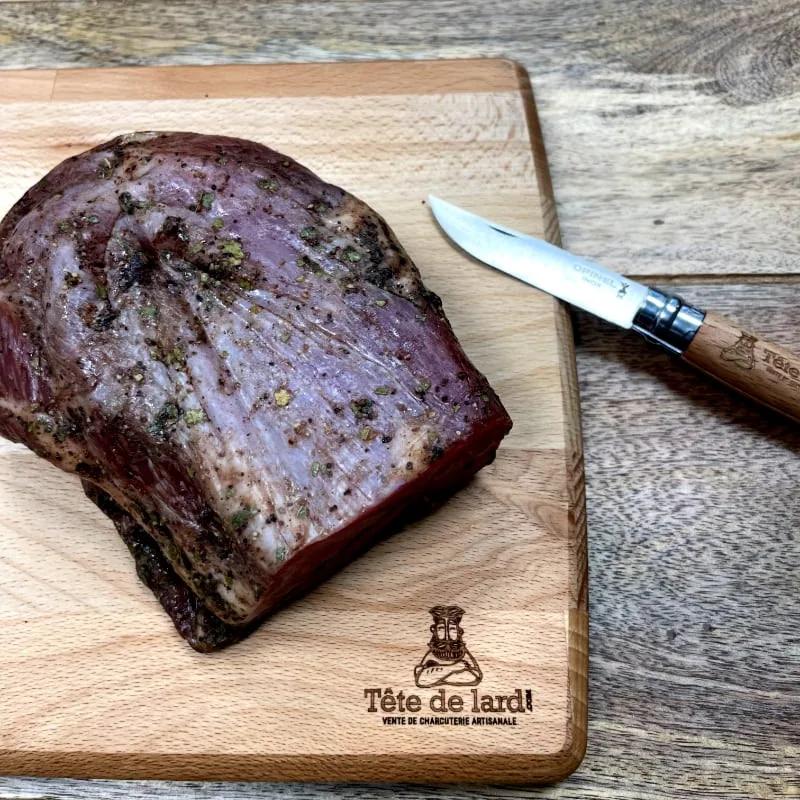
Pork tenderloin is a cut of pork meat, coming from the ilio-psoas muscle where the femoral nerve is located. This cut should not be confused with the beef cut of the same name, which is located inside the rib cage.
In the 14th century, the tenderloin was created and so named because it was traditionally rolled and wrapped with string. At that time, meats were cooked in a fireplace and only on a spit. This tenderloin is said to be "mignon" (dainty) due to its small size and fineness.
Over time, this cut from the butcher has been prepared in many different ways. All of us have, at least once, tasted pork tenderloin roasted with mustard and oven-baked with little potatoes in sauce...
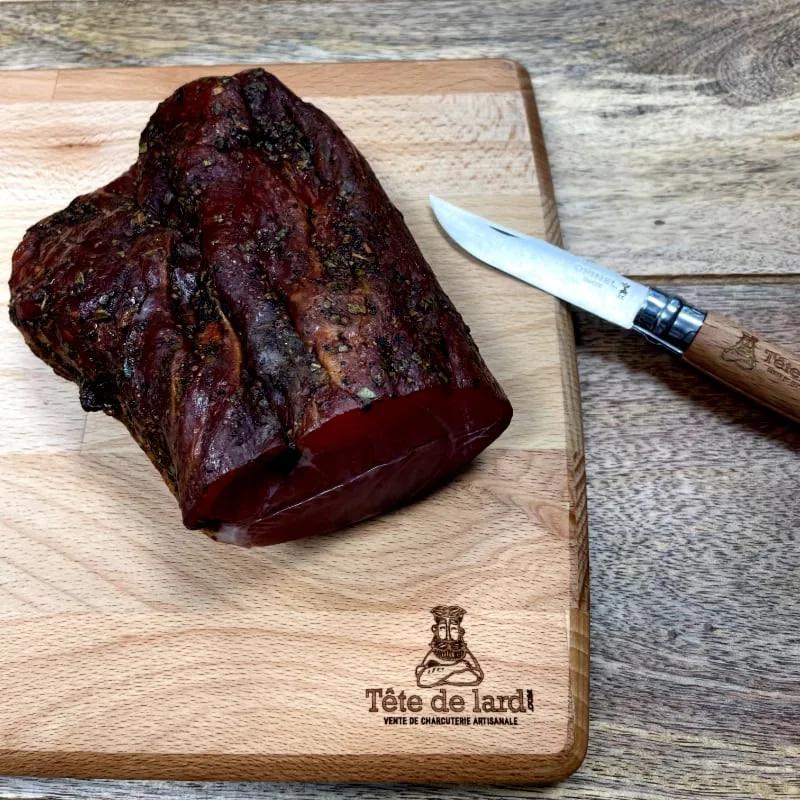
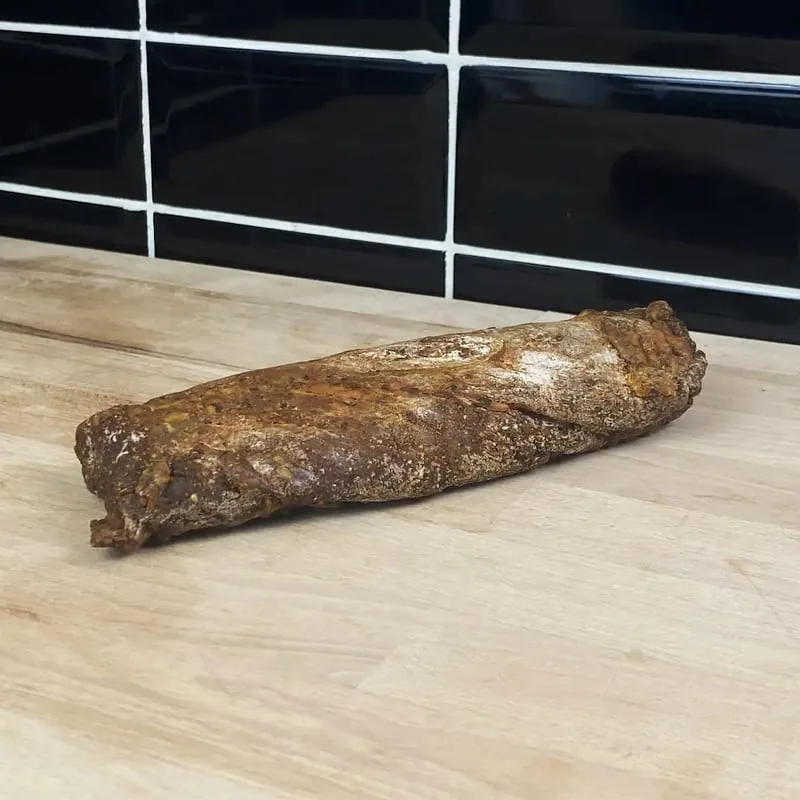
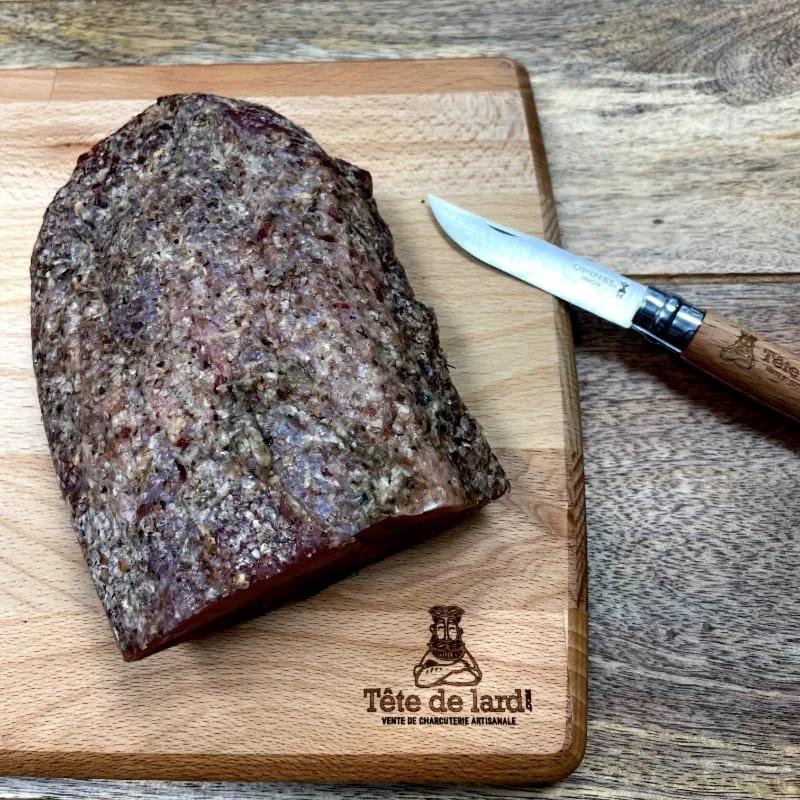
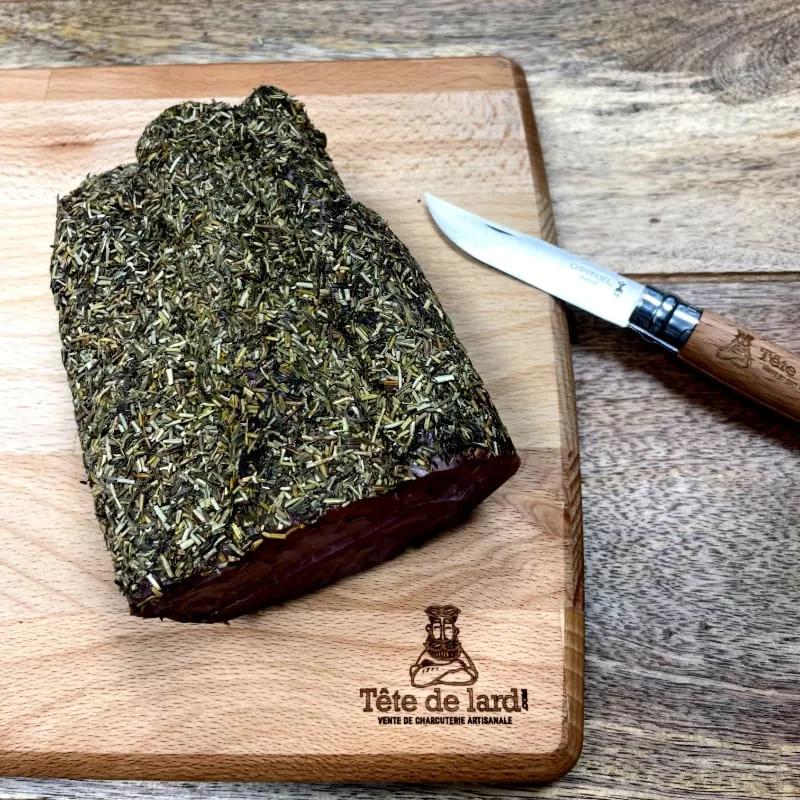
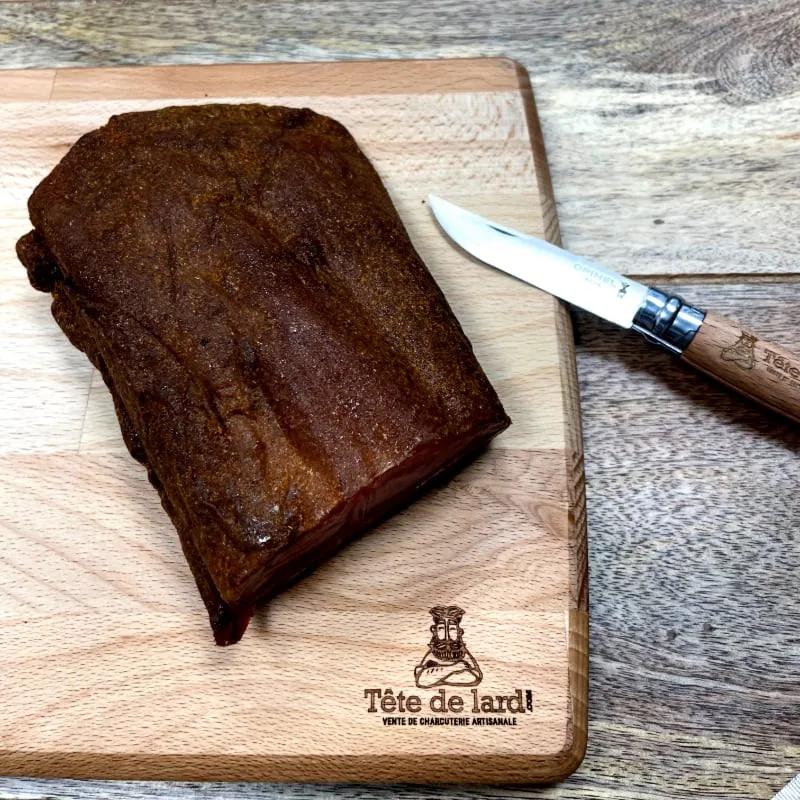
Today, pork tenderloin is also available dry-cured, prized for its fineness and delicacy.
The artisanal making of dry-cured pork tenderloin:
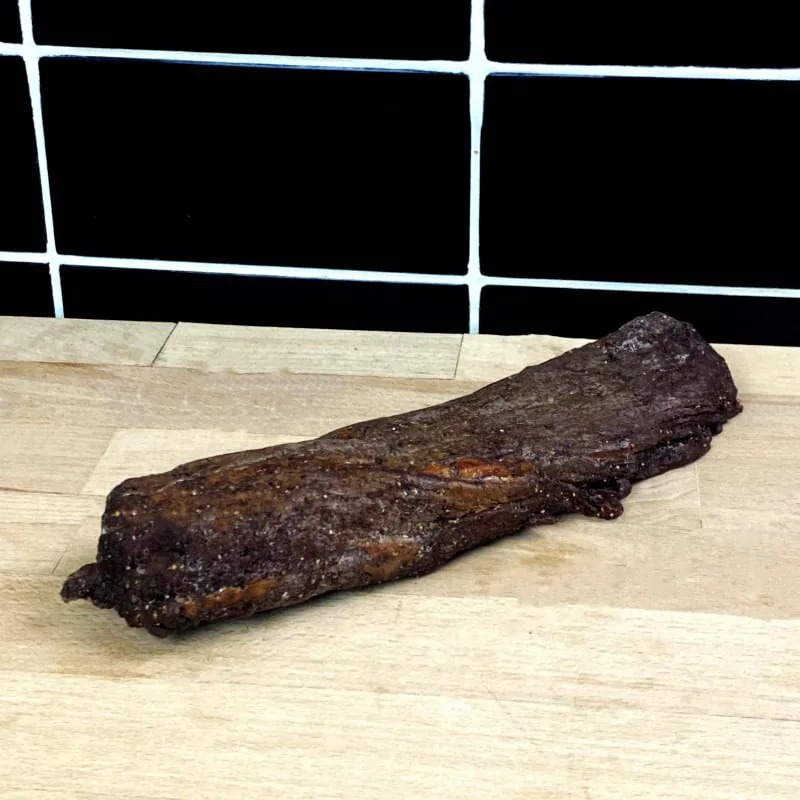
To enjoy dry-cured pork tenderloin, it must, as its name suggests, be dried. Drying is the most important part, and the one that gives it that wonderful artisanal charcuterie flavour!
The tenderloin is first trimmed, meaning the excess fat is removed along with the aponeurosis (a white membrane made of interwoven fibres). This makes the tenderloin more pleasant to enjoy.
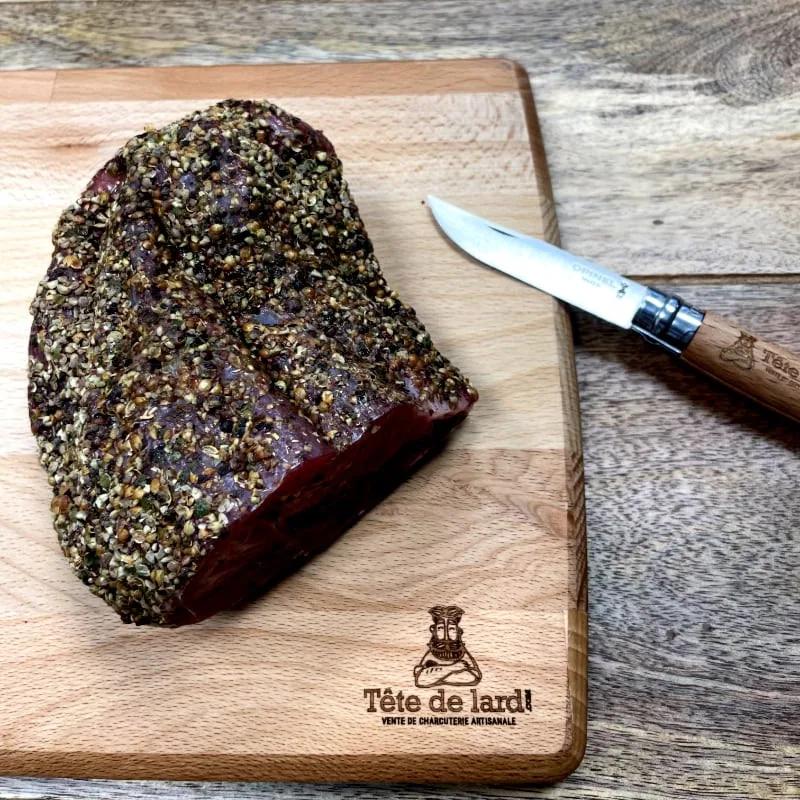
It is then enhanced and seasoned with herbes de Provence, pink peppercorns, rosemary and much more! Salting lasts at least 12 hours.
Drying can then take place, and lasts between two and three weeks depending on the desired tenderness.
This artisanal charcuterie can be enjoyed in many ways: with oregano, rosemary, Espelette pepper, or simply plain! You will discover this cut from the butcher in a different light and can enjoy it as an aperitif, in a salad or in your favourite sandwiches!
Where does it come from?
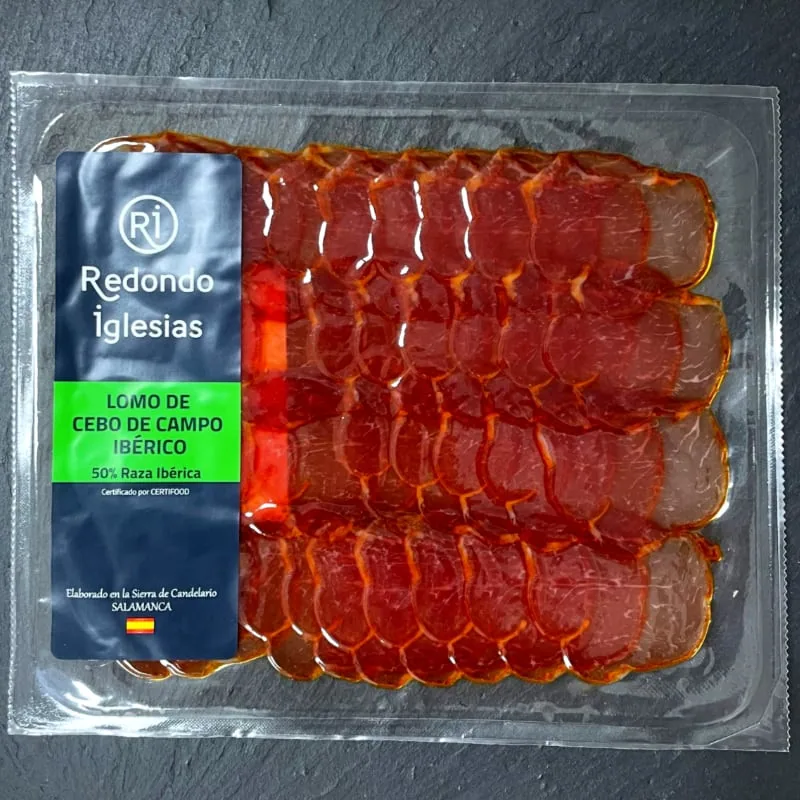
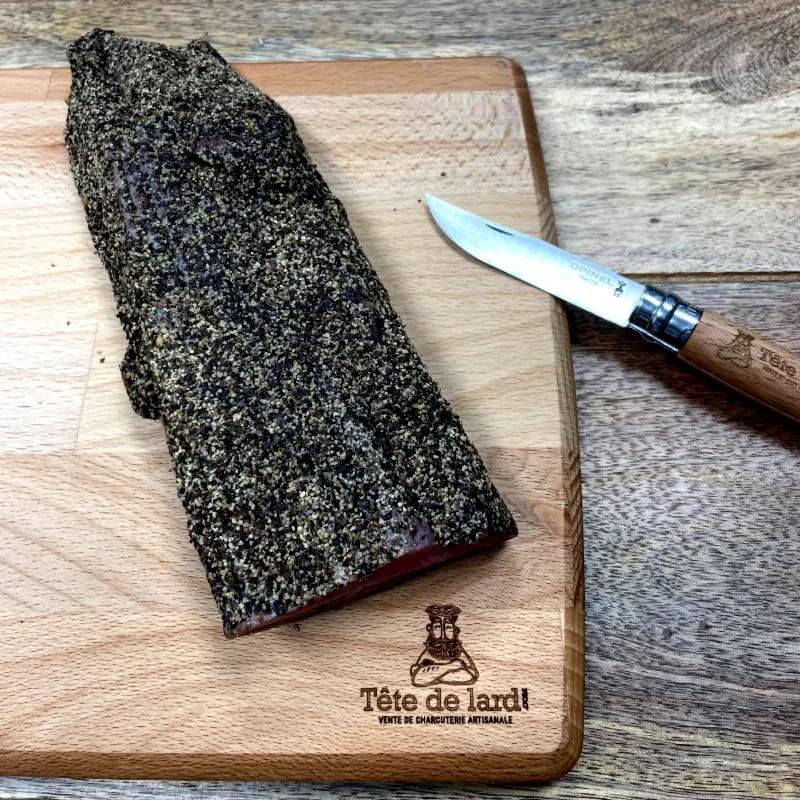
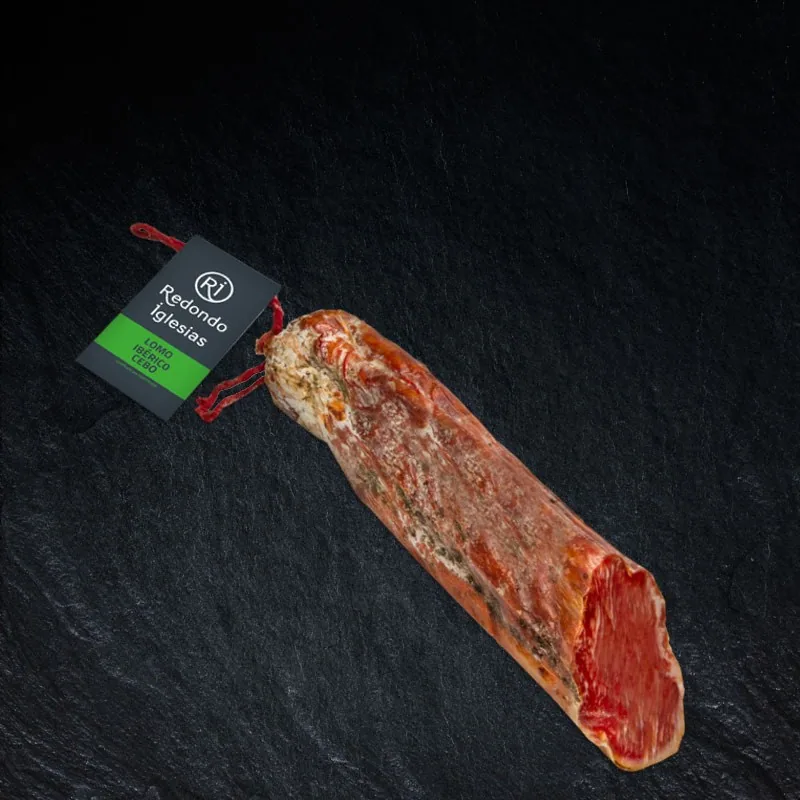
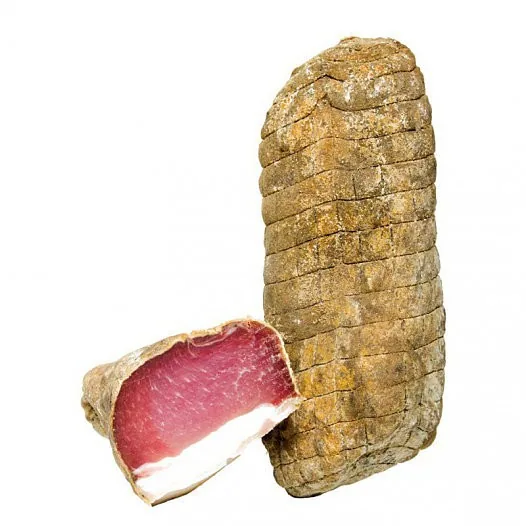
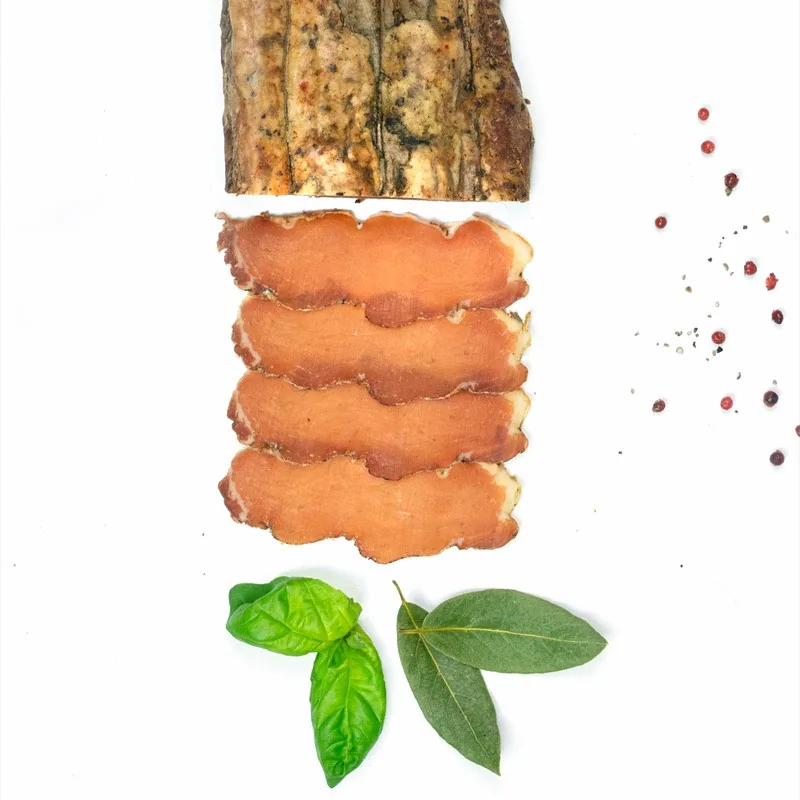
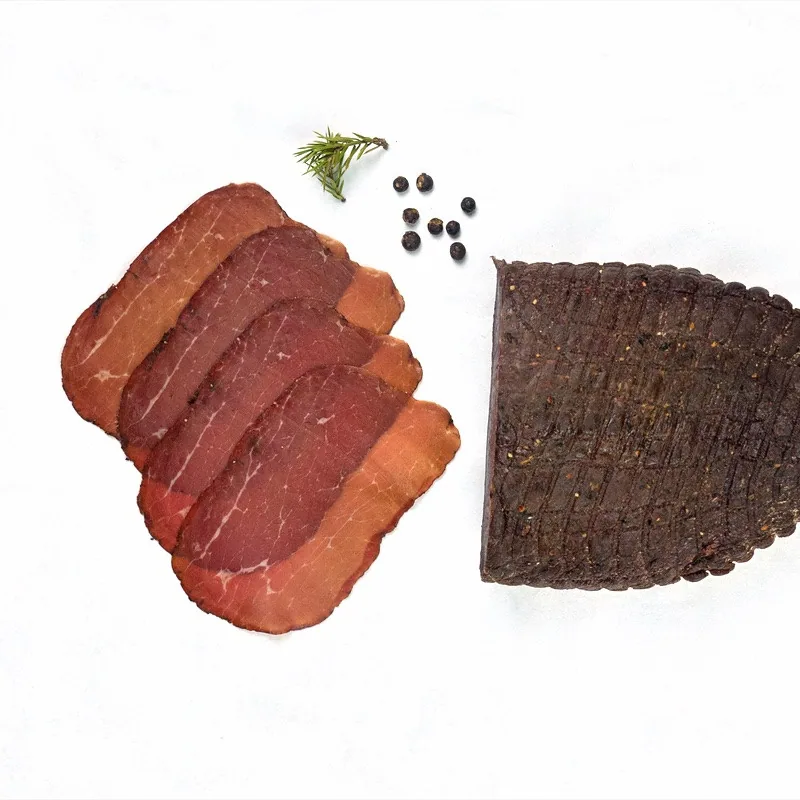
Lomo, known as "lomo embuchado" or stuffed loin in English, is a cut of pork tenderloin cured in salt for around 48 hours, then dried for around two to three months. This charcuterie contains almost no fat and is a highly prized sausage in Spain!
So this is an age-old speciality of Spanish origin that also developed in Catalonia and in the Basque Country. It can be enjoyed cold, as an aperitif for example, or hot in traditional recipes!
Lomo can be Ibérico, made from Ibérico pig whose diet is made up of tubers and cereals.
Ibérico bellota lomo comes from a pig fed on acorns, so it will have a different taste.
This charcuterie can be enjoyed as an aperitif and pairs wonderfully with full-bodied tempranillo wines, or with Fino or Manzanilla wine.
It can also be paired with light beers to soften the intense flavour of the lomo.
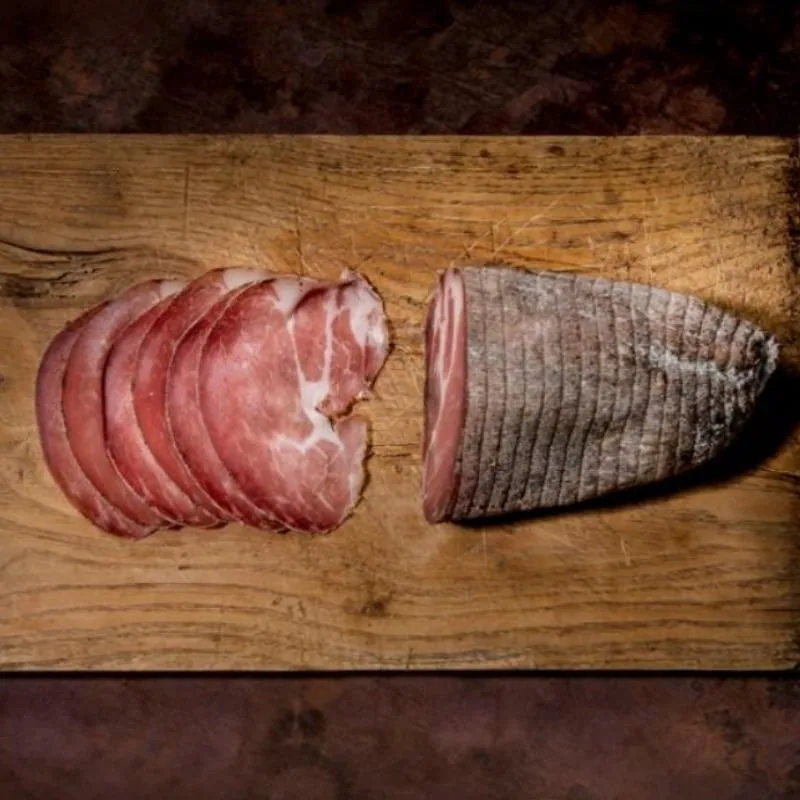
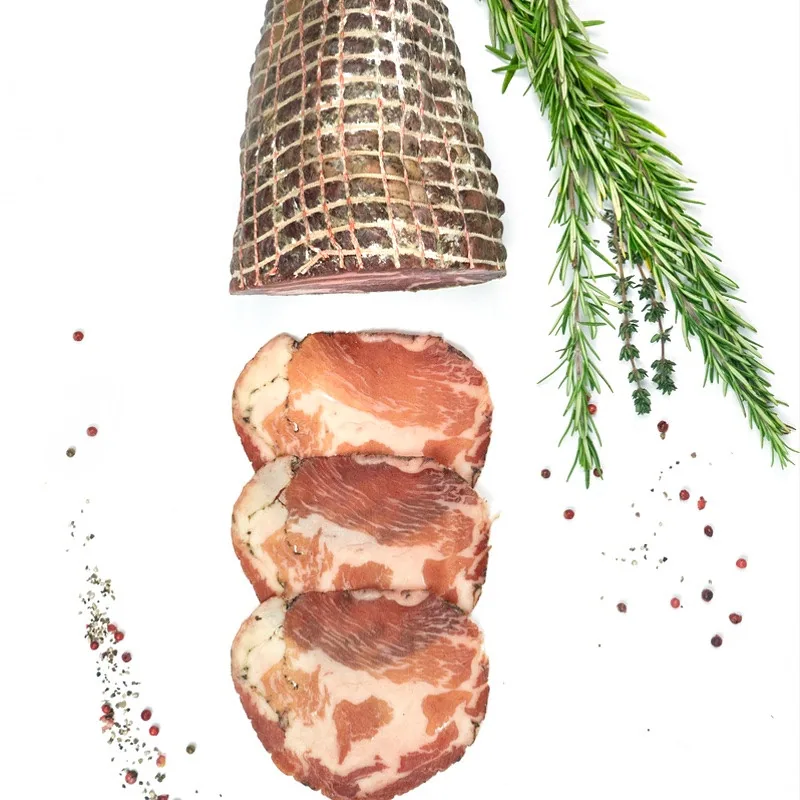
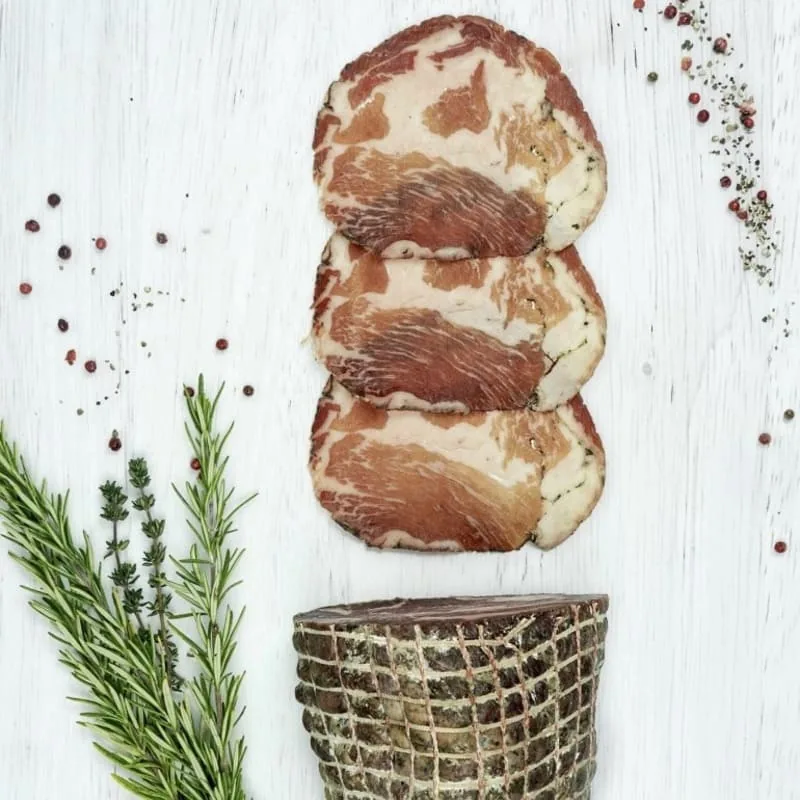
Coppa is an artisanal charcuterie originating from Northern Italy, also produced in mainland France, Corsica and Switzerland.
This charcuterie is made from pork collar. It is boned, salted and seasoned with pepper, garlic or mixed with various spices such as cinnamon or cloves.
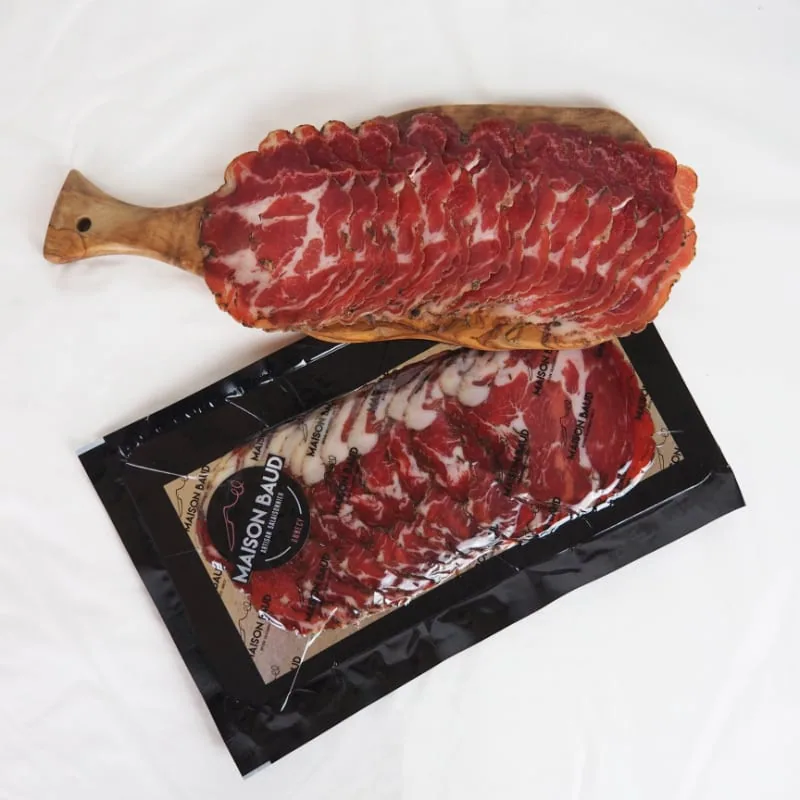
It is then compressed into a casing and dry-cured for several months. The slice should be red in colour, veined with pale pink, before it is ready to be enjoyed.
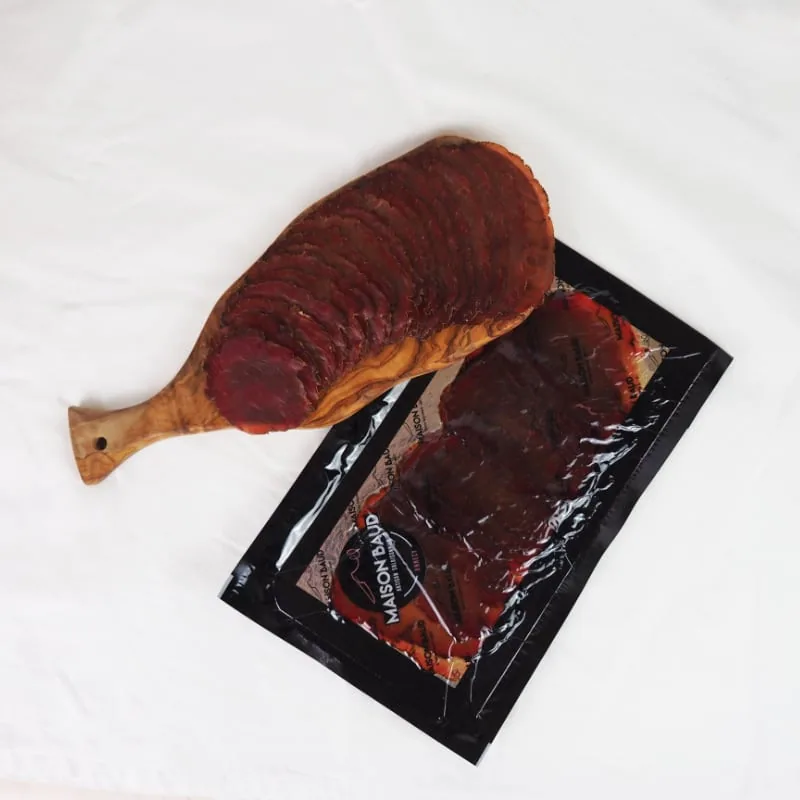
At Tête de Lard, discover coppa made in France through our partnership with Maison Baud, perfect alongside a Savoyard dish—you'll be pleasantly surprised by how long its flavour lingers on the palate!
A little history!
In Corsican, lonzo means "ours" and it is a Corsican charcuterie, made both in the north and the south of the island.
The Corsican pig has been present on the island for decades, even centuries! It is raised outdoors in a semi-wild state. Corsica is keen to carry on this traditional way of farming, and a programme was set up after 2014 to preserve the breed and the number of animals.
From around 1960 to 1990, the Large White, Piétrain and Duroc breeds were crossed in, lightening or altering the black coat of many Corsican pigs.
Following this, the farmers decided to counter cross-breeding, and in 1998 an association of breeders of the breed was created. The breed was officially recognised in 2006.
How it's made:
The lonzo, or "lonzu", "lonzi" in the plural, is made from the fillets of Corsican pork, or "porcu nustrale".
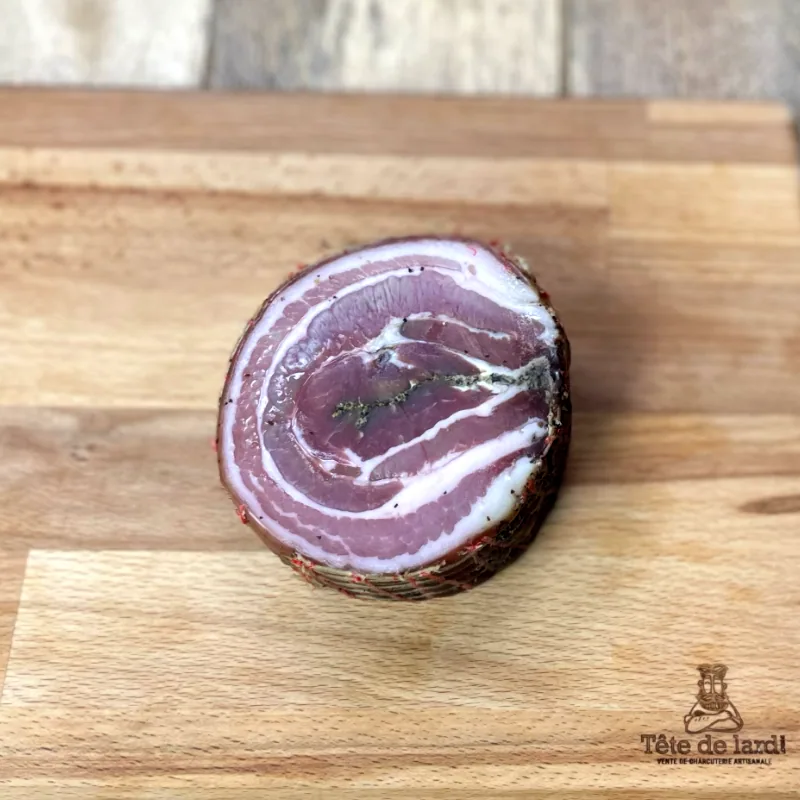
There are two parts to the lonzo, a fatty part and a lean part joined together, clearly visible once sliced. The lonzi are salted, then kept cool for 4 to 5 days.
The various pieces are washed in wine, dried, then seasoned. The fillet is placed in a pork casing which is then tied. The fillets are then smoked; ageing and storage take place in the cellar.
At Tête de lard, the very best of artisanal charcuterie is available online with delivery within 24 hours!
Find all your favourite products, the unusual ones too, organic charcuterie and nitrite-free options, terrines, saucisson, lomo, Corsican lonzo, coppa, and pork fillet on our website, and share your thoughts on the blog!
Tip: For the best tasting experience, slice your charcuterie thinly with a suitable knife, or better still, with one of our electric charcuterie slicers
 Award-winning
 Nitrite-free
 Award-winning