400 g
€14.90
6 products
6 products
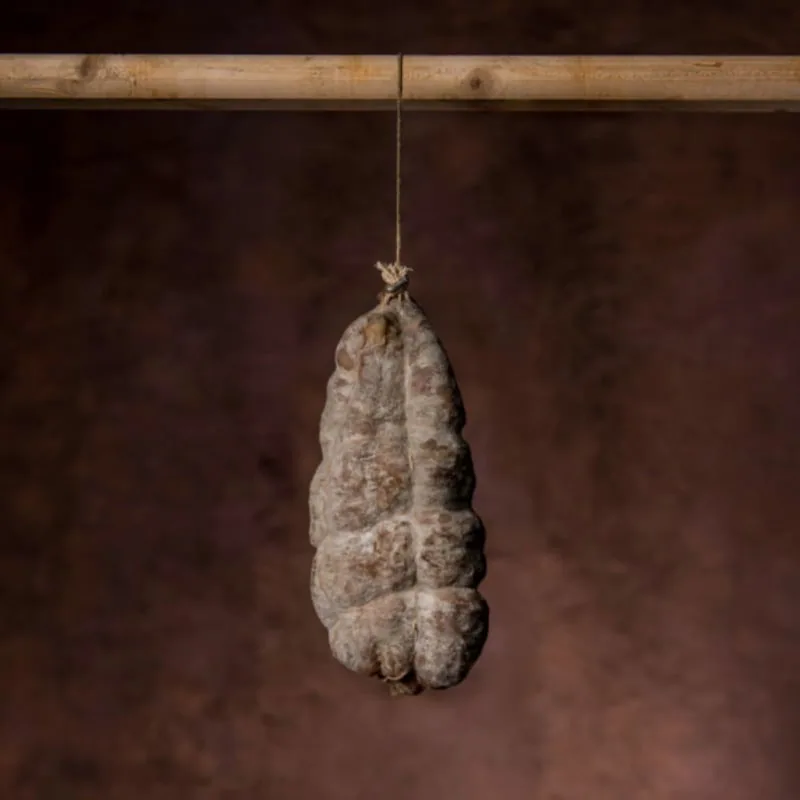
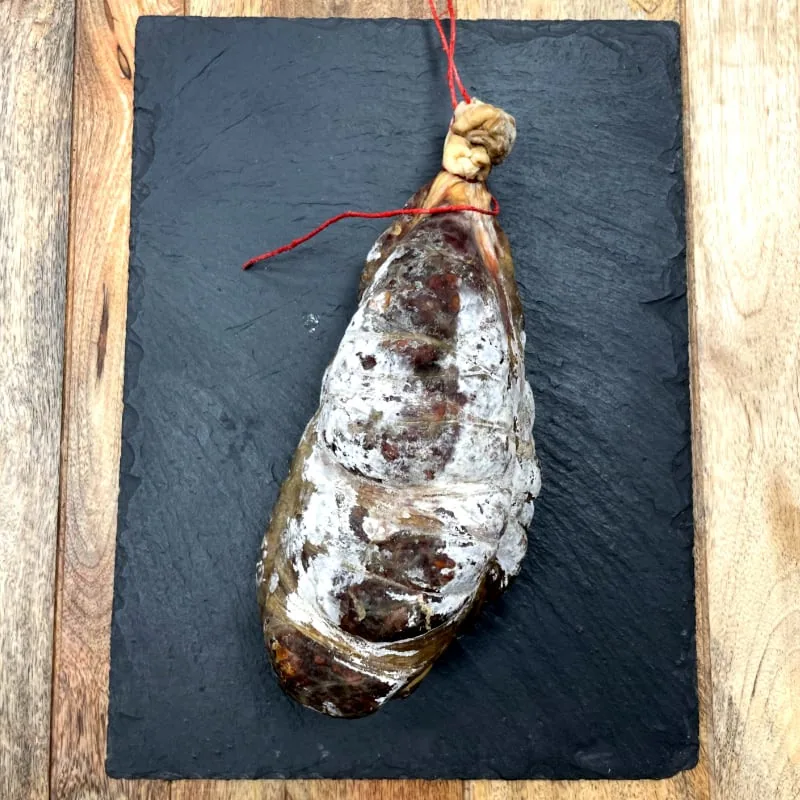
Its origins are linked to the end-of-year festivities, the jésus saucisson needed to be ready for tasting at Christmas, thereby celebrating the birth of Jesus Christ. You may also sometimes hear that a jésus saucisson resembles a small swaddled infant, owing to the way it is tied up to hold its shape during drying.
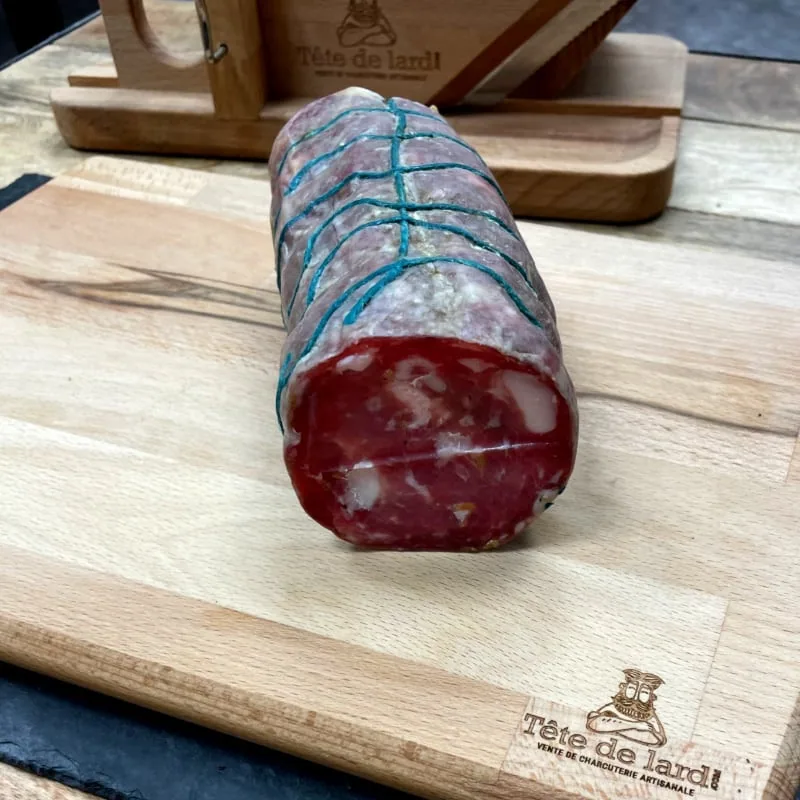
The jésus is a saucisson shaped rather like a pear, long and, above all, broad, measuring around 10cm across. It is an artisanal charcuterie of Lyonnais and rustic origin, made from pork meat and back fat, minced, salted and seasoned according to the tastes and preferences of the charcutiers from various regions.
The jésus is recognised as a top-quality dry-cured charcuterie by the Ministry of the Economy. As such, the pork used in its production must meet a very precise set of specifications and must come from the "noble" parts of the animal, such as the ham, shoulder or belly, sourced from farms in the Rhône-Alpes region (its original Lyonnais home). The fat cubes used must come from skinned back fat and pork belly, and must make up between 18 and 20% of the mixture.
This artisanal charcuterie must always be seasoned with salt, black pepper (whole, coarsely ground), garlic, red wine, as well as lactic ferments.
The secret to a fine recipe no doubt lies in the addition of refined, flavourful ingredients such as mace (the delicate layer surrounding the nutmeg) or nutmeg itself.
During production, this saucisson is stuffed into a wide casing known as the "sac de porc" (pork bladder). The casing is coated with saltpetre to prevent mould.
Before it can be enjoyed, the drying and maturing process must last at least fifty days or so.
A jésus generally weighs between 400 and 600 grams and does not exceed 15 to 20% fat content.
The difference with rosette or saucisson from Lyon lies chiefly in its shape, which is thicker, making it a more tender saucisson.
The type of casing used for stuffing will differ for the rosette.
This essential artisanal charcuterie originating from the Lyon region takes the name Rosette because the casing in which it is encased bears this name due to its pink colour.
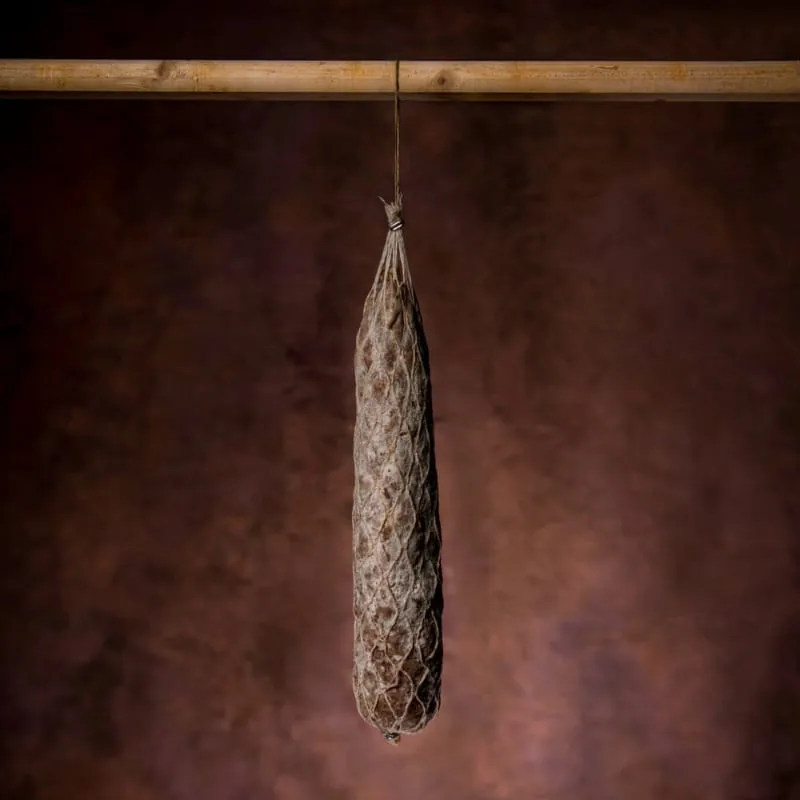
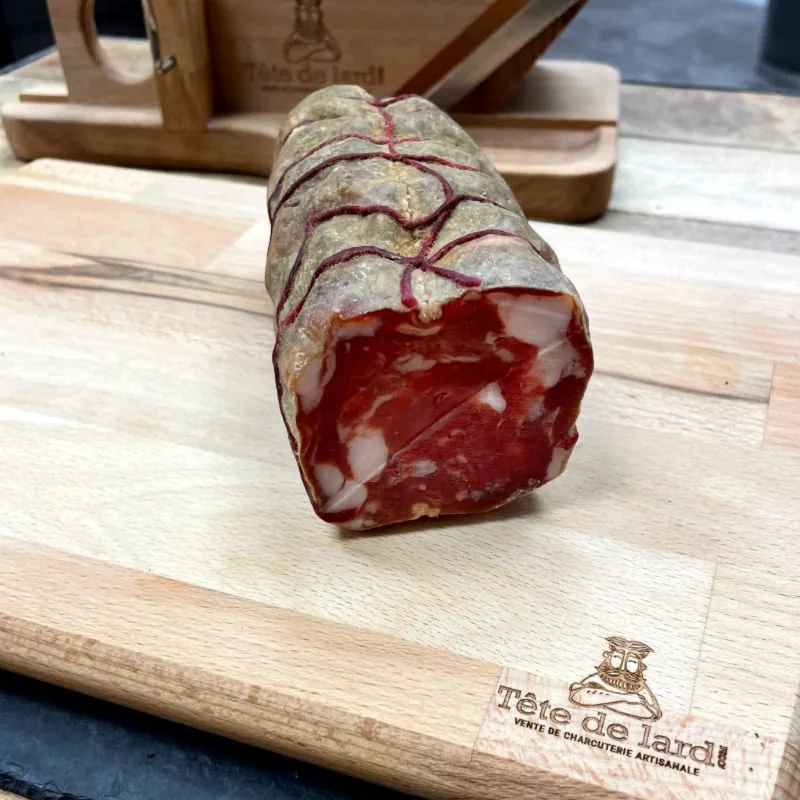
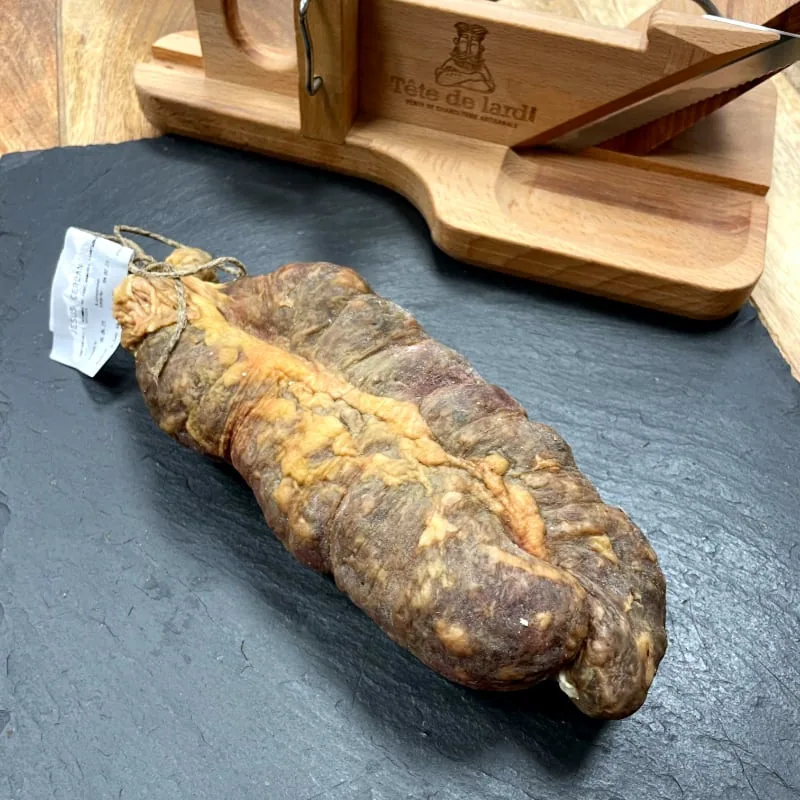
Rosette is, at its heart, a dry-cured farmhouse charcuterie recognisable by its elongated, conical shape, which can reach up to a metre in length and a weight of over 2 kg, allowing it to be easily distinguished from saucisson. It has one end thicker than the other, making it a protein-rich saucisson measuring forty centimetres on average.
Rosette can also be recognised visually by the net casing in which it is wrapped.
It is, moreover, considered to be a dry-cured charcuterie of superior quality.
As a superior-quality charcuterie, the pigs used to make rosette are raised according to a strict set of specifications.
Its superior quality is partly down to the noble cuts of pork that make it up, such as the shoulder, the loin, and the belly. During preparation, rosette is seasoned with salt, pepper, garlic, red wine and lactic ferments, giving it a rich flavour. Its fat content must not exceed 20% of its composition. The rosette is placed in a small net and left to dry and mature for at least 3 months so that the aromas can develop; the longer this period, the more pronounced the flavour. The time needed for maturation varies more or less depending on the size of the rosette. A fine artisanal rosette can be recognised by its net being tied with string rather than fastened with a staple, as well as by a lovely bloom developing all around it, a sign of pronounced ageing. This is an impressive charcuterie, with a weight that can exceed two kilograms.
Rosette should be kept in a cool, dry place, hung by its string. Its shelf life is estimated at around 40 days; it can also be kept wrapped in a tea towel once sliced, to prevent it from spoiling.
Before tasting it, you need to check the good quality of the rosette: it's worth checking its fat content, which should be a maximum of 20%, but also making sure that the ends of the rosette have a lovely pink colour. The rosette is rich in flavour and has an authentic taste that wins over connoisseurs and amateurs alike.
Rosette is a charcuterie usually served in thick slices. It is mainly served as an apéritif or starter, paired with other charcuterie and a glass of wine.
You'll often find it in dishes such as raclette, as it goes wonderfully well with cheeses. Its ready-sliced form makes it perfect for filling a sandwich, making rosette an ingredient you can take anywhere.
In the traditional Lyonnaise recipe, you'll find salt, whole black pepper, garlic, red wine and, depending on the artisan, a few other spices such as aromatic herbs.
Whether you choose jésus, rosette or even both, these traditional, artisanal specialities are sure to win you over with their exceptional quality!
Buy online and have it delivered within 24 hours! Support craftsmanship and our artisan charcutiers!
 Nitrite-free
 Award-winning