Charcuterie with friends
French Charcuterie
France is known for its wine, its bread, its cheese… but also for its charcuterie! Proud of French charcuterie, you're looking for the best place to buy…
9 min read· By Rémi Ledu
FRENCH CHARCUTERIE
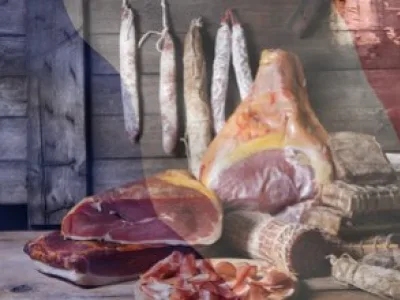
France is known for its wine, for its bread, for its cheese… but also for its charcuterie! Proud of French charcuterie, are you looking for the best place to buy quality French charcuterie? In that case, you’ve made the right choice by landing here! Jambon d’Auvergne, Savoyard charcuterie, saucisson d’Ardèche… Make your choices, ladies and gentlemen: here, everything is truly delicious!
BUYING FRENCH CHARCUTERIE
Good French tables couldn’t do without the traditional charcuterie that has made the country’s reputation. That’s why you’ll find it in brasseries, restaurants and in practically every household. Did you know that charcuterie has existed for thousands of years? Once called salsicius in Rome, charcuterie and salting were first and foremost practical, a way of preserving unused meat in salt. Today, French charcuterie has become an art form in its own right.
Of all French charcuterie, the sausage in all its forms is undoubtedly the most popular. We love to enjoy it on every occasion: during the summer, grilled and served with salad and raw vegetables. Or during the cold season, when sausages are used in the preparation of many winter dishes such as choucroute, pot-au-feu or potée. Here are the different types of French sausages and charcuterie that delight true food lovers:
- Saucisse cocktail
- Cervelas
- Chipolatas
- Godiveau
- Figatelle
- Ficatellu
- Diot
- Gendarme
- Longanisse
- Merguez
- Soubressade
- Sabodet
- Saucisson à l’ail
- Beer sausage
- Knack
- Mettwurst
- Schinkenwurst
- French black pork charcuterie
- Herb or white wine sausage
- Black pork ham
- French saucisson
- White Viennese sausage
- Crépinettes
This is a non-exhaustive list, as there are hundreds of types of French charcuterie. And whilst during the last century charcuterie was considered a festive meal, enjoyed only on special occasions, today it is fully woven into families' everyday eating habits. Just consider that the French consume close to 210,000 tonnes of sausages of all kinds every year. Traditional, artisanal charcuterie wins over households, both for its exquisite taste and its convenience.
Every region of France has its own charcuterie speciality
French charcuterie is, above all, a delicious charcuterie that draws its flavour from the traditions of the region it comes from. This is why each charcuterie is different, and why a culinary stroll through our pages is well worth taking. You'll be able to enjoy the regional specialities of every corner of France and discover the best-kept, age-old gastronomic secrets! Farmers and makers of these food preparations – made from raw or cooked pork and salt – know exactly how to delight us with their expertise.
French charcuterie doesn't have just one style, and it's precisely this diversity that makes it so rich. Indeed, these specialities, obtained through the transformation of meat, generally come from pork, but also from other types of meat. You'll find beef charcuterie as well as charcuterie made from game, that is to say wild boar and hare, particularly for saucisson and pâtés. There is also French poultry charcuterie, made from turkey, duck or chicken.
Here are the 3 main types of products when it comes to buying French charcuterie:
- Cured meats, which are prepared without cooking, namely chorizo, ham or saucisson.
- Cooked charcuterie: cooked ham, pâté, rillettes, andouille sausages or boudin.
- Sausages for cooking and other charcuterie to be cooked or pan-fried.
When it comes to French charcuterie, no region in France is left behind. Indeed, each of them has its own speciality and its own know-how. For example, you have:
- Strasbourg sausage
- Frankfurt sausage
- Morteau sausage
- Montbéliard sausage
- Savoyard charcuterie
- Corsican charcuterie
- Savoie ham
- Auvergne ham
- Ardèche ham
- Savoie saucisson
- Rillettes from Le Mans
- Corsican saucisson
- Ardèche saucisson
- Toulouse sausage
- Jambon de Bayonne
- Andouille from Vire or Guéméné
- South-west charcuterie
French charcuterie can also draw on a few threads of European specialities, depending on the region it comes from. This is precisely why we find such a great diversity of products: the finest French artisans have known how to make the very best of Spanish charcuterie, Italian charcuterie or Portuguese and German charcuterie to create a far finer version of it!
Saucisson
French saucisson is made from a mince of seasoned meat, which is then placed into a casing. It can be eaten raw after a maturing and drying process, or cooked, depending on the preparation and the speciality. Discover, for example, artisanal dried sausage, which is a dry-cured saucisson made using a very ancient traditional method.
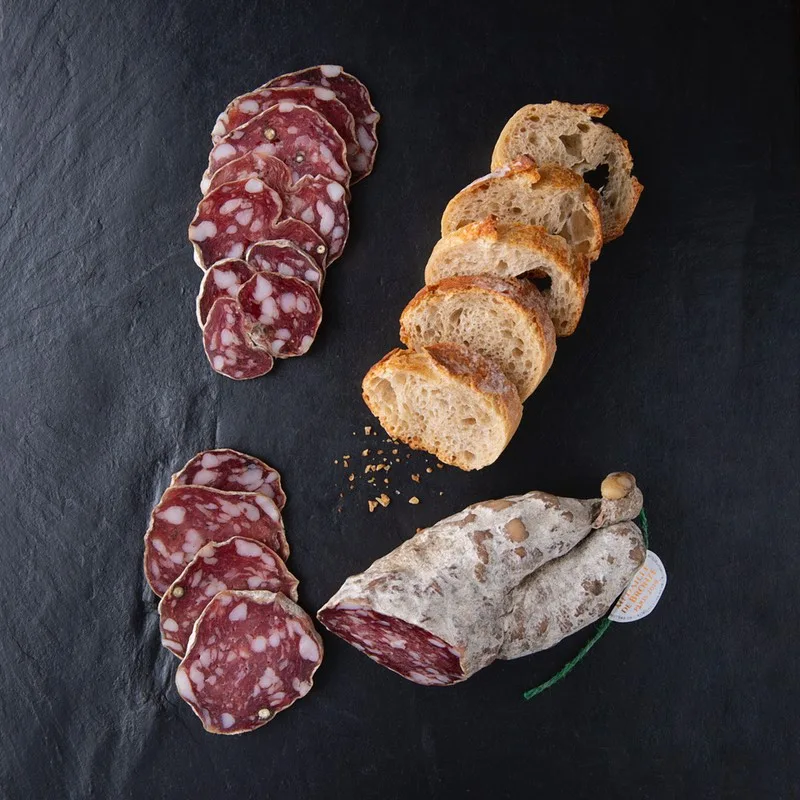
Here are the various French saucissons you might find:
The household sausage or country saucisson, which is eaten only lightly dry-cured.
The mountain saucisson or premium quality saucisson.
The dry sausage, which is generally presented in a string of small, dry, U-shaped pieces. This mainly covers the saucisson d'Auvergne, the saucisson de Provence, the saucisson d'Ardèche and the saucisson des Pyrénées.
The saucisson d'Arles, which traditionally includes lean horse or donkey meat in its making.
The saucisson chasseur, which is small, fatty and full of flavour, but cannot be kept for long.
The jésus, which is a large, oval-shaped saucisson.
The smoked Cracovie saucisson.
The saucisson de Lyon, which has a fine, straight and even filling. Do take care not to confuse it with the cervelas de Lyon, which needs to be cooked.
Salamis, which are often smoked and finely textured.
The rosette, tied in a spindle shape, which is carefully matured when it is authentic.
The liver saucisson, which is spread cold onto country-style bread.
The Cambridge saucisson, which is more of an English speciality but may be regarded as a French charcuterie. It is often used as a garnish for mixed salads.
The black saucisson or smoked boudin.
The mortadelle, or cooked saucisson with a slightly milder flavour.
The saucisson de Paris, usually flavoured with garlic, which features especially in the garnish of choucroute.
Ham
French hams are a true delight! Discover straight away these delicious hams that are the pride of the country.
- The ham from the Ardèche is a ham made from the pig's leg, with every stage of preparation carried out within the Ardèche region. The hams are first cut into rounded shapes, before being hand-rubbed and mixed with salt, pepper, various spices, saltpetre and, of course, plenty of know-how! This ham is then coated with a crust made from lard, Ardèche chestnut flour, various spices and all the love the artisan can put into it! The end result is a lovely red, supple ham with a pronounced flavour and a subtle hint of chestnut. It's a mountain ham that requires at least 7 months of ageing.
- Ardennes dry-cured ham is an unsmoked ham, hand-rubbed with fine salt before being dried. It needs to be aged for at least a year. The result is a delicious dried ham with a fruity aroma. However, it's quite rare to come across, owing to its limited production.
- Auvergne dry-cured ham is a rustic, full-flavoured product, mainly made from young pigs, lightly salted, seasoned and aged for 7 months.
- Jambon de Bayonne is a product that has existed for almost as long as anyone can remember. Indeed, its tradition has spanned the centuries to offer the luxury of a delicious, convivial delicacy to all food lovers and enthusiasts! The fresh hams are first rubbed with salt from the Adour Basin salt marshes, before being left to rest under a layer of salt and dried at a low temperature. They are then hung from a beam in the drying rooms, allowing the ham's aroma to develop and its tenderness to build up gently. But that's not all! The cut pieces are then coated in a mixture of flour and pork fat. The drying process is a little gentler still, and a further long ageing period is needed for these hams to mature and truly reveal their character.
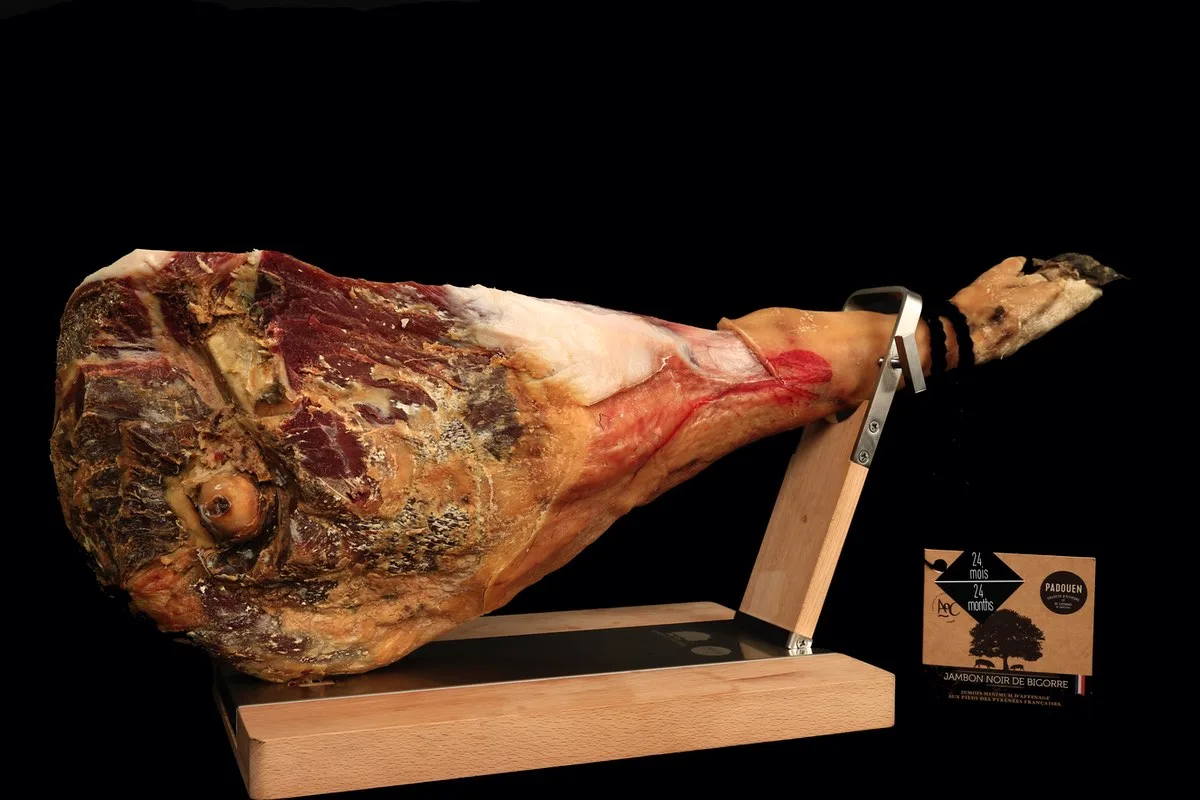
- Jambon Noir de Bigorre, made from the Noir de Bigorre pig. This pure breed of pig lives on the edge of the Hautes-Pyrénées. It's a ham that calls for very specific know-how and plenty of time. Indeed, the salting is very gentle, and artisans use natural rock salt, applied by hand. The ham is then aged in the open air for around 20 to 24 months. The result is a very red, juicy, tender meat that melts in the mouth and is, above all, incredibly flavoursome! The aromas that come through are roasted chestnut and dried fruit.
- Now let's turn to Jambon de Cerdagne, or Gambajo, which has been enjoyed throughout the country since Roman times. It's a spiced, highly traditional mountain ham, air-dried for just under a year. This ham is first rubbed with salt twice, before being brushed with pepper, which gives it its unique flavour.
- Jambon de Chalosse is an exceptional French ham, made from truly the finest cuts of meat. It's a quality product from the Gascon terroir, in the Landes department. To achieve this delicious, flavoursome meat, the ham is first coated, then aged in the open air for 9 months. It's the subtle salting, perfectly distributed through the meat, along with a blend of know-how, that makes all the difference. This ham reaches full maturity once the fat takes on a hazelnut flavour and its colour becomes noble.
- Hay-cooked ham results from a very different way of cooking ham. It's generally cooked gently in a pot together with hay. Alternatively, the meat is wrapped in hay and then in bread dough before cooking. This technique produces a very tender meat, imbued with the flavour of the meadows.
- Vendée smoked ham is a speciality that is both traditional and original, coming to us from the Bas-Poitou region. The ham is rubbed with Noirmoutier salt, then with pear or plum eau de vie, and flavoured with wild herbs. A 15kg piece flavoured with alcohol takes around 30 days of salting. It's then wrapped in a cloth before being dried beside the fireplace for a month.
- Prisuttu is a cured ham made from Corsican pigs. It's a dry-cured raw ham, with each piece weighing around 6kg. To make it, the pig's leg is buried in salt for around 6 weeks, before being brushed and coated with pepper or other herbs and spices. Note that the ageing and drying process can then take up to 18 months.
As you will have gathered, French charcuterie is above all a matter of talent and tradition! These are just a few examples of French hams. There is also the Jambon de Paris, or cooked ham, and the jambon de Savoie, with its soft, tender texture. French charcuterie is truly rich in diversity and offers a whole range of flavours. Whether you are a food lover or a true connoisseur, follow our guides to buying French charcuterie throughout our pages: you will not be disappointed!