Never without my saucisson!
Everything you need to know about saucisson!
Saucisson is a charcuterie made from minced meat, one or several types, most often pork, seasoned differently according to local, regional traditions or…
7 min read· By Rémi Ledu
CONTENTS:
The history of saucisson
The different types of saucisson
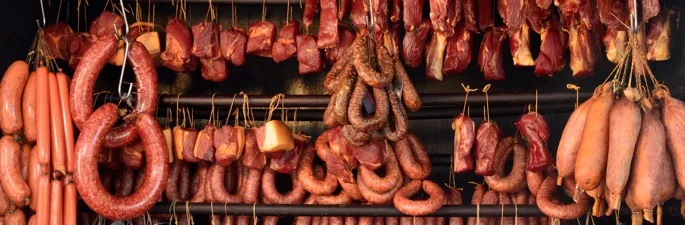
A saucisson is a charcuterie made from minced meat, one or several, most often pork, which is seasoned differently depending on local, regional or national traditions.
The history of saucisson
Historians believe that saucisson dates back to the Roman Empire. It would therefore have been invented by the Greeks and the Romans. Even back then, they had already mastered the preservation of pork and preparations using salt.
In Latin, salsus means salted. It is thought to be the origin of the word we use nowadays, saucisson. The definitive word appears in writing in 1546.
The Gauls, the traditional producers of pork, naturally took up the recipe for saucisson, adapting it to their own tastes and to the products they had available.
In France, the trade of charcutier had a hard time establishing itself as such. In the 15th century, they finally obtained the exclusive right to sell raw, cooked and prepared pork. Since then, saucisson has never stopped spreading around the world, and has become part of our everyday lives.
The different types of saucisson
- Boutefas
This is a saucisson that comes from the canton of Vaud in Switzerland. It is made from pork. It is stuffed into a pork caecum, tied closed with string. It is a product with an irregular shape, golden on the outside and pink to red inside. Its weight can range from 600g to 1 kilo.
Its flavour is very traditional, lightly smoked.
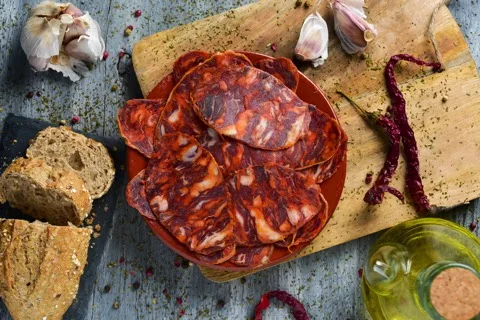
This is a Spanish and Portuguese speciality. It is made from pork or sometimes a mixture of beef and pork. This meat is seasoned with salt and a variety of paprika, pimentón. This spice gives it that rust colour and slightly fruity taste. Some are more or less spicy than others.
It can take a straight, wide shape or a folded, rather thin one. It is eaten cold, in very thin slices, or mixed into hot dishes. In that case, you'll need to cut thicker slices.
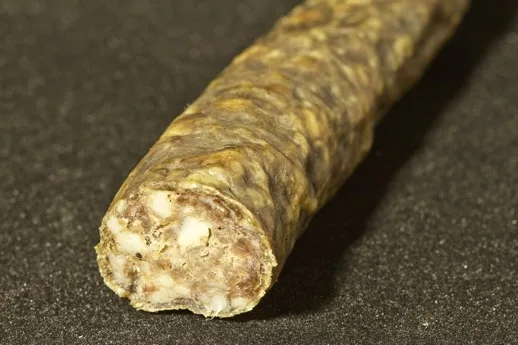
This is a dry-cured sausage, a speciality of Corsica. It is made solely from pork. The liver is mainly used, and fat is an important element to which pork offal such as spleen, heart and lungs are sometimes added, along with red wine and garlic. It may then be smoked, or not.
The pigs should traditionally be Corsican.
Recipes differ depending on where they're produced. Artisans add more or less liver depending on whether they come from the North or the South.
It is eaten cold when very dry, or cooked over embers in a sauce with lentils.
- Grelots
These are small Savoyard saucissons. Their shape gave this speciality its name. Made traditionally, with unrivalled know-how, these little marvels are based on shoulder and belly of pork.
Their texture is soft, the taste is delicious, and these treats can be enjoyed at any time of day!
They can be seasoned in different ways, the walnut grelots and the beaufort ones are the most common.
- Jésus
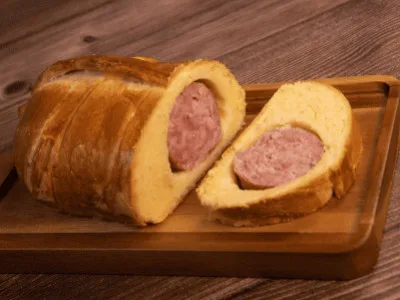
This is a Lyonnais speciality that gets its name from its shape. It does, indeed, resemble a swaddled child. This saucisson is made from the meat and fat of pork. The artisans use only the noble cuts of the pork, the ham, the shoulder, the loin and the belly. The fat, meanwhile, comes from the back fat or the belly. According to the specifications, the pigs must come from farms in the region.
It is seasoned with salt, coarse peppercorns, garlic, red wine and often other spices such as nutmeg.
Once the preparation is complete, the saucisson is stuffed into a fairly wide casing known as a “pig's bladder”. It is then tied with string to keep its shape during drying. It is a rather long saucisson to produce, requiring at least fifty days of drying and maturing.
It is a saucisson that is less dry-cured than others, closer in style to rosette.
- Lukinke
Lukinke is a Basque speciality, inseparable from this region. It can be eaten either raw or cooked. It is a dry sausage, made from pork with a hint of spice.
In the past, it was made at the time of the pig slaughter, then dried by the fireside.
It is a product that today is enjoyed all year round, in all its forms.
- Rosette
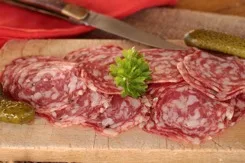
This saucisson is also a Lyon speciality, in fact the best known one. It's made from pork meat and back fat, the fat from the pig. The meat comes from the prime cuts of the pig, which must come from the region. It's then very finely minced, salted and seasoned with black and grey pepper, garlic and red wine. The fat makes up around 20% of the mixture.
Its name comes from the casing in which it is stuffed. This is the terminal part of the pig's intestine.
Its size and weight mean the saucisson needs to be tied with string to keep its shape. It weighs between 550 and 700 grams at the end of the making process.
- Salami
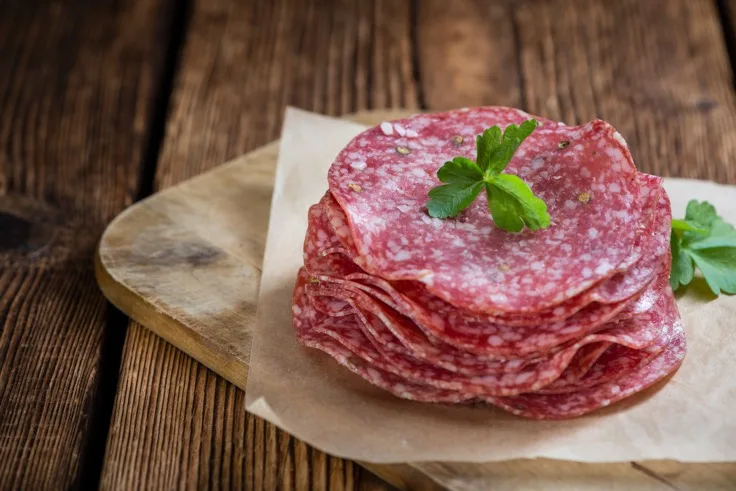
This is a speciality originally from Italy, which has since taken on numerous variants depending on the country. Every region of the globe has adapted the recipe according to its own specialities.
Originally, this saucisson was made from pork and salt. The salt is, in fact, where its name comes from. They were dried out in the open air. Nowadays there are also salamis made from beef, or from pork mixed with beef. Today, the seasoning consists not only of salt, but also of spices and fine herbs.
It may sometimes be smoked or cooked before being dried.
- Garlic saucisson
This saucisson is also known as Saucisson de Paris or Paris-ail. It's a charcuterie made from pork, to which a preparation is added containing egg white, salt, pepper, spices and freshly chopped garlic. This last ingredient gives it its name and its distinctive flavour.
- Saucisson from the Ardennes
This is a variety of dry-cured saucisson created by producers of Ardennes ham. They wished to showcase their terroir with their product.
Its appearance is similar to salami. It is made up of pork meat or beef mixed with pork. The meats are minced then spiced and finally stuffed into natural casings, preferably.
The artisans then leave the saucisson to ferment, then smoke it over oak and beech wood. Finally, it is left to dry. Its taste is very distinctive, it is very smoky.
There is a specification that defines all the criteria of this speciality.
- Lyon saucisson
This is a large dry-cured saucisson that has existed for thousands of years. A speciality of Lyon, it was originally made from several meats. Lean pork and donkey. Since then, the latter meat has been replaced by beef, or sometimes horse. All the meats are very finely minced, then fat is added. The seasoning is made up of coarse black peppercorns, ground white pepper, garlic, red wine and sometimes other spices such as nutmeg.
These lean meats give it its very dark colour. Its drying period lasts several months, allowing for optimal maturation.
- Vaudois saucisson
This is a Swiss speciality, made from pork meat and fatback, all stuffed into a natural pork casing.
Authentic products bear the green seal of Vaudois charcuterie, an official mark issued by the Federal Office for Agriculture. To obtain this recognition, producers must make their saucissons in keeping with tradition and produce them within a defined territory.
- Fuseau lorrain
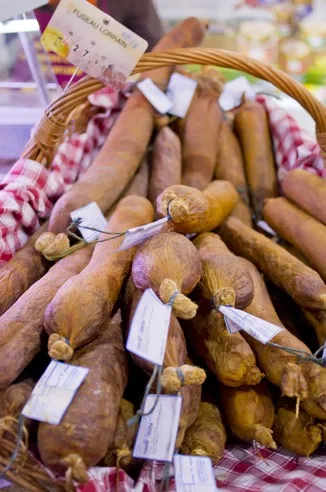
This is a sausage, made up of different cuts of pork combined with spices and condiments.
The meats used are shoulder and ham. Producers add pork fat as well as spices such as pepper, salt, cumin, various berries, and garlic. Red wine is also part of the preparation.
This mixture is stuffed into natural pork casings and then placed in a dark, damp room free from draughts for six weeks.
It is enjoyed sliced into rounds, as a nibble with drinks.
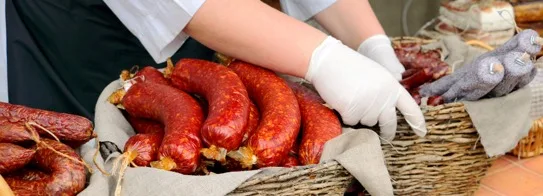
The saucisson is therefore a product that forms part of our national identity, a product with many facets, which has diversified over time. It must be prepared according to the rules of the art, respecting essential steps.
Discover the ranking of the best artisanal French saucissons established by our Tête de lard, some of which have been awarded at the Mondial Rabelais du saucisson!
Tête de lard is committed to honouring these traditions, offering only saucissons of recognised quality, with no added chemicals, fine products from our terroir that you can find on our website /.