Never without my saucisson!
Savoie saucisson
The origin of Savoie saucisson goes back several centuries, when farmers and shepherds of Haute-Savoie relied on artisanal saucisson production from Savoie…
7 min read· By Rémi Ledu
History of Savoie saucisson
The evolution of Savoie saucisson production
The ingredients of Savoie saucisson
The production methods of Savoie saucisson
The varieties of Savoie saucisson
Tasting and storing Savoie saucisson
The origin of Savoie saucisson goes back several centuries, when farmers and shepherds of Haute-Savoie relied on artisanal saucisson production from Savoie to preserve their meat and make it last throughout the year. Since then, the production of Savoie saucisson has evolved to become a product of great quality, appreciated the world over for its unique taste and delicate texture. The touristic appeal of Savoie and Haute-Savoie has particularly contributed to its development.
Savoie saucisson, a reflection of the alpine climate
The mountain climate, alternating between coolness and humidity, greatly favoured the emergence of drying techniques that allowed for the development of naturally matured charcuterie. This link between the environment and traditional preservation methods gives Savoie saucisson its distinctive character.
The evolution of Savoie saucisson production
Over the centuries, the production of Savoie saucisson has undergone significant change, moving from traditional artisanal methods to more modern ones that allow for large-scale production while preserving the quality of the final product. Today, Savoie saucisson is produced according to rigorous methods to guarantee its exceptional taste and delicate texture.
Quality upheld without an official label
Although it does not yet benefit from a PGI or PDO, Savoie saucisson is produced by artisans who follow strict manufacturing rules: careful selection of meats, natural seasoning, traditional casings and slow drying. It is this rigour that gives it its recognised quality.
The ingredients of saucisson de Savoie
The meats
The meats used in the production of saucisson de Savoie are chosen with care to guarantee the quality of the final product. The meats most commonly used in the production of artisanal saucisson de Savoie are pork, beef and mountain meat, which bring their own unique and subtle flavours to the saucisson.
The importance of the origin of the meats
Some producers work with local or mountain farms, where the animals are fed without GMOs and reared outdoors. This approach results in meat that is tastier, healthier and better suited to long drying.
The spices
The spices and seasonings used for saucisson de Savoie are carefully selected for their flavour and their ability to harmonise with the meats used in the production. The spices most commonly used in the production of saucisson de Savoie include nutmeg, clove and pepper, which give the saucisson a deliciously spiced and smoky taste.
The production methods of saucisson de Savoie
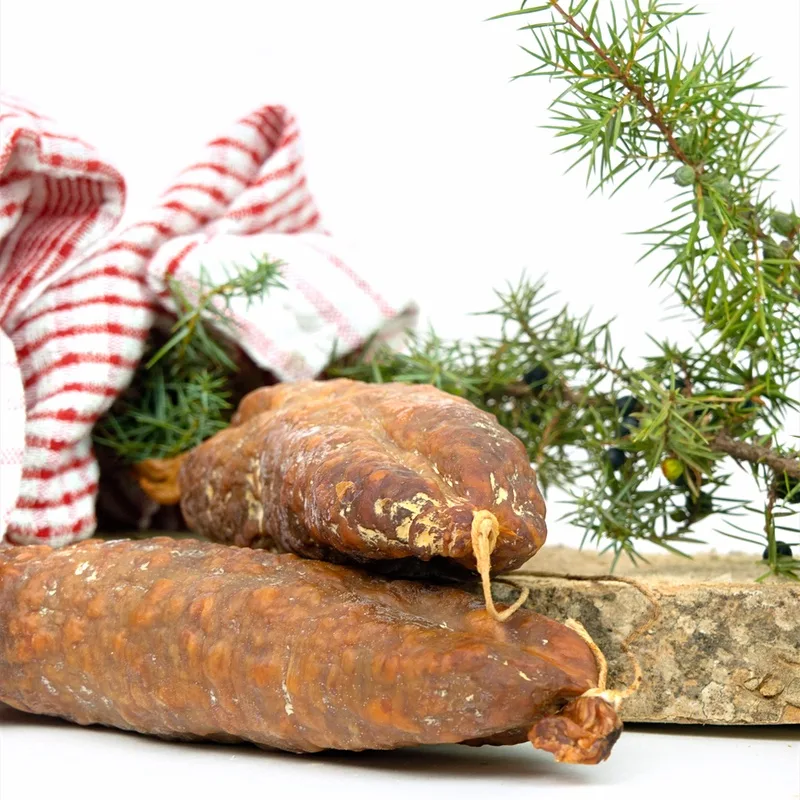
The traditional method of producing saucisson de Savoie is based on ancestral techniques that involve mixing the meats and spices, shaping them in natural casings and letting them dry slowly so that the meat can take on its full flavour and texture. Most often in a natural cellar, to recreate the flavours of days gone by and the taste of the terroir.
The importance of slow ageing
Ageing can last between 3 and 8 weeks depending on the size. During this time, the natural bloom (a fine white mould) develops on the casing, contributing to the formation of the typical aromas of saucisson savoyard.
Modern production methods for saucisson de Savoie
The modern methods for producing saucisson from Savoie are based on the same principles as the traditional method, but with more modern techniques to guarantee large-scale production whilst preserving the quality of the final product. Nowadays, le saucisson de Savoie is produced using machines specially designed to mix the meats, spices and seasonings, and to fill the casings more efficiently. The modern method also allows for more controlled drying to guarantee the quality of the final product. Some Savoyard producers such as la Maison Baud manage to recreate the ageing conditions of days gone by.
Mastered innovation
The most demanding artisans now use ventilated cold rooms that faithfully reproduce cellar-drying conditions. This allows for consistent ageing, whilst preserving the texture and aromas of a typically mountain product.
The varieties of saucisson de Savoie
Saucisson de Savoie comes in many different varieties, each with its own unique flavours and textures. The differences between the varieties can be put down to the meats used, the spices and seasonings, as well as the production methods employed.
The differences between the varieties of saucisson de Savoie
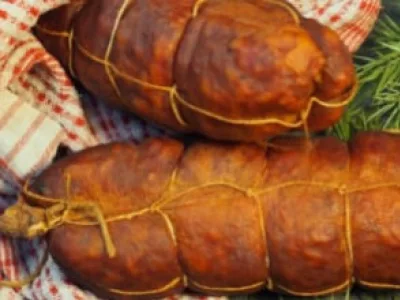
The differences between the varieties of saucisson de Savoie may include the meat used, the spices and seasonings, as well as the production methods. For example, herb saucisson from Savoie can be made from pork and beef, with fresh herbs such as thyme and rosemary. Smoked saucisson de Savoie, meanwhile, is produced from pork and smoked for a smokier taste.
Here is a short list of flavours commonly used in Savoie:
| 1 | Saucisson with thyme |
| 2 | Saucisson with rosemary |
| 3 | Saucisson with porcini mushrooms |
| 4 | Saucisson with chanterelle mushrooms |
| 5 | Saucisson with hazelnuts |
| 6 | Saucisson with reblochon |
| 7 | Saucisson with Beaufort |
| 8 | Saucisson with blueberries |
| 9 | Saucisson with génépi |
| 10 | Venison and pork saucisson |
| 11 | Donkey saucisson |
| 12 | Saucisson with wild garlic |
| 13 | Smoked saucisson |
| 14 | Saucisson made the old way, without starter culture |
| 15 | Hand-tied saucisson |
And new recipes are always being developed in line with the latest trends (a saucisson with Savoyard Gin is coming soon).
Savoyard creativity and innovation
The Savoyard charcuterie scene never stops innovating: seasonal recipes, organic ranges, local collaborations with cheesemakers or distillers... Every year, new creations come to enrich the range, all while respecting the codes of tradition.
The most popular varieties of saucisson de Savoie
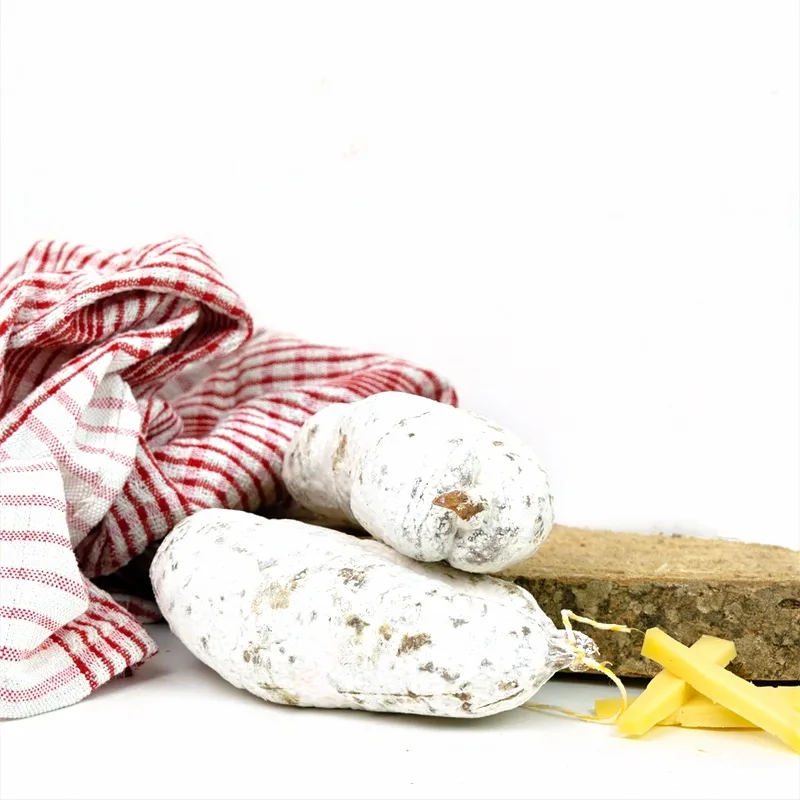
The most popular varieties of saucisson de Savoie include the saucisson de Savoie with herbs, the smoked saucisson de Savoie and the dry-cured saucisson de Savoie. Each of these varieties is prized for its own unique flavours and textures, and can be enjoyed on their own or added to various dishes to enhance their flavour.
Tasting and storing saucisson de Savoie
Tasting and storing saucisson de Savoie are important aspects when it comes to preserving the quality and flavour of the product.
How should you enjoy saucisson de Savoie?
The saucisson from Savoie can be enjoyed on its own, sliced and served with bread or dried fruits, or added to various dishes to enhance their flavour. It is important to enjoy it at room temperature for an optimal tasting experience. It's just like wine: if the saucisson is too cold, its aromas won't be able to show their full potential.
Slicing, a detail that changes everything
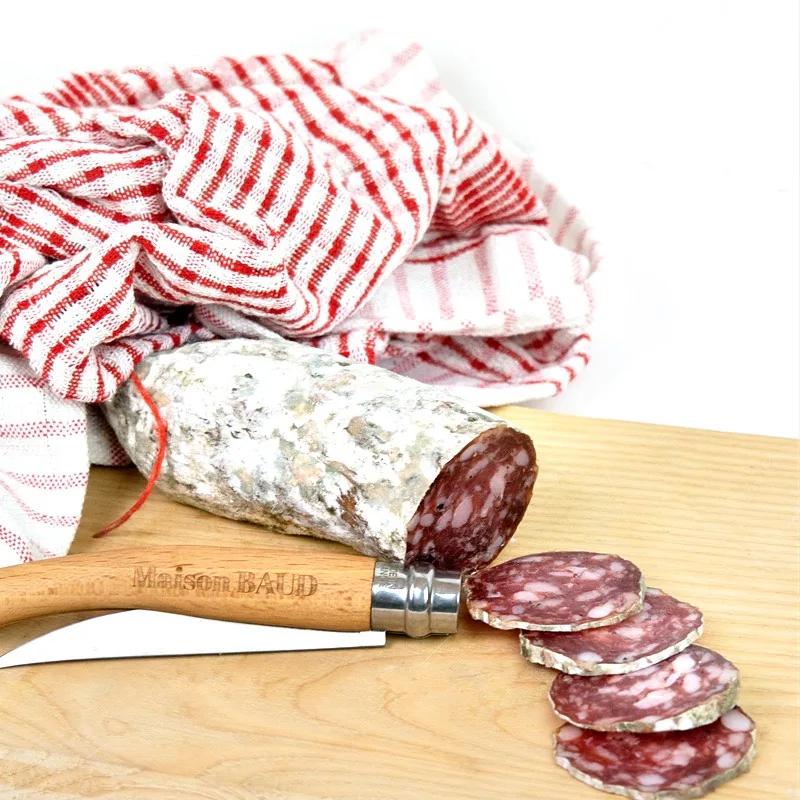
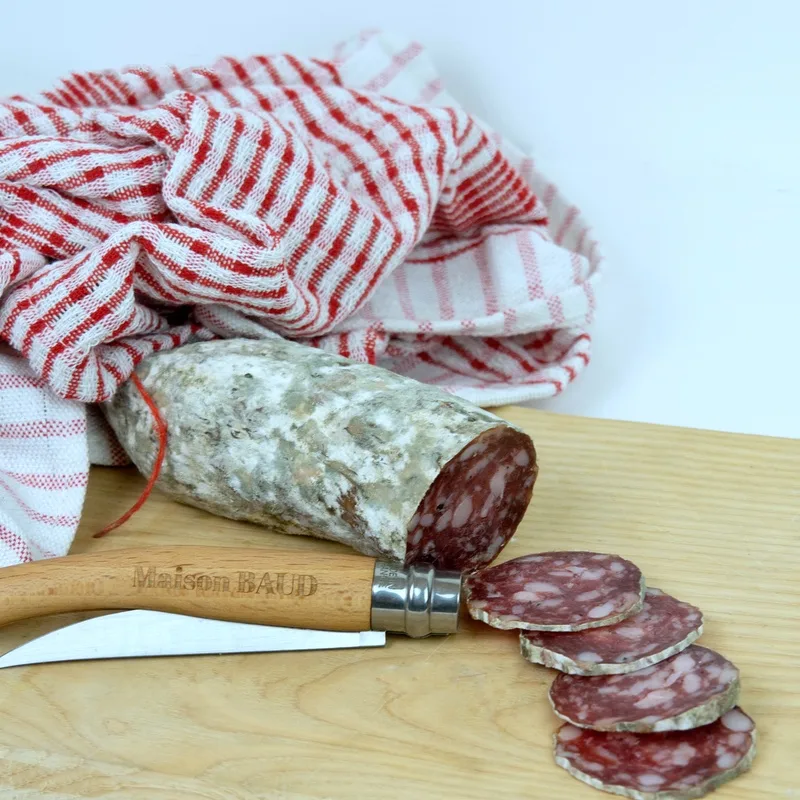
For an optimal tasting experience, we recommend cutting thin slices with a well-sharpened knife. A cut that is too thick can crush the flesh, while an irregular cut spoils the consistency of the flavours.
How to store saucisson from Savoie to preserve its quality?
Saucisson from Savoie should be stored in a cool, dry place to preserve its quality. It can be kept for several weeks in a cool, dry place, but we recommend enjoying it as soon as possible to make the most of its optimal flavour. It can also be frozen for longer-term storage, but it is important to defrost it slowly to preserve its texture and flavour. At Tête de lard we're not keen on freezing saucisson, as we find it tends to change texture. You can keep it in a cellar if possible, or in the vegetable drawer of your fridge. Do bear in mind that saucisson needs to breathe, so it's important to take it out of its packaging. Ideally, keep it wrapped in a cloth, so the product can breathe without any issues.
Recognising a well-kept saucisson
A well-kept saucisson has a dry but supple skin, a pleasant smell and firm flesh. If it becomes too hard, wrap it in a slightly damp tea towel for 24 hours. On the other hand, a sour smell or greenish mould are signs of a problem: it's best not to eat it in that case.
Wishing you a lovely tasting of Savoyard saucisson
Your lardons.
Also worth reading: La consommation du saucisson en France