Never without my saucisson!
The consumption of saucisson in France
Is it really a surprise? The French are indeed the greatest consumers of saucisson in the world! Every French region has its own specialities when it comes to…
5 min read· By Rémi Ledu
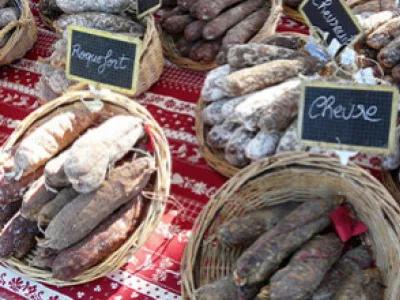
France: the land of saucisson
Is it really a surprise? The French are, without a doubt, the world's greatest consumers of saucisson! Each French region has its own specialities when it comes to gastronomy, and this includes saucisson-making. From saucisson de Savoie, to saucisson d'Auvergne, by way of saucisson de Lyon or even saucisson corse... Many dry-cured saucissons from our regions, each with their own flavours, are available on the market, ready to be the perfect nibble alongside a drink and to delight everyone!
The heritage of saucisson in France
Where to find good saucisson
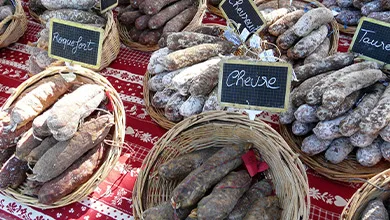
The heritage of saucisson in France
We, the French, have a genuine saucisson heritage, one that has been passed down through generations. Artisans across all our regions work every day to diversify their offerings while continuing to provide authentic recipes with that wonderful taste of days gone by. Of course, industrial producers also offer various saucissons, but we much prefer the cured meats made by our charcutier producers, who bring with them a wealth of age-old expertise (and, above all, prepare it with real care). So, broadly speaking, what does the saucisson market in France look like?
Saucisson market statistics
In France, over 78,000 tonnes of saucisson are devoured every year! That works out to 2.4kg every second (quite something!). More broadly, pork is consumed in France at a rate of nearly 34kg per person per year. We do hope for one thing: that saucisson still has many wonderful years ahead of it to enhance our drinks and nibbles!
The world championship of saucisson: Rabelais
And since France is the home of saucisson, we also bear the responsibility of awarding the finest saucissons each year! The mondial Rabelais du saucisson takes place in France. In 2023, the saucisson world championship will be held in Orange on the 3rd and 4th of June. This competition is the only tasting and award competition for the finest saucissons, where the Rabelais medals are bestowed, and several saucissons we sell have already received one, such as Christophe Gueze's Mangalitza pork saucisson, or indeed the knife-cut larded saucisson from I Salam d'Giors! The first saucisson world championship took place in the Ardèche in 2018, drawing 13,000 enthusiasts! However, the competition is not open to the public. Only the judges may take part, though the public can follow the competition on a giant screen before gathering for a buffet and the announcement of the results.
Which town is the saucisson town?
In France, the town of Saint-Symphorien-sur-Coise is regarded as the world capital of saucisson! In the Rhône, close to Lyon, over a hundred tonnes of saucisson are made there every day. A quarter of the nation's dry-cured saucisson production thus comes from this small village of 4,000 inhabitants. However, the saucissons made there are industrial ones, produced in the factories of a well-known industrial group, which explains the volume turned out daily.
What is the best saucisson in France?
To answer this question, we put together a ranking based on our customers' reviews and our own personal tasting! You can find it in our article: click to discover what is the best saucisson in France. More broadly, a new championship, on a much smaller scale than the mondial Rabelais, was born in 2022: the championship for the best French saucisson. On a national scale, then, this championship took place in June 2022 in Courbevoie, in the Hauts-de-Seine, at the initiative of the Amicale du sauciflard.
Where can you find good saucisson?
If, like us, you're a fan of good traditional saucisson, and above all artisanal saucisson, and you'd rather not eat (or wish to limit your consumption of) industrial saucisson, you've come to the right place!
Tête de Lard: online sales of good artisanal saucisson
At Tête de Lard, our first priority is to preserve French craftsmanship. Our gastronomy is a treasure that we owe it to ourselves to keep alive in our own small way, and there are so many producers from our regions who deserve to be shown in the spotlight. This is what drove us to launch our online artisanal charcuterie business. It is now possible to eat local, but from several regions all at once, and to support French artisans, all in a single order! That's why we choose the producers we work with with great care. We pay particular attention to the quality of their raw materials, which depends on how their animals are raised and slaughtered. The animal's diet and stress levels have a considerable impact on the quality of its meat.
More broadly, we are firm advocates of animal welfare and environmental preservation, and we believe that if you're going to eat meat, you might as well eat good meat, from animals raised outdoors and fed on natural feed. If you choose Tête de Lard, you're consuming responsibly, and you can be sure to find the kind of good artisanal saucisson we love from our terroirs. These are unrivalled flavours that you'll discover on our website, born of age-old know-how and expertise from near and far, and your aperitifs simply won't be the same without them! As a reminder, Tête de Lard is, above all, about French craftsmanship, but we also offer a small range of Italian charcuterie and Iberian charcuterie, because their charcuterie is well worth a detour. Surely you wouldn't want to miss out on a good Spanish chorizo?
How can you recognise a good saucisson?
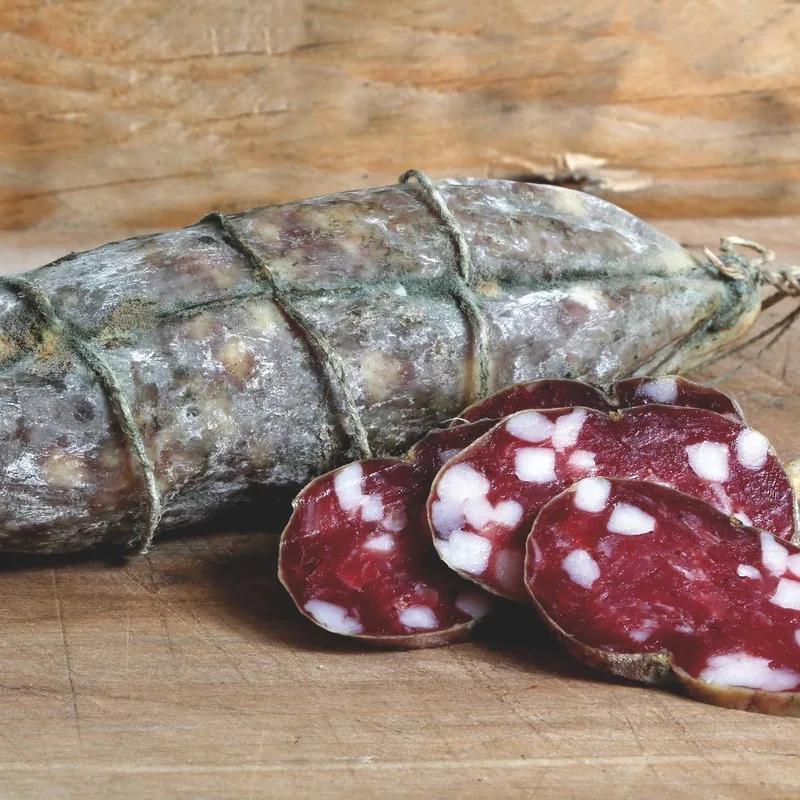
- The string: a good saucisson is first recognised by its natural casing. If you see a metal clip serving as a fastening, with a piece of plastic sticking out, it isn't an artisanal saucisson. So it's best to choose a saucisson tied with string! However, a metal clip may sometimes close certain artisanal dry-cured sausages, given their small size, but you won't see any excess plastic protruding.
- The presence of mould on the surface is a sign of good maturation, you'll find it on artisanal saucissons (unless it has been brushed off), and it's a mark of quality, it's what gives the product all its flavour! The colour of an artisanal saucisson and its bloom varies, and if everything looks uniform, regular, and white, it's probably an industrial saucisson.
- An artisanal saucisson has an irregular shape, as it takes the shape of the natural casing into which it was stuffed.
In short, remember the 3 F's: the string (ficelle), the bloom (fleur), and the shape (forme), to recognise a good artisanal saucisson.