
300 g
€11.90
What is the difference between a dry-cured sausage and a saucisson sec?
Dry-cured sausage origin and production
Which casing is used for dry-cured sausage
Where can you find artisanal dry-cured sausages?
20 products
20 products
300 g
€11.90
250 g
€10.90
250 g
€9.90
250 g
€16.90
250 g
€9.90
200 g
€8.90
210 g
€16.90
120 g
3 or more: €6.50 each
 Nitrite-free
Le Séchoir du Bugey
€9.90
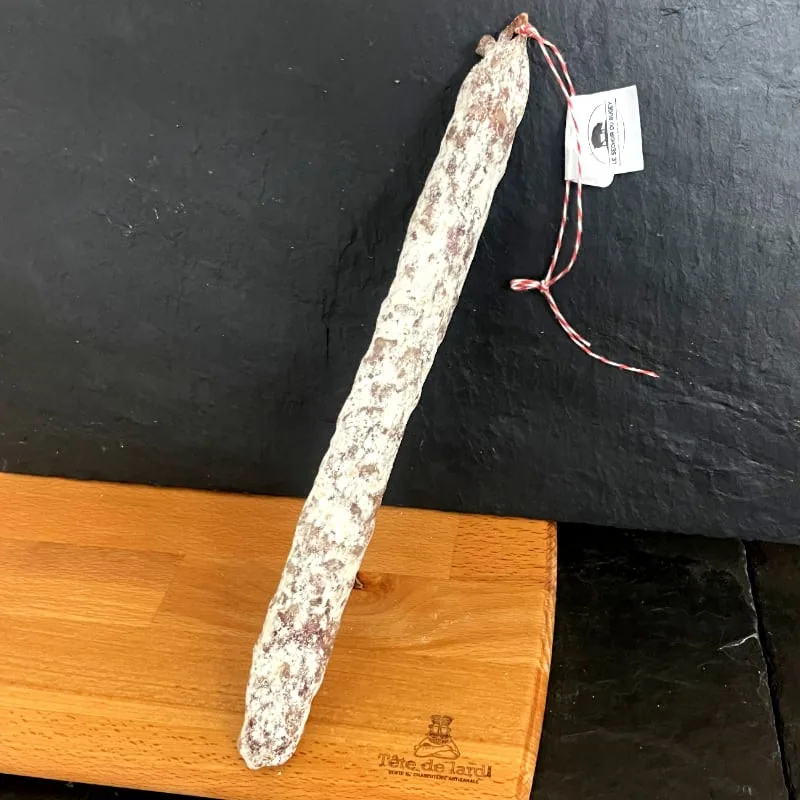
120 g
3 or more: €6.50 each
Nitrite-freeLe Séchoir du Bugey
€9.90
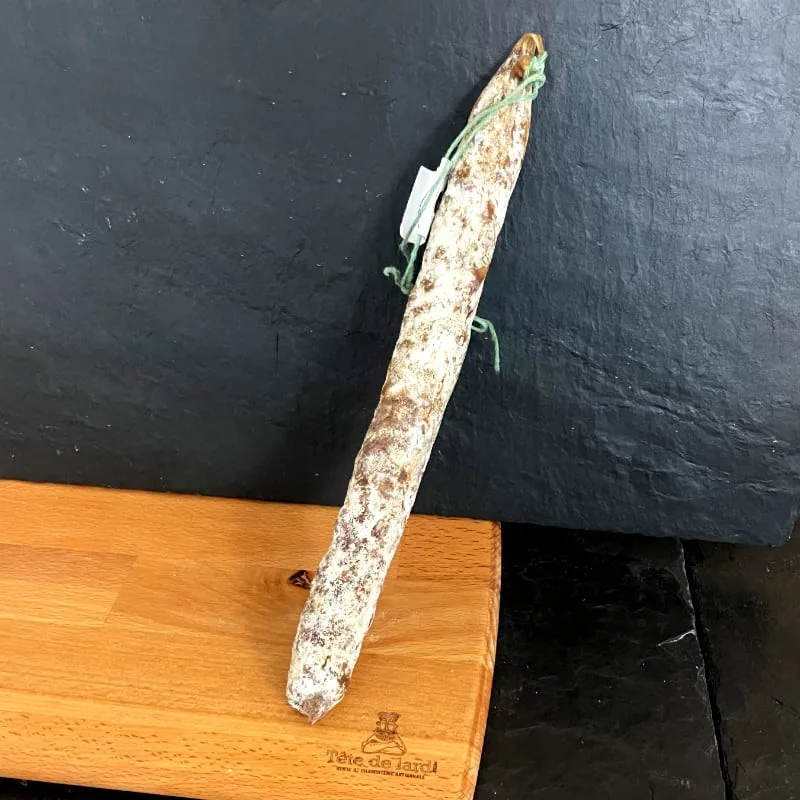
120 g
3 or more: €6.50 each
Nitrite-freeLe Séchoir du Bugey
€9.90
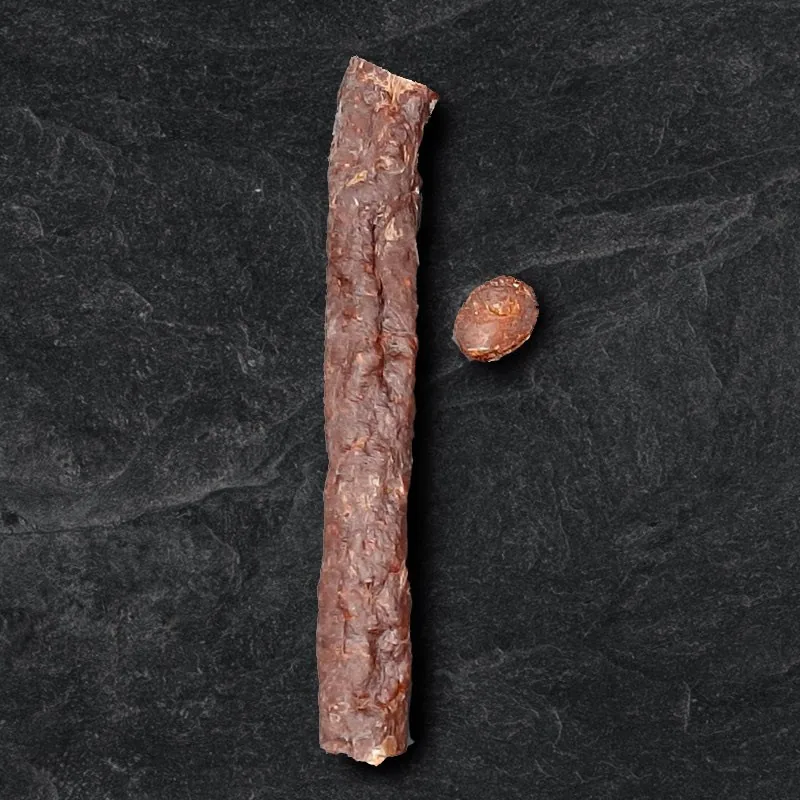
100 g
2 or more: €8.07 each
Nitrite-freeLa Sourbere
€9.50
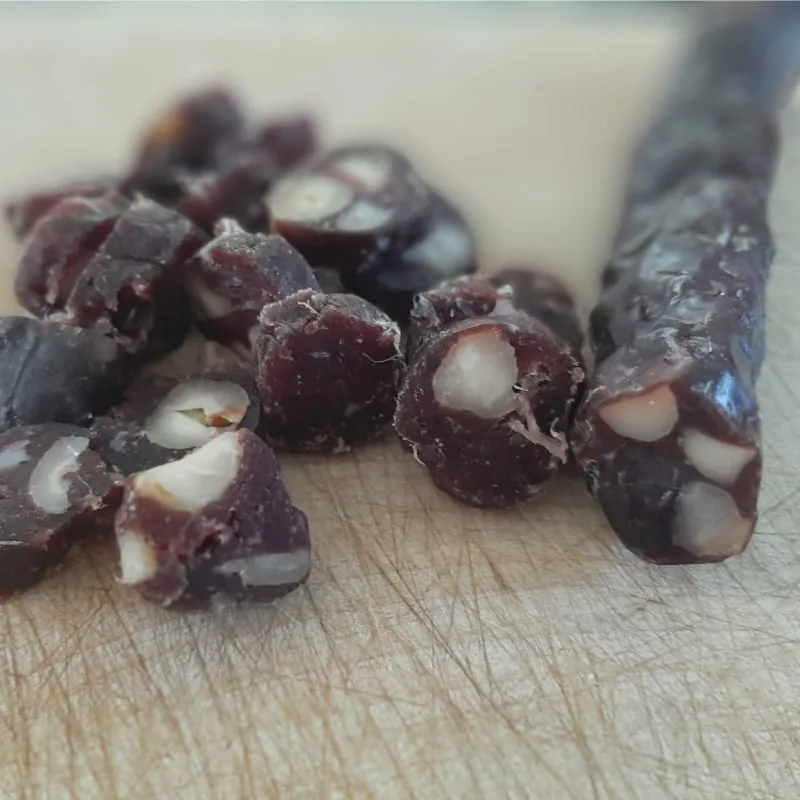
100 g
€9.50
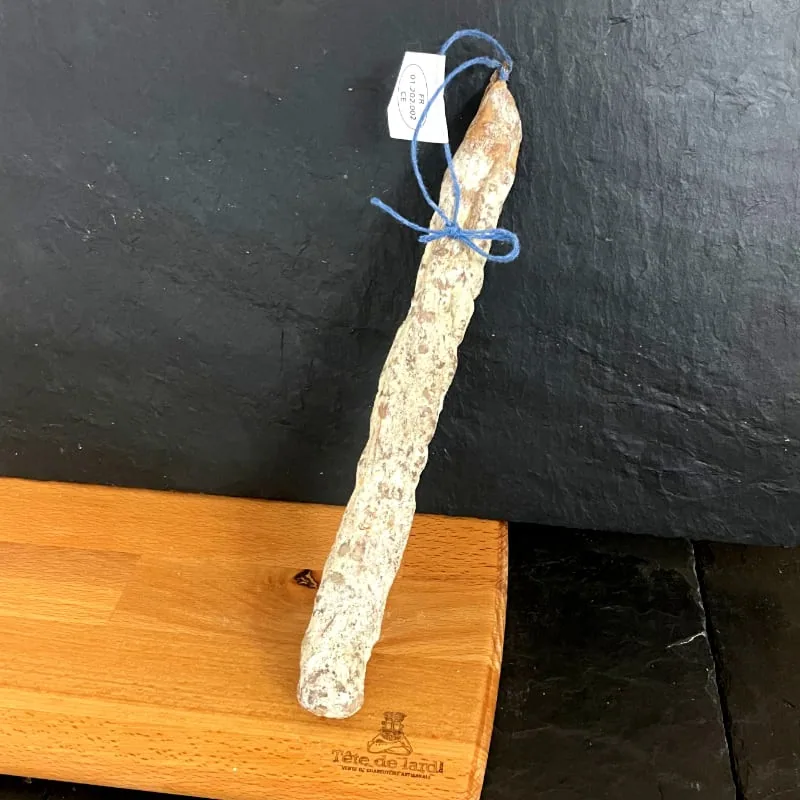
120 g
3 or more: €6.50 each
Nitrite-free Our favourite
Le Séchoir du Bugey
€9.90
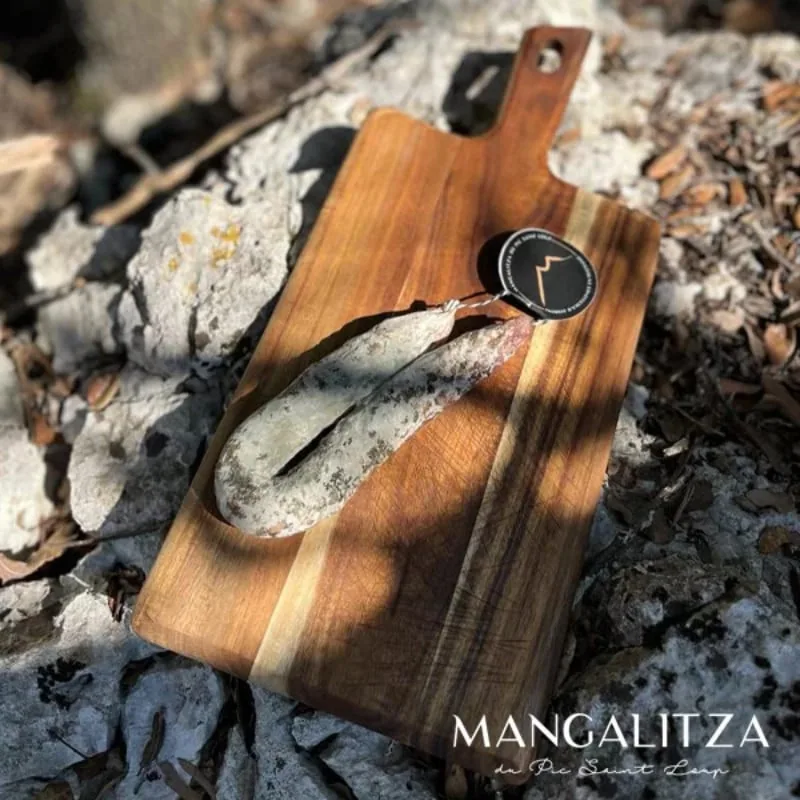
250 g
€16.90
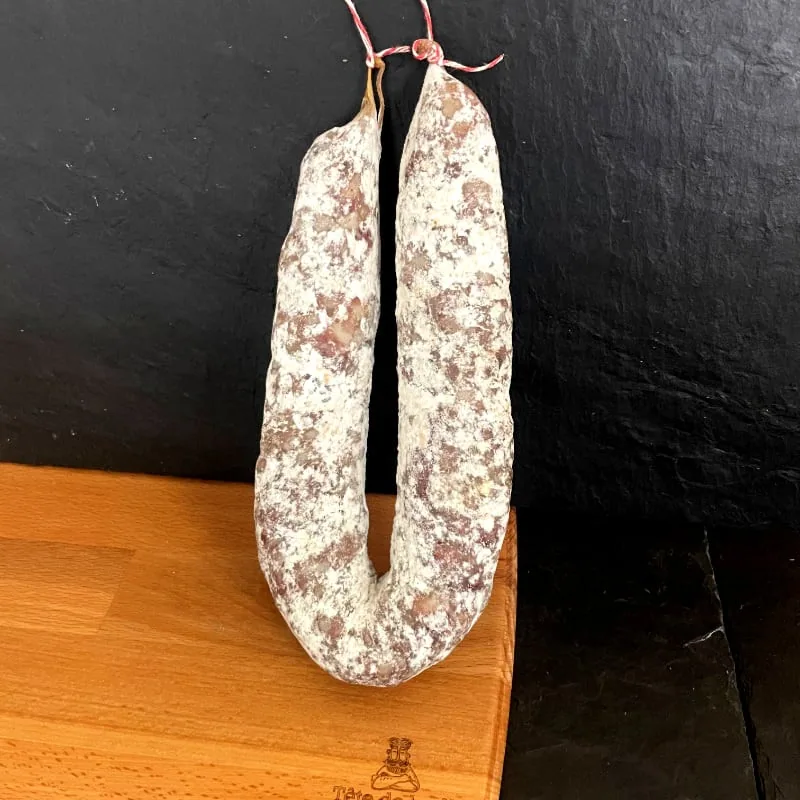
350 g
Nitrite-free Award-winning
Le Séchoir du Bugey
€17.90
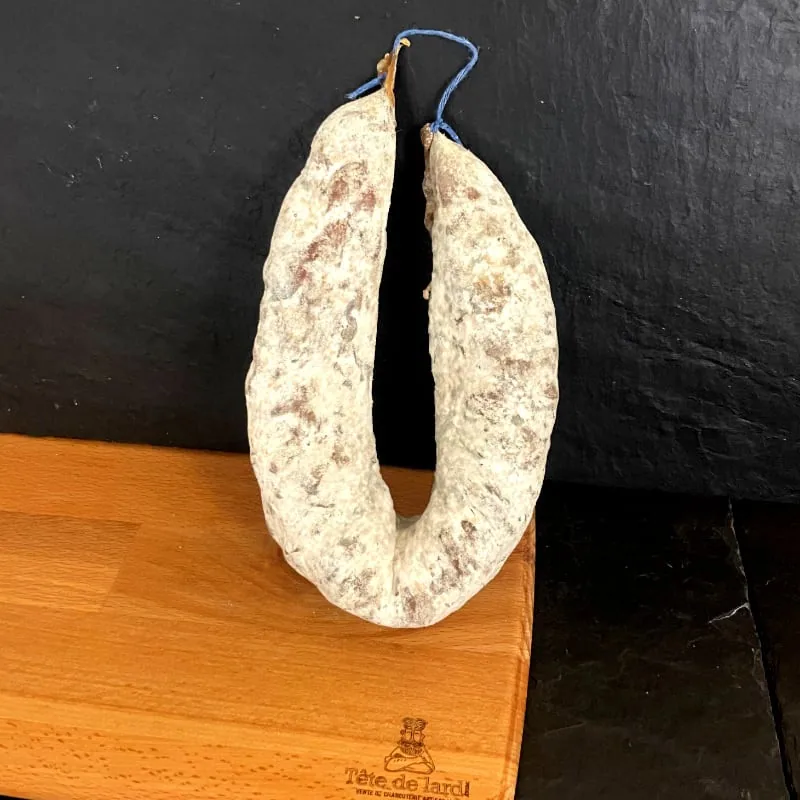
350 g
Nitrite-free Award-winning
Le Séchoir du Bugey
€17.90
100 g
€9.90
210 g
€9.90
230 g
€11.50
300 g
€12.50
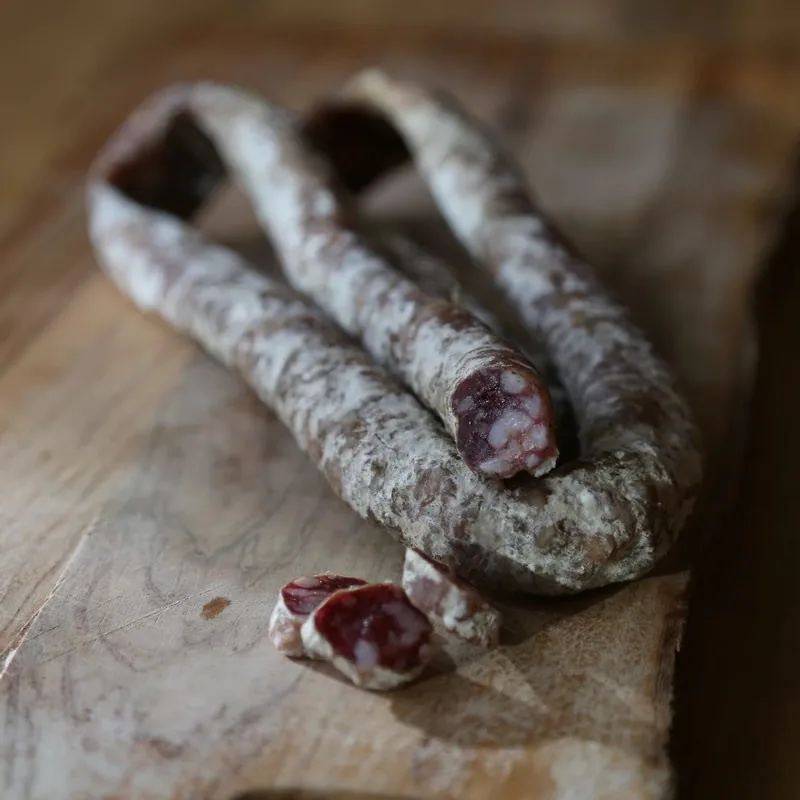
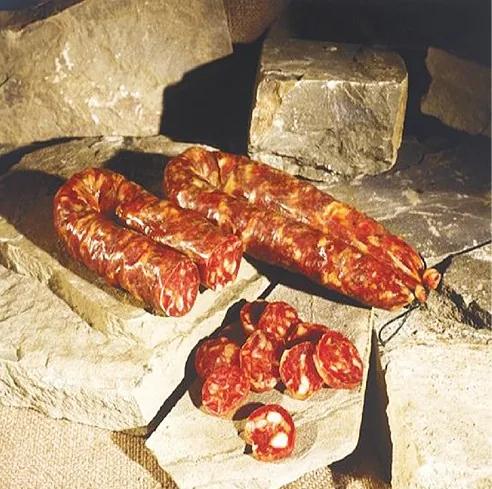
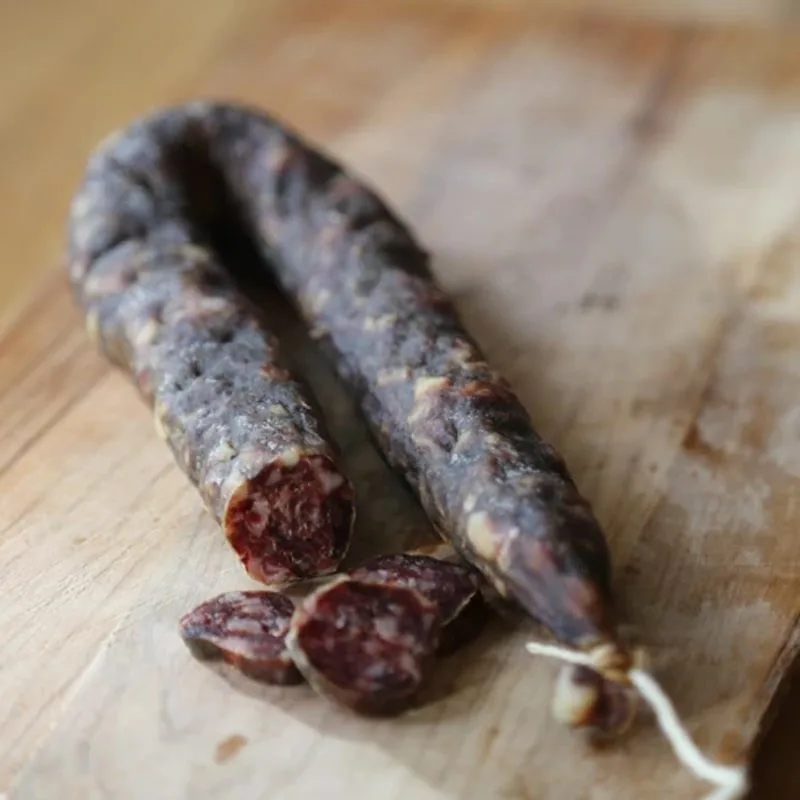
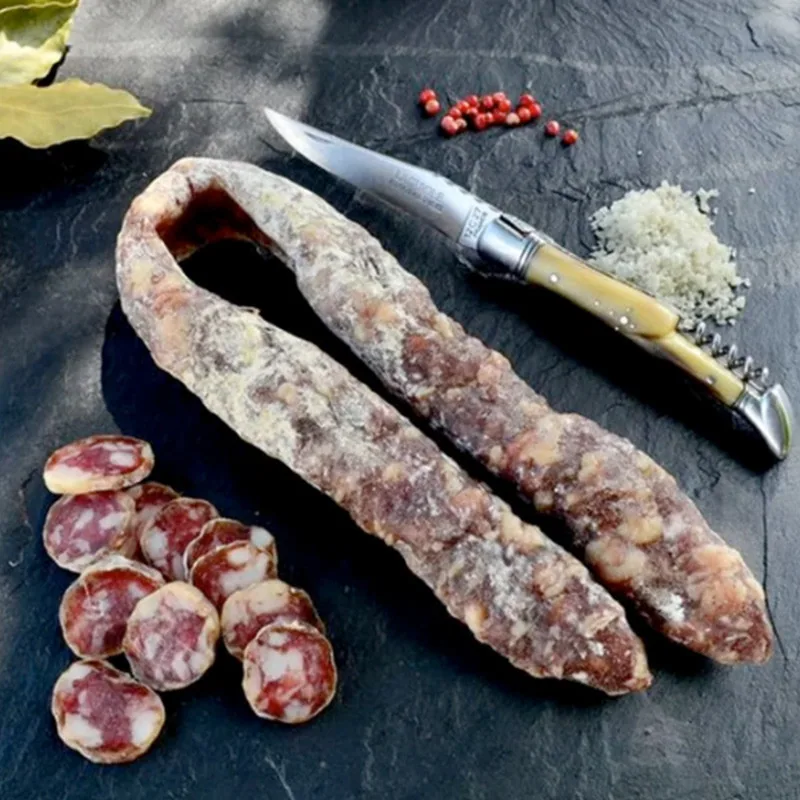
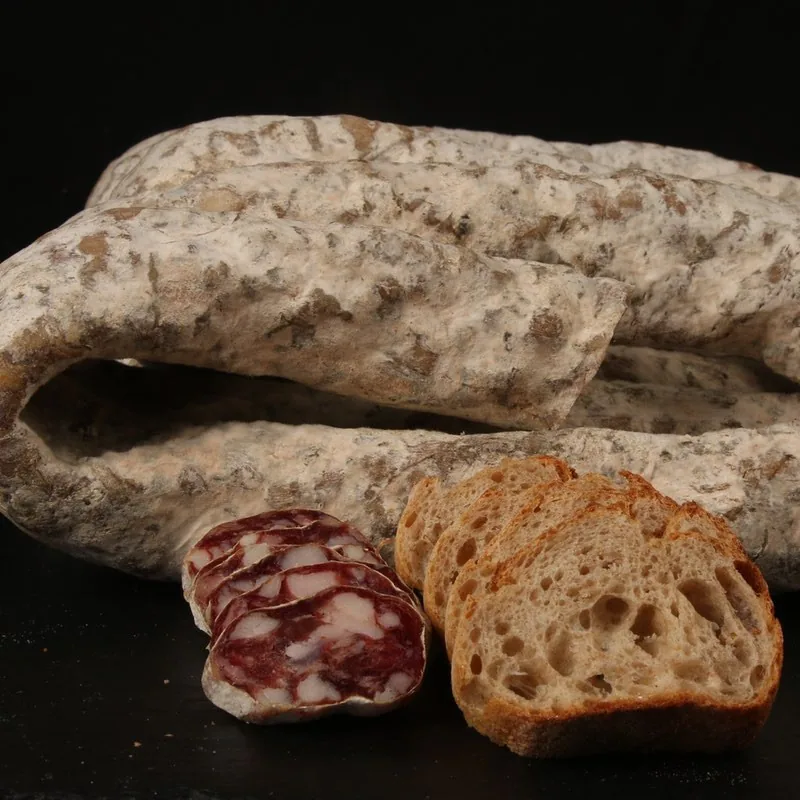
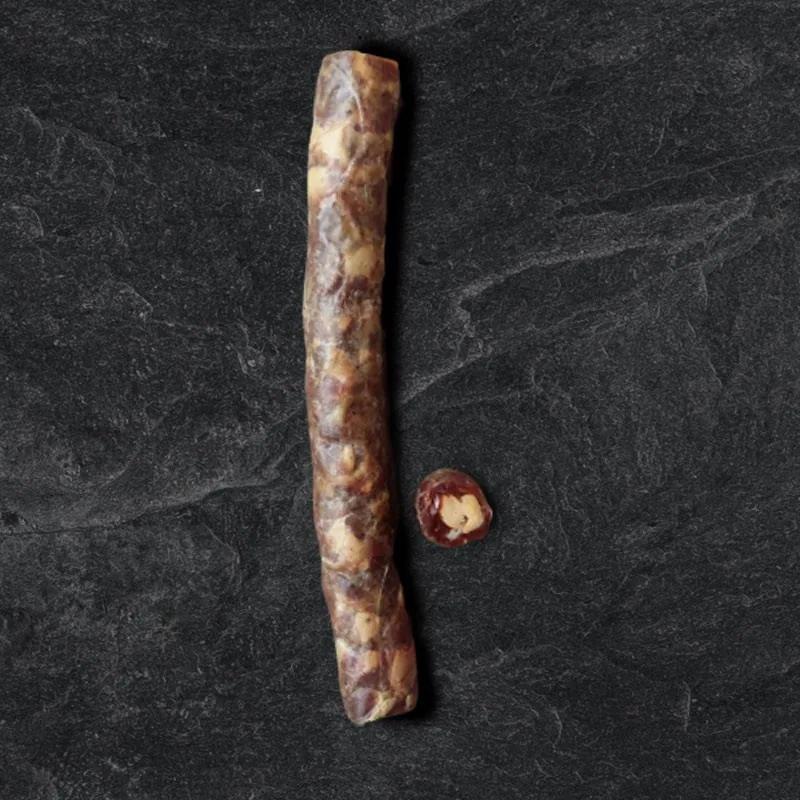
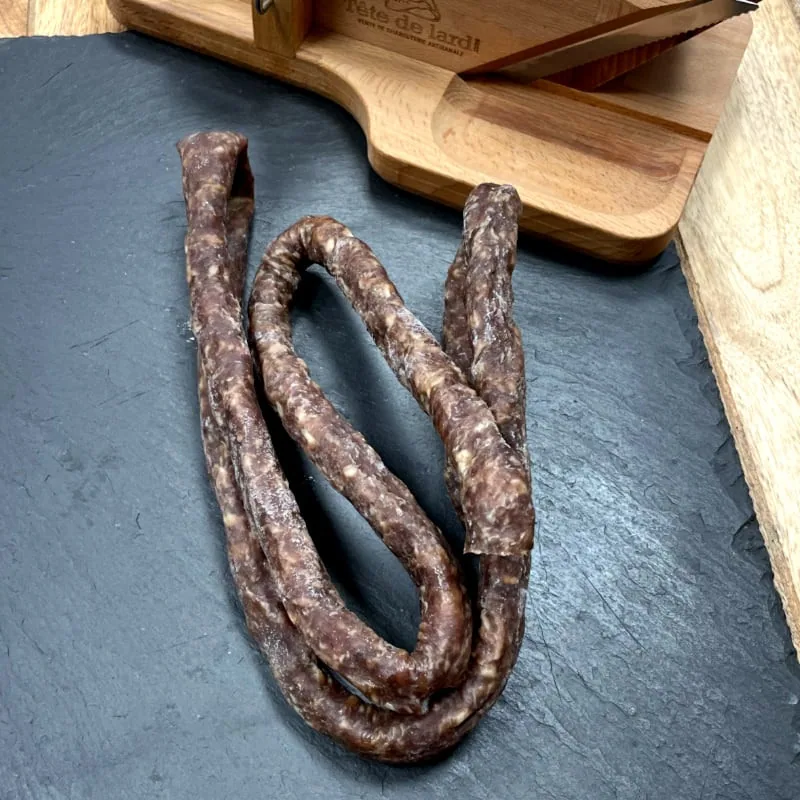
First, you need to understand the difference between a dry sausage and a saucisson. It's quite simple: the saucisson sec is shorter and a little irregular in shape, as it is stuffed into a straight casing, whereas the dry sausage is U-shaped and comes from a finer, longer and curved casing. So, the main difference between dry sausage and saucisson lies in the natural casing it is stuffed into!
The making of dry-cured sausage goes back to Roman times. Indeed, the Romans discovered that by rubbing raw meat with saltpetre, it would keep for longer. In those days, there was no such thing as a refrigerator, and the best way to preserve meat was to salt it, smoke it or dry it. The term "salaison" (curing) thus dates back to this era. Dry-cured sausage is made by hand, and the principles of salting and drying are of great importance. One must let time and nature take their course to determine the quality of the sausage! Just like dry saucisson, the first dry-cured sausages were made back in Roman times. The Romans, keen to preserve meat as there was no refrigeration available, discovered that rubbing meat with saltpetre extended its shelf life! The means of preserving meat were limited in those days, so one would choose to salt it, smoke it, or dry it. This is where the term "salaison" (curing) comes from. In the artisanal tradition, the making of dry-cured sausage is a long and painstaking process. It calls for patience, as well as careful control of the climate in which the sausage is left to mature and then dry. Particular attention is paid to hygrometry, that is, the level of humidity in the surrounding air, which influences the production choices made by our producers. What's more, the drying and maturing times needed for the natural bloom to develop properly, responsible for the sausage's lovely flavour, depend not only on the climate and the choice of meat, but also on the know-how of our artisans.
As explained above, the casing used to make dry-cured sausage is longer and more curved than the one used to stuff a dry saucisson. As with dry saucisson, it is generally a natural pork casing that is chosen for stuffing the dry-cured sausage, more specifically the pork "menu", which has a calibre better suited to making a dry-cured sausage.
Have it delivered within 24 hours with Tête de Lard! We select « small producers », artisans from our regions of France, and all our saucissons secs are crafted with care. Most of the saucissons secs we offer come from our French regions, but, given the demand for charcuterie, we have also chosen to offer you a few products from qualified Spanish and Italian producers, as we believe their charcuterie is well worth the detour! After all, who would refuse to taste the inimitable flavours of Iberian black pork? Choosing Tête de Lard means supporting French craftsmanship and its artisan charcutiers!
 Award-winning