Charcuterie with friends
Italian Charcuterie
Buying Italian charcuterie: which is the best Italian charcuterie?
9 min read· By Rémi Ledu
ITALIAN CHARCUTERIE
How do you choose your Italian charcuterie well?
The history of Italian charcuterie
Buying Italian charcuterie: which is the best Italian charcuterie?
The different Italian hams?
The different types of Italian charcuterie
Trust our know-how when it comes to gastronomy for your buying guide to Italian charcuterie and discover, with great pleasure, a whole range of Italian speciality charcuterie sure to delight you.
How do you choose your Italian charcuterie well?
Fancy treating your tastebuds to quality products that will make all the difference? If so, discover Italian charcuterie products such as ham, saucisson, Italian chorizo, mortadella, pancetta, guanciale, speck, bresaola or even salami! You can put together a delicious charcuterie platter served with country bread and sun-dried tomatoes. Just the thing to delight the biggest food lovers among us. However, before thinking about delicious recipe ideas featuring charcuterie and cheese, you first need to make the right choice when buying Italian charcuterie and Italian cured ham. So, how can you tell, without tasting, which dry-cured ham, black pudding, country terrine and other charcuterie assortment to choose? By following our guide to ham slices and saucissons!
The history of Italian charcuterie
Human beings began consuming charcuterie very early on. Not yet as an aperitif nor as fresh produce in its early days, but rather out of necessity. Good charcuterie was not yet what it is today, but its origins already date back to antiquity. From the moment people began rearing and eating pork as well as beef, they began making charcuterie. However, at that time, no one yet knew that this would become an art. Indeed, it was more a matter of practicality. In the past, unconsumed cuts of meat were preserved in salt and other seasonings to stop them from spoiling. They were left to dry, and this is how the first charcuterie was born.
A little later, the Romans were the first to produce true ham from pork, much like what we can taste today. They knew how to turn it into a precious product, which was at first reserved for feast days and special occasions. It was then during the Barbarian invasions that the diversification of Italian charcuterie began. Dried meat was then used as a substitute food rather than as a precious dish kept for the court. The range of products then began to expand, and the farmers of the time started competing in ingenuity to create new methods of preserving and flavouring meat.
It was not, however, until around the 14th century that what we truly call the “art of charcuterie” made its appearance. The Italian charcutier-caterer of the time was a passionate craftsman of the Renaissance, who loved having the nobles of the court taste his masterpieces… You only need to look at old medieval paintings to see just how present charcuterie was on the tables and lavish banquets of the era. The typical pâté de campagne of Italians at that time was really made for country folk: it was tasty but did not have the refinement of the grand tables' gastronomy.
Finally, around the 1800s, the first gourmet food shops, the first food laboratories, and the first Italian charcutier-caterers made their appearance. They began offering gourmet meats made from artisanal curing.
Buying Italian charcuterie: what is the best Italian charcuterie?
Italian ham, saucisson, mortadella, pancetta, guanciale, speck, bresaola, salami… There are many Italian charcuterie products worth mentioning, and they have made the country's reputation. But which Italian charcuterie is the best known, the most widespread and, above all, the most appreciated? What meat does it come from? Just like Spanish charcuterie and French charcuterie, particularly Alsatian charcuterie, the produce that comes to us from Italy is drawn mainly from pork, beef, as well as horse meat.
Italian charcuterie can be divided into a few categories: cooked charcuterie and raw charcuterie, then stuffed and unstuffed. Among all the Italian charcuterie one comes across, you will find coppa, prosciutto crudo, speck, saindoux, salame and bresaola. All these charcuterie products that have made Italy's reputation come from a specific production process, requiring a particular maturing period and smoking method. This is, in fact, what gives them their pronounced flavours! Among the cooked products, the most popular and best-loved are cotechino, mortadella, prosciutto cotto and zampone.
The different types of Italian ham?
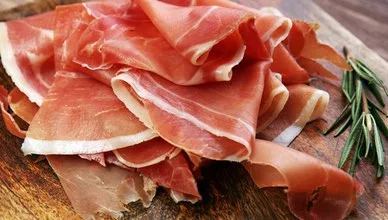
Who says buying Italian charcuterie inevitably says Italian ham! Between cooked ham, thinly sliced cured ham, plain boiled ham, smoked ham and other regional Italian specialities, are you spoilt for choice? Discover and order on our pages the finest Italian hams you'll find anywhere on the market!
- Parma ham
It would be impossible to mention Italian hams without first talking about Parma ham! Indeed, it represents Italian charcuterie in its purest form. Its ageing can last up to 3 years, and it is most often sold ready-sliced. - Bassett Reggiani Ham
Bassett ham is a speciality that comes to us from a small town in the pre-Apennine Lazio region. This deliciously seasoned ham benefits from excellent ventilation and a dry climate, with no temperature variations during its ageing and maturing. - Villa Caviciana Mangalitza Ham
This delicious ham comes from the meat of the woolly Mangalitza pigs, found on the border between Lazio and Tuscany at Villa Caviciana. These pigs are raised free-range and fed on natural elements, allowing them to yield excellent hams with relatively low cholesterol. - Ca Lumaco Nero Romagne Ham
Mora Romagnola pigs are a tender breed left to graze freely on farms where oak trees, grasses and chestnut trees grow in abundance, in the Apennines between Modena and Bologna. The result is well worth it: hams of pronounced refinement that we love to pair with a good red wine or plates of fresh pasta. - Masseria dei Trianelli Nero Caserta Ham
Usually enjoyed in thin slices, the Casertana is a pig renowned for producing lard, along with meat that is as tender as it is flavoursome. - Nero Nebrodi Ham
These are small hams that come from pigs raised among the Nebrodi pastures. They are naturally fed on cereals, pulses, acorns and chestnuts. This is a highly reputed Iberian-style ham that discerning palates will know how to appreciate at its true worth! - Cinta Senese Ham
This is a true delight that comes straight to us from San Miniato, near Pisa, home to many master charcutiers.
The list of delicious Italian hams doesn't end there. Indeed, every region or province of Italy has its own history and its own typical hams! Do treat yourself to this culinary art in its own right.
The different types of Italian charcuterie
Italian charcuterie stands out from what can be found around the world, both for its unique flavour and for the quality of its production. Without further ado, here are the different Italian charcuterie you may come across when looking to buy Italian charcuterie:
- Parma ham
This is a delicious raw ham, PDO-certified since 1996, and it has existed for nearly 2000 years! The production of this traditional ham is strictly regulated and requires know-how passed down from generation to generation. Such quality meat comes from pig farming using specific breeds. Parma is a particularly rich and generous land. The pigs used to make this ham are fed on cereals as well as Parma whey.
To produce this Parma ham, the fresh pork legs are first salted, before being left to mature for 12 to 36 months. Sometimes the maturing period exceeds this timeframe. Then comes the drying stage, resulting in a 100% natural product with no additives whatsoever!
You will particularly appreciate this exquisite ham, pink and marbled, with a perfectly balanced texture. Indeed, Parma ham is at once firm and tender, offering an extra blend of salty, sweet, sour and bitter flavours. It is this exquisite taste that undoubtedly makes it the most widely consumed Italian charcuterie in the world!
You simply cannot imagine a charcuterie board without a few fine slices of Parma ham. To enjoy it at its best, pair it with a slice of toasted bread spread with good-quality butter. Italians enjoy raw ham with a good slice of fresh melon or a seasonal fruit of your choice. - Bresaola
If you love charcuterie made from beef, you will love bresaola. This cut of meat is first marinated, then dried, before being sold in a cylindrical form. - Culatello
Culatello is the finest cut of the ham. In fact, it is a charcuterie made by taking a piece from the very heart of the ham, from the most tender and succulent part. You will particularly appreciate its softness and refinement! - San Daniele ham
After salting, San Daniele ham is left to mature for over 12 months before it is ready to be enjoyed. - Zampone
Zampone is a charcuterie made from minced pork, seasoned with spices to give it its intense flavour. You can find it on the market either cooked or pre-cooked. - Mortadella
Who has never tasted good mortadella? If that's you, you need to make up for lost time right away, because you've been missing out! It is a cylinder made from finely minced pork, sometimes studded – or not – with cubes of fat. Depending on the traditional recipe followed for its production, mortadella can be seasoned and spiced in various ways, with pepper, garlic, pink peppercorns, or even a few slices of pistachio.
Bologna's mortadella has existed since the 16th century and has since diversified into all sorts of cooked sausages and charcuterie made from minced meat. Mortadella is usually pale pink or slightly orange in colour. You can find all sorts, to suit every taste, from peppery and sweet notes to more intense, spicy flavours. An essential part of Italian gastronomy, mortadella can be enjoyed on its own or as a topping on a pizza with extra virgin olive oil. - Coppa
This is a raw charcuterie made from pork that is pre-salted, peppered and then marinated in wine. The coppa is wrapped in a thin casing skin, much like sausages. It is then left to smoke, then dry-cured for around 8 weeks.
Another curing method, from northern Italy, involves making coppa from pork loin that has first been boned and salted, then dried, before spices are added. These lean and fatty cuts of meat are then mixed together and salted, placed into a tied casing and aged for 3 to 6 months. You can enjoy it raw as a starter or with drinks, paired with the spirit of your choice. - Italian sausage or salamella
Italian sausage is a charcuterie that comes in more than a dozen varieties. Some are made from beef, others from pork or poultry. Salamella, for example, is a lean, dry-cured saucisson, distinguished by its striking red colour and exquisite flavour!