Ham, and how good it is!
Dry-cured ham
Dry-cured ham, or country ham, is the name we all know well for referring, in charcuterie, to an animal's leg intended for consumption. Most of the time, ham comes from…
9 min read· By Rémi Ledu
Dry-cured ham
What is dry-cured ham?
How should you enjoy dry-cured ham?
Is dry-cured ham good for your health?
What is dry-cured ham?
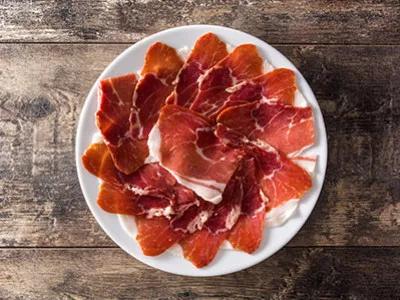
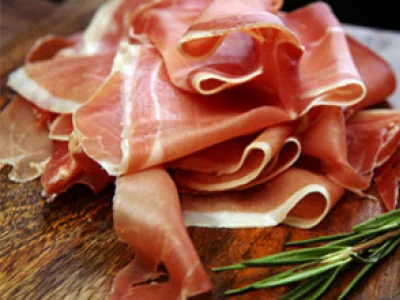
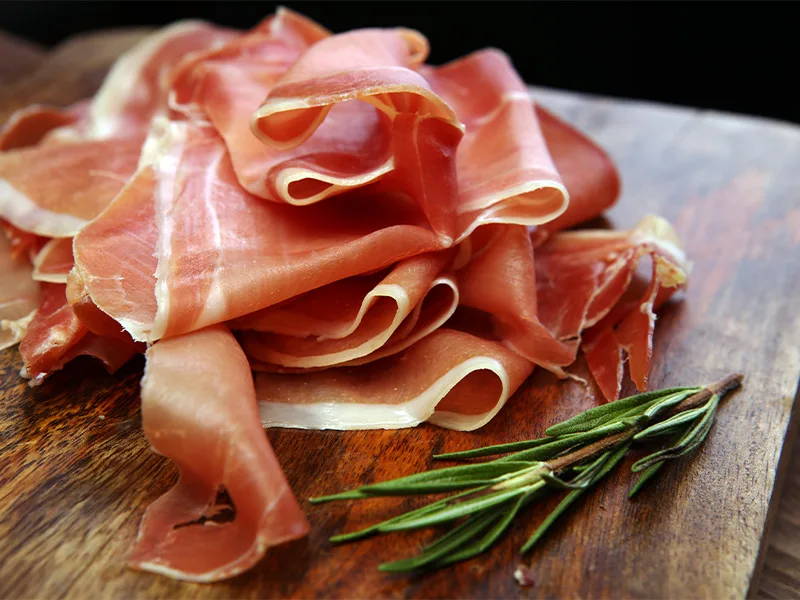
Dry-cured ham, or jambon de pays, is the name you're likely familiar with when it comes to describing, in charcuterie, the leg of an animal intended for eating. Most of the time, ham comes from pork. But nowadays, you can also find ham from other animals, such as game, or turkey.
How is dry-cured ham made?
A dry-cured ham is made in 3 stages:
- Salting / Maturing
- Drying
- Ageing
As you may already know, salt is the key to making ham. It plays a major role in preserving the ham. Indeed, the ham is matured in salt, which allows moisture to be drawn out of the cells, before the ham is rinsed and moved on to drying.
Depending on the amount of salt added, the maturing time (this varies according to the size of the ham, a larger ham will need more maturing time, roughly 1 day per kilo), the climate of the region, the breed of pig, the drying time, the ageing, and many other factors, you will end up with different types of ham.
This is why every region has its own speciality! To obtain what is known as a “dry-cured” ham, the drying time is around 60 days. The ham is hung up high, which allows the salt to penetrate more deeply, moisture to be released further, and the meat to firm up. After drying comes ageing, in the open air, which allows bacteria and yeasts to develop and give the ham all its flavour and texture.
What is the difference between dry-cured ham and cured ham?
Don't worry, it's common to confuse jambon cru and dry-cured ham! But they're not quite the same ham. Indeed, the difference between a jambon cru and a dry-cured ham lies in the drying time. As mentioned earlier, the drying time for a jambon cru is around 60 days. The resulting meat is therefore softer, more tender, but also less salty, since the salt will have had less time to penetrate during the drying phase.
A dry-cured ham, on the other hand, is dried for longer, at least 130 days. This is why it's often more expensive: the longer the drying time, the higher the price of the ham tends to be, as a dry-cured ham is considered superior to jambon cru, having had more time to reveal all its flavours. Consequently, making a dry-cured ham is more demanding than making a jambon cru. Of course, the price also depends on the breed of the animal and the ageing time.
What's the difference between cooked ham and jambon cru?
Even though they're not particularly confused with one another, it's worth telling you about the difference in how cooked ham and jambon cru are made. Because cooked ham is one of the French people's favourite products!
Cooked ham is made quite differently from jambon cru. First, it's deboned and any excess fat, sinew, cartilage and other unwanted bits are removed. It's then salted, often brined with a salting mixture injected in so that the meat takes up the salt well and keeps properly. Next comes the kneading, to help the brine spread through the muscle. Then, moulding, which gives the ham its shape back before cooking. Finally, it's steamed, or cooked in a cloth dipped in a broth, as tradition dictates!
How should you enjoy jambon cru?
Which jambon cru should you choose?
Jambon cru can be enjoyed in many different ways, and of course you can savour it plain, as a good ham speaks for itself, in place of your usual cut of meat! But it's also much loved in a whole host of recipes, and we'll help you choose the right jambon cru depending on what you fancy.
Which raw ham for melon?
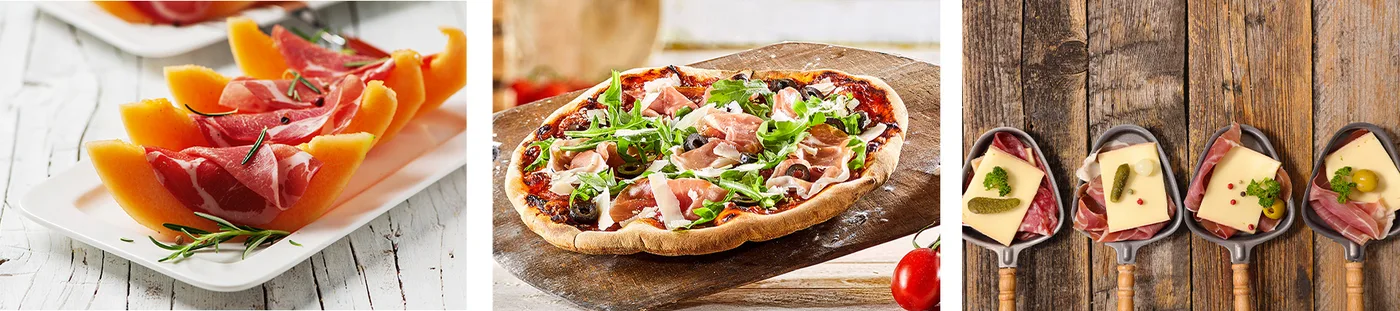
When we think of melon, we think of summer, of sunshine… So why not choose a raw ham with the sun-drenched flavours of the south of France? Jambon de Bayonne, lightly salted, has a melt-in-the-mouth texture and pairs beautifully with the freshness of melon. Sliced very thinly, it's even better!
Which raw ham for pizza?
Pizza, as we all know, is a speciality that comes to us from Italy. And to honour tradition and make a truly authentic Italian pizza, we favour Parma ham! This delicious Italian raw ham with its subtle flavour goes wonderfully with rocket, or with tomatoes and mozzarella, on your Parma ham pizza.
To preserve the flavours and texture of this delightful Italian ham, add it to your pizza at the very last moment.
Which raw ham for raclette?
Raclette is the dish for gatherings with friends or family in winter (or all year round, for the truly greedy among us)! It comes to us from Switzerland and is a classic mountain recipe.
So, we'd recommend turning to a traditional ham from mountain regions, such as a raw ham from Savoie, to accompany your raclette in the very best way.
How can you tell the quality of raw ham?
We care deeply about promoting responsible consumption and shining a light on artisans who uphold these values. First and foremost, the animal's welfare throughout its life matters greatly to us. A pig needs to be raised outdoors and fed a natural diet! This shows all the more in the quality of the meat, whether in terms of diet or stress levels.
We are also rigorous in our choice of producers and favour products free from harmful substances and limited, where possible, in additives and preservatives. This way, you will find quality-guaranteed products on our website. Traceability is important for understanding the quality of the products we consume. You can therefore find out about the producers and their farms in complete transparency, as well as about the composition of the products.
Craftsmanship comes first, so the cured hams you will find here are not the result of industrial production or intensive farming, which is also a guarantee of quality. Prices are set by our producers, mostly French. We also work with Spanish and Italian producers but apply the same selection criteria.
We choose them simply for the quality of their products, as they offer us inimitable charcuterie specialities not to be missed if you are an enthusiast! We are therefore able to offer you Iberian ham or indeed high-quality artisanal Italian ham.
To find out more about rearing conditions, pig breeds, ageing and other factors involved in making cured hams, this information is available on the labels, or for example on the coloured tags for Iberian hams, as we explained in our article on Cebo de Campo ham.
How to store cured ham?
The storage conditions for cured ham will differ slightly depending on how it is packaged, but in all cases, it should be kept away from heat and light.
Whole cured ham:
If you have a whole cured ham, you should store it in a dry, cool place, such as a cellar or pantry, away from light, that maintains a constant temperature of around 15 degrees. This helps prevent the formation of mould or attracting insects. It will keep for several months this way.
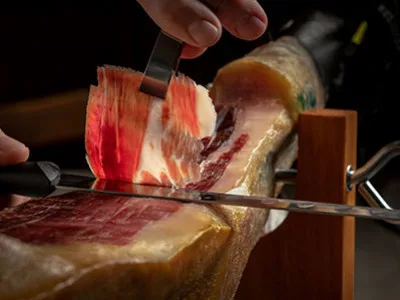
Always cut the first slice before eating your ham, then place it back on the ham once you’ve finished slicing to prevent it from drying out. You can also place cling film over the cut section. You should also cover the ham with a clean cloth, such as a tea towel, to help preserve it.
Vacuum-packed dry-cured ham:
If you haven’t yet opened your vacuum-packed dry-cured ham, you can keep it this way for more than 6 months. Just be careful not to expose it to heat, and make sure to keep the packaging intact!
The slightest hole compromises the whole point of vacuum packaging, letting in air and moisture. Before eating it for the first time, you should open the packaging a few hours beforehand, the day before, or even 2 days before, to let the ham breathe and reveal all its flavours.
Now that your vacuum-packed dry-cured ham has been opened, you should wrap it in a clean, dry cloth, or in clear cling film, and you can then keep it in the fridge for 3 to 4 months.
Sliced dry-cured ham:
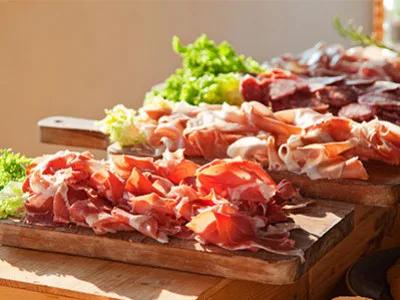
Unlike whole hams, sliced dry-cured ham keeps for a shorter time, as the slices tend to dry out quickly. This is why you should eat it sooner rather than later.
Ideally, if you’re able to vacuum-pack the slices, you can keep them this way for several weeks in the fridge.
Otherwise, wrap them carefully in cling film, letting in as little air as possible, but eat them within the following 3 to 4 days.
Is dry-cured ham good for you?

What are the benefits of dry-cured ham?
A good-quality dry-cured ham is rich in good-quality protein. This is an essential macronutrient for cell and muscle development, and for keeping our bodies in good working order. Per 100 grams of dry-cured ham, you’ll find around 200kcal, and a little over 20g of protein!
Low in calories, it suits those who are losing weight, reducing body fat, or watching their cholesterol, provided they limit the white fat on the slice of dry-cured ham. The fatty acids found in dry-cured ham are unsaturated, just like those found in extra virgin olive oil. This makes it a “good fat”, helping to limit bad cholesterol and cardiovascular risks.
Dry-cured ham is also rich in B vitamins, the very ones that keep us in good shape and give us a boost of energy! It is also a formidable ally against deficiencies, as it is rich in iron, sodium, phosphorus, potassium and selenium, minerals essential to our wellbeing. Dry-cured ham also contains zinc, which helps strengthen intellectual and muscular capacities, and is in fact very good for breastfeeding, as it supports the infant’s healthy growth.
Can you eat dry-cured ham while pregnant?
During pregnancy, eating any raw meat is strongly discouraged, as raw meat carries a higher risk of contamination by certain bacteria. While some bacteria may not cause serious illness in an adult, they can be far riskier for the baby, so it is best to avoid dry-cured ham during pregnancy as a precaution.