Ham, and how good it is!
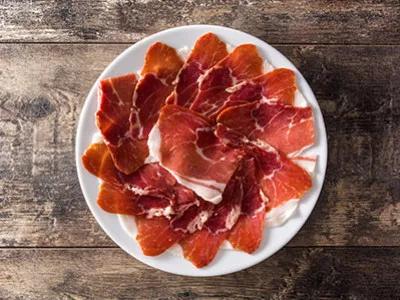
Iberian Cebo de Campo ham
What are the different varieties of Iberian charcuterie?
4 min read· By Rémi Ledu
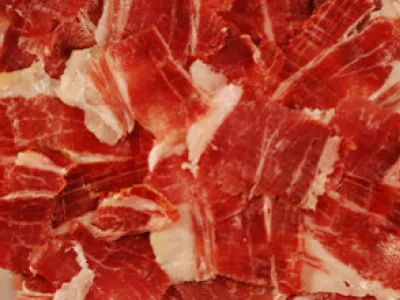
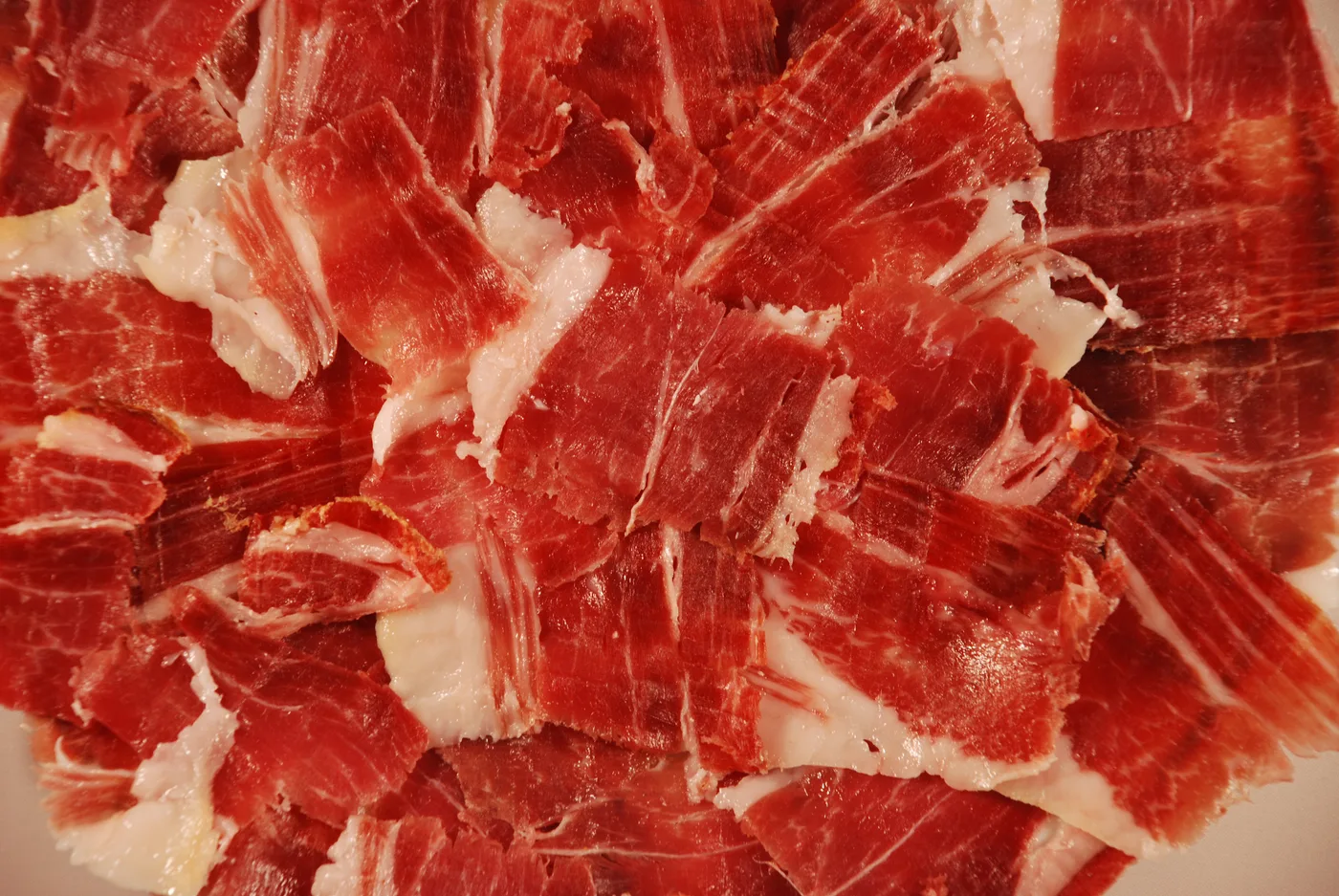
Iberian Cebo de Campo ham - jamón ibérico Cebo de campo
What certifies the ibérico designation?
How are Iberian black pigs reared?
What is ageing and how do you know its duration?
What are the different varieties of Iberian charcuterie?
What identifications exist for Iberian charcuterie?
How is jamón ibérico Cebo de Campo obtained?
What certifies the ibérico designation?
The pigs behind Cebo de Campo ham must be at least 50% Iberian breed. Iberian pigs, found only in Spain and Portugal, are recognisable by their very dark, almost black coat. What sets these animals apart is their ability to store fat within the muscle, which gives Iberian charcuterie its exceptional texture. For Iberian charcuterie, black pigs are crossed with Duroc pigs, owing to the similarity in the taste and texture of their meat.
How are Iberian black pigs reared?
In west-central Spain, in the province of Salamanca, the Extremadura region and the north of Andalusia, Iberian pigs are reared and fattened in different ways. For our Cebo de Campo ham, the pigs are reared in semi-freedom in the Dehesa (pastureland), and are fed on legumes and cereals. Unlike Bellota ham, Cebo de Campo comes from a pig that has eaten little or no acorns.
What is ageing and how do you know its duration?
After being separated from the rest of the body, the black pork's hind leg is left to mature for 2 months in salt. Then, once washed, it is left to dry for a minimum of 8 months. It is only after this that the ageing of the ham takes place. The aims are, among other things, to give the ham a clean appearance, to trim away excess skin and fat with a knife, and to identify any potential imperfections or wounds that could be a source of contamination. Ageing takes place in a natural cellar for a minimum of 730 days. To indicate the ageing time of the ham, a MAPA seal is stamped in ink onto the ham, showing the start date of the piece's ageing process.
How can you tell Cebo de Campo ham apart from other Iberian charcuterie?
What are the different varieties of Iberian charcuterie?
We distinguish 4 types of Iberian ham:
- "Cebo" ham: This comes from pigs that are at least 50% Iberian breed. Unlike our Cebo de Campo ham, these pigs are not raised freely outdoors. They are fed exclusively on cereals, legumes and fodder. This is the least high-quality of the Iberian ham varieties.
- "Cebo de Campo" ham: As explained above, this comes from pigs that are at least 50% Iberian breed. They are raised outdoors in the Dehesa and fed on cereals, legumes, fodder and sometimes acorns. It's a good compromise for enjoying a high-quality artisanal charcuterie without paying the price of a 100% Bellota, also known as "Pata Negra".
- “Bellota” ham: Always at least 50% Iberian breed, Bellota ham comes from pigs raised outdoors and set loose in certified oak forests during the Montanera (between October and January), so that they can feed exclusively on acorns, or “bellota”. The Montanera is the final fattening stage for black pigs. This is why Bellota ham has a nutty flavour and a more intense fat than the hams mentioned above.
- 100% Bellota ham, or “Pata Negra”: Raised in the same way as Bellota ham, these pigs are 100% Iberian and are therefore not the result of crossbreeding. Fattier, this ham is known to be the finest in the world. It represents the very top of the range in Iberian charcuterie. It is the only ham that may be called “Pata Negra”, so do take care, as some hams are not always labelled accurately.
What markings identify Iberian charcuterie?
More than just a legal requirement, the tamper-proof seals and labels on Iberian charcuterie help us understand the quality of the ham we are enjoying. There are four different colours:
- White: For “Cebo” ham
- Green: For “Cebo de Campo” ham
- Red: For “Bellota” ham
- Black: For 100% Bellota, or “Pata Negra”, ham
What's more, the paper labels give us more detailed information about the piece we are eating; they show:
- The type of cut, paleta (shoulder) or jamón (hind leg)
- The percentage of Iberian breed
- The pig's diet (Cebo, Cebo de Campo, Bellota)
- The name of the company certifying the piece
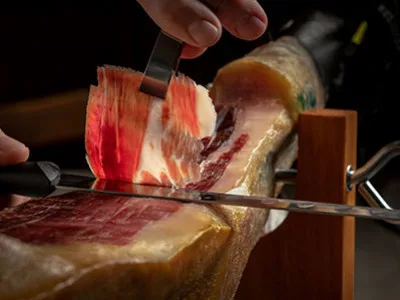
Tip: Open your ham's pouch in advance, slice it thinly and enjoy your Iberian charcuterie at room temperature. We now wish you a wonderful tasting!