Ham, and how good it is!
Spanish Ham
Spain is renowned for its country hams, Spanish charcuterie is very rich, very delicious, and admired by gastronomes the world over. There are dozens of varieties, and it can even be tricky to find your way around them…
6 min read· By Rémi Ledu
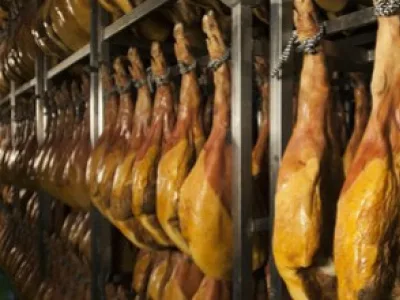
Spanish Ham!
Spain, Serrano Ham, Ibérico ham, a story steeped in tradition!
Jambon Serrano
Jamón ibérico
Spain is renowned for its country hams, Spanish charcuterie is very rich, very delicious, and admired by gastronomes the world over. There are dozens of varieties, and it can even be tricky to find your way around them.
To choose your ham properly, you first need to know the basics. There are two main families of pigs, giving rise to two distinct families of ham: Serrano and Ibérico.
Serrano ham
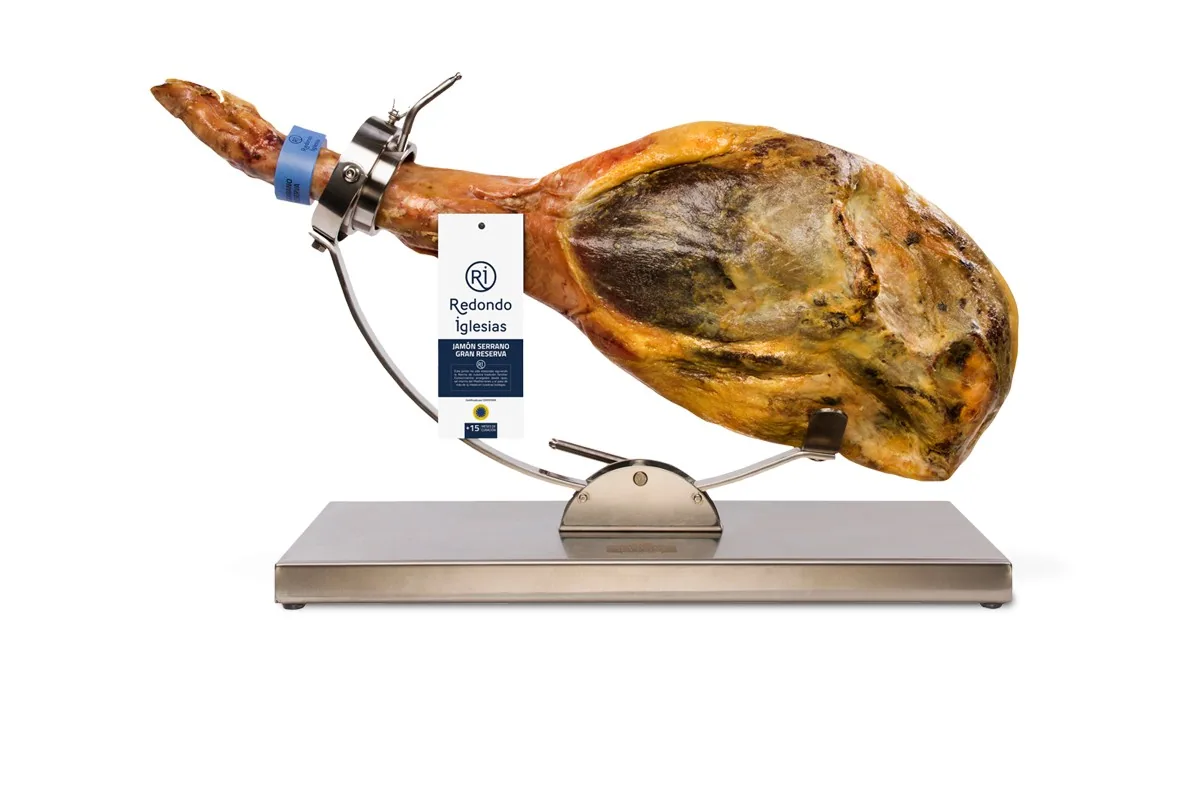
Serrano ham means mountain ham. It is made from pink pigs, the most common breed of pig nowadays.
It is a reliable staple of Spanish gastronomy, renowned for its excellent quality.
The animals are reared in the mountains, and the entire process of making the ham, including cutting, drying and maturing, also takes place in the mountains.
Within the Serrano ham family, there are three categories:
- Serrano Consorcio. This corresponds to top-quality Serrano hams. It must be aged for a minimum of 36 weeks. Its quality is guaranteed by the Consorcio Del Jamón Serrano Español. This is a voluntary association of Spanish companies that has been carrying out its mission since the 1990s. It brings together the most important companies in the Spanish meat sector. This group of leading producers monitors product quality to guarantee consumers, both in Spain and around the world, a top-quality Serrano ham, made according to the finest traditional standards.
- L'appellation d'origine Teruel. Cette reconnaissance n'est accessible que pour les jambons serrano élaborés dans la province de Teruel en Aragon. C'est un signe de garantie depuis 1983. Les règles sont strictes, le jambon doit être obtenu à partir d'animaux nés, élevés, sélectionnés et abattus dans la province de Teruel. Le territoire sélectionné se trouve au Nord-Est du pays à une altitude moyenne de 800m. Les jambons acquièrent une particularité gustative due au climat de cette zone unique. À la fois continental et méditerranéen, les hivers longs et froids rendent les jambons robustes. C'est un lieu idéal pour le processus naturel d'élaboration du jambon.
- L'appellation d'origine Trevélez. Cette garantie protège les jambons serrano séchés dans le village de Trevélez et dans les villages limitrophes, situés au sud de la Sierra Nevada. L'histoire de cette appellation remonte à 1862 lors du concours national des produits alimentaires. Le jambon de Trevélez le remportera largement, il obtient donc comme récompense de la Reine Isabel II l'estampillage du jambon par le cachet royal. Ces jambons suivent également des règles. Ils doivent être issus de porc de race Landrace, Duroc-Jersey et Large-white. Les croisements entre ces trois races sont également autorisés. L'affinage des jambons, lui, n'est autorisé que dans les huit municipalités de la province de l'Alpujarra, dans des séchoirs à plus de 1200 mètres d'altitude. L'affinage dure en général de 14 à 24 mois de manière traditionnelle. L'affinage démarre lors des mois les plus froids pour obtenir la maturation lors des mois les plus chauds. Ce processus de fabrication donne un jambon délicat, mais ferme, peu salé, à la graisse fondante, un produit très agréable.
Les jambons ibériques
After the Serrano hams, we shall take a closer look at the family of Iberian hams. These products, which are woven into the country’s gastronomy and have delighted its people for generations, owe their renown to their producers, but also to a rather particular breed of pig. It is this breed that gave its name to these exceptional hams. Indeed, this pig is distinguished by its black colouring. It is a species unique in the world: this animal has the ability to infiltrate fat into the muscle, which makes its meat fattier and therefore of higher quality. Depending on the type of ham being sought, the pigs will be more or less “pure”. The minimum, however, must remain 50% Iberian.
These animals are reared in a rather particular way. For months, their growth, their diet and their behaviour are closely monitored, and then comes the Montanera. This is a five-month-long process, from October to March, during which the pigs fatten up. Their only activities are sleeping and eating. Their day consists of walking to find their food, which they feast on in abundance at the foot of the oak trees. This process takes place in the dehesas, where the concentration of holm oaks is at its greatest. The exceptional climate of these very particular parts of Spain gives rise to plentiful acorns.
The pigs roam free, and tradition dictates that there be only 5 pigs per hectare. At the start of this stage, they arrive weighing around 6 kilos. During this process, they will put on a minimum of 50 kilos to reach their final weight. For 100% Iberian pigs, their diet must consist solely of acorns. For the other black pigs, the acorns may be supplemented with grasses, cereals and vegetables. This is the most crucial stage, one that gives this meat its inimitable appearance and taste. It is this diet that gives the ham its truly distinctive flavours.
To tell the different Iberian hams apart, they have been given coloured labels (Black, Red, Green and White). These colours represent the “purity” of the product: the more the animal’s breed is 100% Iberian, the more highly the ham is regarded. The black label represents the finest quality ham according to these rules.
The classification of these hams will depend on the breed of the pig and the quantity of acorns consumed. There are, in total, four types of Iberian ham:
- The first, the Pata Negra, comes from 100% Iberian pigs, and each animal must be certified with a DNA test. They are raised in total freedom and fed exclusively on acorns. This ham bears the black label.
- The second type, the Bellota, comes from pigs that are 50 to 75% Iberian. It too is raised outdoors, in freedom. As with the Pata Negra, the most important stage of rearing is the montanera. This is the stage where the pig truly builds itself up, feeding abundantly, and becoming an adult. During this period, it feeds on acorns and grasses. It is marked with a red label.
- The third type is the Cebo de Campo Iberian ham. It comes from pigs that are 50 to 75% Iberian breed. It is likewise raised in freedom and fed a mixed diet made up of acorns and supplements such as grains and vegetables.
- The fourth type is the Cebo ham, from pigs that are 50 to 75% Iberian breed. It is raised in freedom and fed on natural fodder and grains. This one is marked with a white label.
As you will no doubt have gathered, Spain is brimming with all manner of treasures when it comes to ham. There is something for everyone to enjoy, whatever their tastes and their budget!