Ham, and how good it is!
Ham, a monument of gastronomy waiting to be discovered!
Ham is part of French gastronomy. It's a dish known to everyone, which can take many forms. We know this product, its flavours, but its history remains more…
17 min read· By Rémi Ledu
Contents:
The history of ham
How ham is made
The different types of ham
The history of ham
Ham is part of French gastronomy. It is a dish known to all, which can take many forms. We know this product, its flavours, but its history remains rather more mysterious.
One cannot speak of the history of ham without mentioning the history of the pig.
- The origins of the pig
This animal's family tree remains unclear. Zoologists long believed it came from the domestication of the wild boar. However, new theories suggest a separation between the wild boar and the various breeds of domestic pig, dating back much further.
People took a while before really taking an interest in the pig and domesticating it. This can be explained by the fact that pigs were rather sedentary, whilst people were constantly on the move. Over time, people began to hunt less and settle down. It was at this point that pigs began to be truly farmed on primitive holdings.
- The discovery of salt
Salt is one of the essential elements of ham. Without salt, nothing is possible. The discovery of salt first made it possible to preserve food. Trade intensified across Europe, and salt became white gold.
People gradually discovered that smoking combined with salt allowed for excellent preservation. Pork is fattier than the meat of ruminants, so these preservation techniques suit it very well, it keeps better and its flavour remains remarkable.
- Pork and the Mediterranean
The Mediterranean rim benefits from a climate and resources that are perfectly suited to the pig. The animal thrived thanks to farming communities. Food was plentiful, thanks to the work of men but also thanks to the forests, which provided fruit and roots. This environment also allowed it to live in the shade, in the cool.
However, desert populations did not benefit from its meat. The climate is far too hot for this animal, which has no way of sweating. Nor can it feed itself unaided. Pigs therefore do not exist in this part of the globe.
In the Near East, deforestation and population growth hastened the disappearance of the pig. Its natural habitat vanished and food went first and foremost to humans.
In Greece, on the other hand, the pig's place was preserved thanks to the mountains and forests. It was also used as a sacrifice to the goddess Demeter. This region's climate is also very favourable to the development of ham's flavours.
- The pig and the Romans
In the empire, the pig was a much-loved animal. The Romans were fond of it for the many ways in which it could be produced, and therefore all its different flavours. They first reared their own animals, before taking a greater interest in hams from Iberia and Gaul. This new-found interest in foreign products can be explained by the growth of trade and by the price, which remained higher for goods made in Rome.
- The pig in Gaul
In Europe, Gaul is the homeland of the pig and the wild boar. The land is well suited to raising herds of pigs in the wild. Thanks to natural resources, the pigs fed themselves, so the Gauls had no need to provide additional food, which considerably reduced production costs.
They could therefore produce more and more of it, and eventually sell a great deal of ham to the Romans. Ham became more refined thanks to the blending of different techniques. This sharing of methods was made possible by the growth of trade. Salt was sold by Armorica, barrels were an invention of the native peoples, the Romans had experience in ham-making, and the Gauls, in turn, supplied the pigs.
In Gaul, the pig and the wild boar remained at the heart of the culture; they were even honoured and glorified. They appear on numerous emblems.
- Pork and Nordic tradition
The pig held the same place in Gaul as in the Nordic countries, except that its veneration and the traditional approach to pork remained part of the culture there for much longer than in Gaul. This animal has a close connection with the forest, a place of great importance to these peoples.
- Pork and the Middle Ages
During this period, the pig was saved thanks to the authorities' decision to preserve the forests. It could therefore continue to be reared. However, these herds were extremely strictly regulated for fear that the pigs would damage the forests. All herds of animals had to be watched over at all times.
The pig therefore remained a very important part of everyday eating habits. Families often kept one or two sheep, a few poultry, and two pigs which they slaughtered during the year. These pigs provided food for them throughout the four seasons.
Butcher's shops became more numerous in towns, where fresh meat was sold. However, pigs also multiplied in towns at the same time, where they caused a great many problems. They fed on whatever they could find. Waste, first of all, but sometimes children too. Cemeteries were also a target, where pigs would dig up the dead. It was not until the sixteenth century that they finally disappeared from towns.
- Pork under the Ancien Régime
The years go by and deforestation accelerates to supply wood to the navy and the great cities that keep on growing. Pigs therefore become scarcer. As oak trees are also less productive, they now have to be fed with agricultural produce and can no longer rely solely on nature. The pig becomes part of agricultural production for good.
The French start turning away from salted hams in favour of plain ham. Only Mayence ham remains in favour. Bayonne ham will find its success some years later. French salted hams are of lower quality and are therefore reserved for the working classes.
The Age of Enlightenment dawns. This is a time of cultural, but also gastronomic, enrichment. Ham finds its place once more on the finest tables at Court. Hams become the object of every desire, every craving; they shed their image as mere “preserved meat” to acquire their true nobility.
- Pork and the Revolution
The Revolution will in no way change the place of ham on French tables — quite the opposite, in fact. It will strengthen its position in the everyday life of the French. Chefs from the great aristocratic households open restaurants, allowing far more people to enjoy dishes once reserved for princes. Ham, of course, features on the menus.
Hams become ever more refined, increasingly enjoyed for their flavour.
- Pork and the age of industry
The age of industry brings modernity. Towns benefit from produce from all over the world, thanks to new shipping and railway lines. These new products offer a choice never known before.
Regional produce falls out of favour, as modernism and novelty become fashionable. The produce of our countryside is rejected, provincial cooking is rejected, and the great houses no longer dare to offer French products.
The new products bring a choice never known before. A new industry is born.
How ham is made
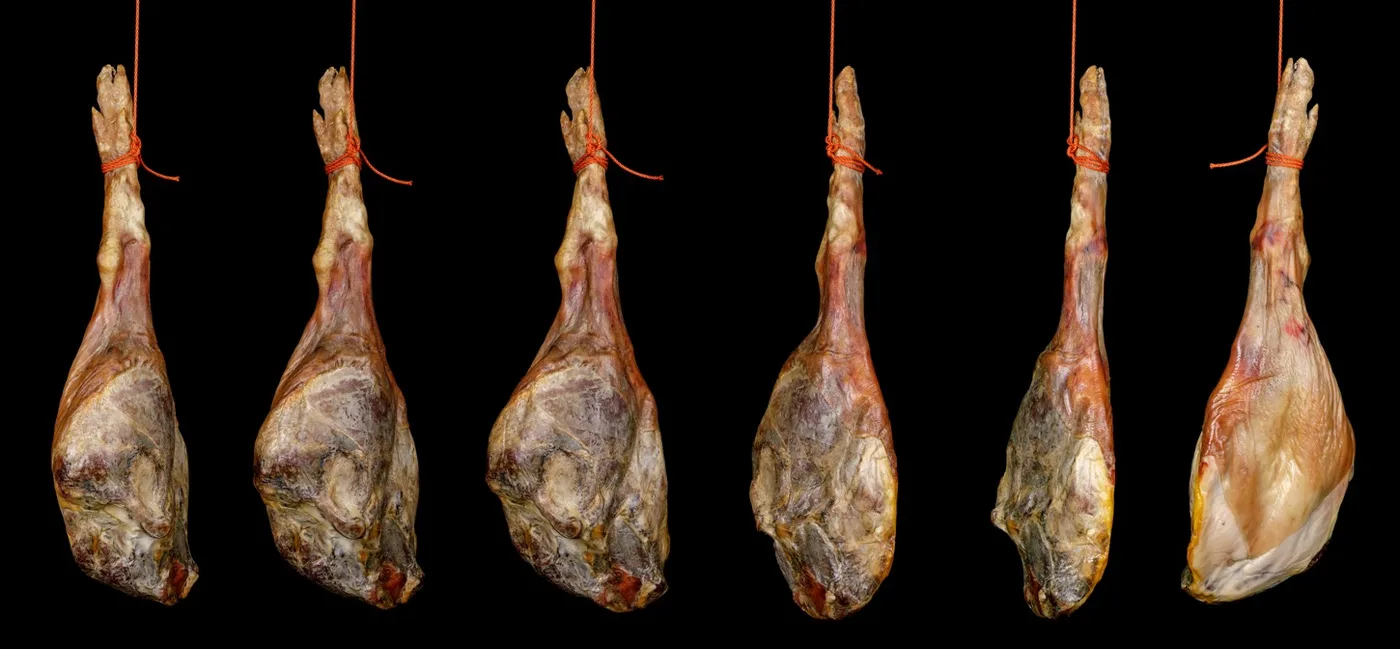
Ham therefore has a rich history. And yet, its production has remained the same over the years.
Once the pig is slaughtered, the meat is covered in sea salt for a period which depends on the producer, some leave it for 1 week, whilst others leave it for 2 months. This period of time, known as maturation, varies according to the weight of the ham. It is generally considered that it should be left in the salt for one day per kilo. The pieces are kept at a low temperature (1 to 5°C), with high humidity.
The hams are then washed in lukewarm water, which removes the salt from the surface before they are left to rest.
Next comes the resting period. In a cold room kept between 3°C and 6°C, with very high humidity, the pieces of pork are kept for 1 to 2 months so that the salt is distributed evenly throughout the ham. This process helps encourage dehydration and preservation.
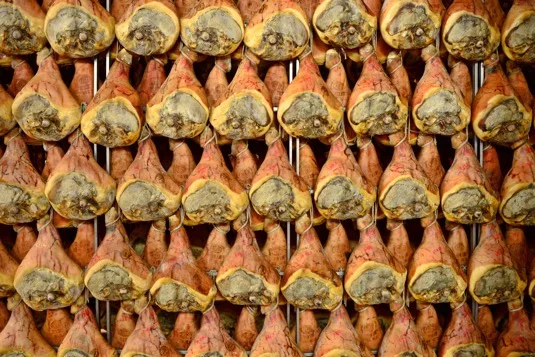
Drying is therefore, naturally, the next step. The drying room must be open to the natural air, with the temperature ranging between 15°C and 30°C. The hams remain there for several months, some producers leave them for up to 3 years, the high daytime temperatures allow the ham to perspire, and the fat to melt, which lets it seep deep into the meat. It then cools down at night and the fat sets. This process helps develop the first, so characteristic, aromas of the ham.
When the pieces come out of drying, they are sorted according to their weight. The ageing time will depend on this. The hams can be hung for more than 50 months, sometimes. The temperature of this room can vary between 15° and 20° depending on the season. The humidity must still remain very much present. This stage allows the ham to develop all its final aromas. The most important thing is not to add any chemical products, a ham must develop its flavours alone, with time.
The ham is generally produced in this way, but each producer has their own know-how, their traditions, their regulations which can give very different processes. Each one develops the flavours they wish, the drying they wish, each one creates their own ham.
The different hams
Thanks to the diversification of production, many different hams have come into being.
French hams
- The ham of Ardèche.
This is a dry-cured ham that comes from the leg of pork. In order to bear the name "jambon de l'Ardèche", all the preparation stages must take place in the Ardèche region. To begin with, the hams are cut into rounded shapes, then rubbed by hand with a mixture of salt, saltpetre, pepper and spices, the secret of which only the makers know.
Next, it is coated with a crust. This is made up of lard, spices and Ardèche chestnut flour.
These stages give a supple, richly red ham with a pronounced taste and a slight hint of chestnut.
Ageing for a minimum of 7 months gives it the character of a mountain ham.
- The dry-cured ham of the Ardennes
A guild, made up of professionals and food lovers, has brought this nearly forgotten ham back into fashion, with great passion. It is an unsmoked ham, rubbed by hand with fine salt, then dried.
L’affinage de ce produit est plutôt long puisqu’il met au minimum 1 an.
Issu de porcs de la région, le jambon obtient un goût, une odeur fruitée et une douce saveur de viande séchée.
Dû à sa petite production, il est plutôt rare d’en trouver.
- Le jambon sec d’Auvergne
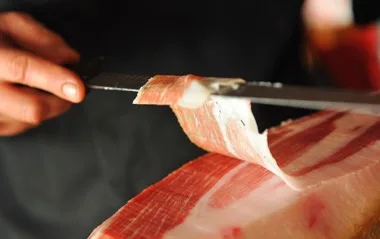
Issu de jeunes porcs, ce jambon est légèrement salé, puis assaisonné. Ils sont affinés 7 mois minimum en fonction du poids du morceau. C’est un jambon avec du goût, un produit brut.
- Le jambon de Bayonne
Ce produit donne l’illusion d’avoir toujours existé. Sa tradition à traversée les siècles et nous offre aujourd’hui un mets convivial.
Pour ce qui est de sa fabrication, les jambons frais sont frottés au sel des salines du Bassin de l’Adour. Ils reposent quelque temps sous une couche de sel, avant d’être envoyés dans la souillarde. C’est une salle de repos qui reproduit les conditions hivernale pour un séchage à basse température.
Ils sont ensuite pendu à une poutre dans les séchoirs ou l’arôme du jambon commence à se développer et le moelleux à pointer le bout de son nez.
Les morceaux sont ensuite panés d’un mélange de graisse de porc et de farine qui amène un séchage plus doux durant une longue période d’affinage.
Il est ensuite temps pour ces jambons de prendre de la maturité, de révéler sa personnalité lors de l’affinage. Entre 9 et 12 mois après, les jambons sont testés puis le sceau officiel est appliqué pour la vente.
In the far reaches of the Hautes-Pyrénées, Gers and Haute-Garonne, lives the Noir de Bigorre pig. It's a pure breed that thrives on its native land. A breed with real character, which takes a long time to raise. The Noir de Bigorre ham calls for a very particular know-how and a great deal of time.
The salting is very gentle, and the artisans use natural rock salt which they apply by hand. The hams must then be aged for between 20 and 24 months in the open air.
It is a rather distinctive meat, very red, juicy, tender, melt-in-the-mouth, but above all extremely flavoursome.
Thanks to the work of the maturers, this product can develop aromas that come through and are reminiscent of dried fruits, or even roasted chestnut.
It is a well-known and highly sought-after cured ham.
A few years ago, passionate farmers and artisans decided to rear this pig and craft excellent products in order to save this French tradition, under the name of the Padouen collective.
- Jambon de Cerdagne or Gambajo
Located in the Pyrenees, this ham has been recognised and enjoyed since Roman times.
It is a mountain ham, dried in the open air for 10 months. It is rubbed with salt twice, then brushed with pepper. This recipe gives it that very traditional salty, spiced aroma.
- Jambon de Chalosse
This is an exceptional ham, made from the finest cuts. It is produced in the Landes department, a true product of the Gascon terroir.
To achieve such a flavoursome meat, the ham is first coated, then aged in the open air for a minimum of 9 months. The salting is subtle, with the salty taste evenly spread throughout the meat.
Maturation is complete once the fat takes on a hazelnut flavour and its colour reflects its noble quality.
- Jambon au foin (hay-cooked ham)
This is a method of cooking ham that can vary from region to region. It may be cooked together with hay in a pot over a gentle heat, or wrapped in hay and then in bread dough. This latter technique guarantees an extremely tender meat, infused with the flavours of the meadow.
- Jambon de Lacaune
This is a dry-cured ham that can only be produced in two cantons in France, Lacaune and Murat sur Vèbre.
It’s a large ham that can be dried and sold with or without the bone, weighing close to 6 kilos.
- The dry-cured ham of Lozère
This is a completely natural ham that excludes saltpetre and colouring. Salting is done with dry salt and drying takes place in the open air.
- The ham of Luxeuil
Made from pigs from Haute-Saône in Franche-Comté, this ham is an exceptional, top-of-the-range product that is very much part of traditional gastronomy.
Enjoyed for over 2000 years, its production must remain artisanal, in keeping with tradition.
The whole leg of the pig is selected, then left to macerate in a bath of red wine from the Jura or salted spirit, flavoured with spices. At the same time, it is regularly rubbed with salt, by hand. The piece of ham then rests in a cool, dry place for a month on wicker. This stage allows the meat to lose weight, and the wicker absorbs some of the salt.
The ham is very lightly smoked with softwood sawdust or cherry stump sawdust.
It will then be hung and dried for 7 to 8 months.
It’s a flavoursome ham with a very long shelf life.
- The dry-cured ham of the Morvan
This is a ham renowned for its taste and its traditional recipe, unchanged since time immemorial. A fine representative of the regional gastronomy of the Haut-Morvan, this raw ham holds great promise.
The products are rubbed by hand with dry salt and various spices, herbs and condiments. They are then aged for 6 months. This recipe gives it a lovely dark pink colour, a golden rind and a taste of days gone by.
- Jambon de Paris
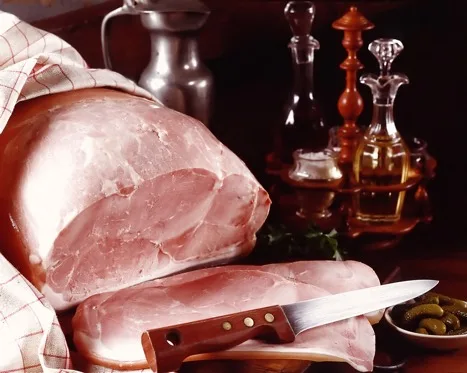
Known to all, this product, commonly called white ham, is cooked, poached in a flavoured vegetable stock.
It generally weighs over 5 kilos and is enjoyed in slices.
- Jambon de Reims
C’est un plat élaboré à partir d’épaule et de palette de porc cuit dans un bouillon spécial. Il est ensuite moulé. On y ajoute de la chapelure. À la coupe, on aperçoit les morceaux de viande compressés.
Il se consomme en entrée ou découpé en carré dans une salade.
C’est un jambon à la texture tendre et moelleuse issu de la tradition haut-savoyarde.
Il est salé lentement au sel marin, puis épicé avec des baies de genièvre et des clous de girofle.
Il est ensuite fumé à froid en cheminée. Ce fumage est réglementé, il ne peut être effectué qu’avec du bois de hêtre.
- Jambon fumé de Vendée
Cette spécialité du Bas-Poitou est aussi traditionnelle qu’originale. Ce jambon est frotté au sel de Noirmoutier puis à l’eau-de-vie de prunes ou de poires et aromatisé avec des herbes sauvages.
C’est donc un jambon aromatisé à l’alcool. La tradition voulait qu’il soit salé autant de fois qu’il pesait de livres. Aujourd’hui, pour une pièce de 15 kilos, cela représenterait 30 jours de salage. Il était ensuite ficelé dans une étole, puis séché à côté de la cheminée pendant 1 mois.
- Prisuttu
Son nom signifie, jambon cru en langue corse. C’est donc un jambon cru et sec, qui pèse entre 5 et 6 kilos.
Il est issu de porcs corses. La cuisse du cochon est enfouie dans le sel pendant 3 à 6 semaines. Elle est ensuite brossée, puis enduite de poivre et d’autres épices et aromates.
L’affinage est très long, le processus de séchage dure de 12 à 18 mois dans une pièce fraîche et parfaitement aérée. Tout au long de sa production, le jambon est surveillé pour s’assurer de sa bonne évolution.
Jambons dans le monde
Les jambons français sont reconnus, cependant, il existe des spécialités mondiales.
- Jambon de Parme
C’est un jambon italien issu de porcs blancs. C’est un produit naturel qui a une appellation protégée.
Les cuisses sont d’abord recouvertes de sel marin. Vient ensuite l’étape de la maturation qui dure de 12 à 36 mois. Cette longue période permet de développer les saveurs, l’aspect du produit. À la fin du processus, ils sèchent à l’air libre. Enfin, son goût n’est pas trop salé, il est plutôt doux.
- Le San Daniele
C’est également un jambon italien protégé par une AOP. Fabriqué dans le nord de l’Italie, ce produit est salé au sel de mer et s’affine pendant plus de 16 mois. On le reconnaît à sa couleur foncée et son goût très doux.
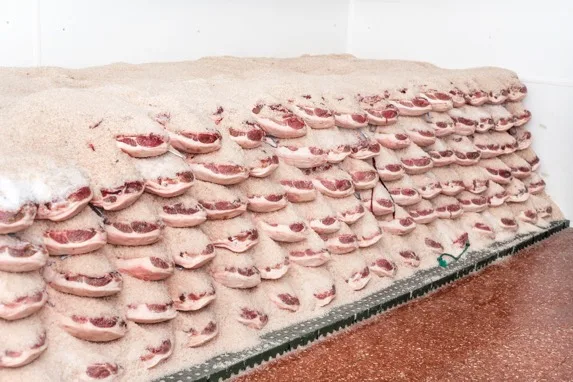
Pour beaucoup, c’est le meilleur jambon du monde. Issu du porc ibérique, une race très pure qui stocke la graisse dans ses tissus musculaires. Produit dans le Sud-ouest de l’Espagne, son salage, sa maturation et son affinage peuvent durer jusqu’à 36 mois.
C’est un jambon à la texture parfaite, à la saveur forte, au goût unique.
- Le jambon de Serrano
C’est aussi un jambon espagnol, qui est lui, issu de la montagne. Le porc peut être de n’importe quelle race. Son affinage dans l’air froid et sec des montagnes lui a d’ailleurs donné son nom. Le jambon est salé puis sèche durant 24 mois.
- Le National
C’est un jambon argentin assaisonné de poudre de chili. L’étape de maturation peut durer jusqu’à 12 mois. C’est un produit fort en goût.
- Le jambon Forêt-Noire
It's a German cured ham, produced in the Black Forest, a small area in the south of the country. The cut of pork is salted with garlic, juniper and black pepper. The ham is then cold-smoked with fir and spruce wood. This production method gives it unique aromas.
Ham is therefore a product with a rich history that has always accompanied mankind. There are many varieties that give this traditional product, known the world over, all its charm.
Tête de lard offers you some of these regional and national specialities, always made using artisanal production methods!