
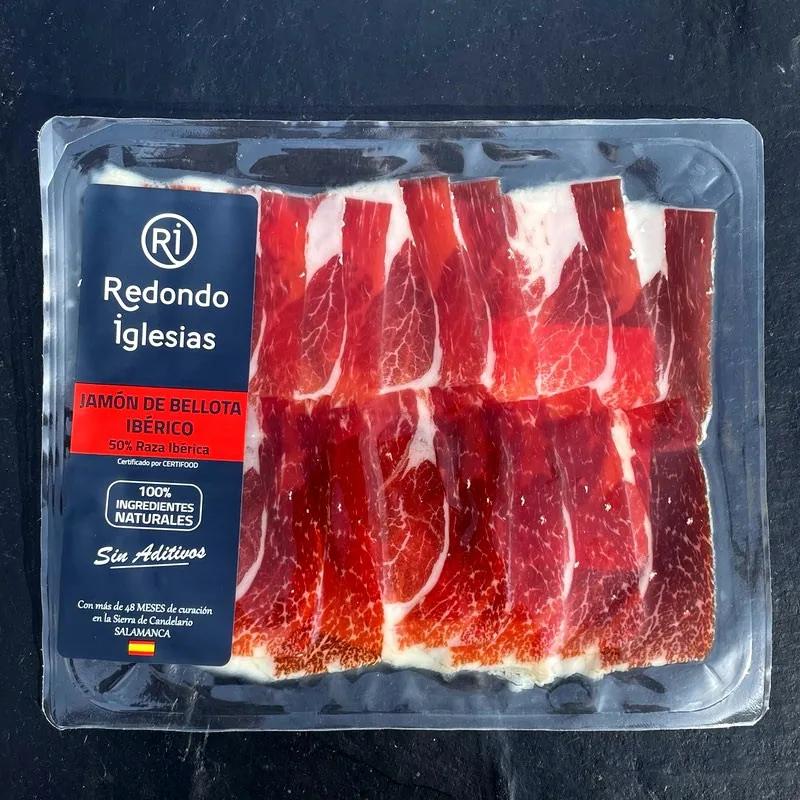
75 g
2 or more: €12.66 each
−15% from 2 Nitrite-free
Redondo Iglesias
Ibérico bellota ham 48 months 75g 50%
(18)€14.90
Saucissons, hams, terrines and rillettes: pork in every form, cured or in jars, from our small producers.
210 products
210 products
75 g
2 or more: €12.66 each
Nitrite-freeRedondo Iglesias
€14.90
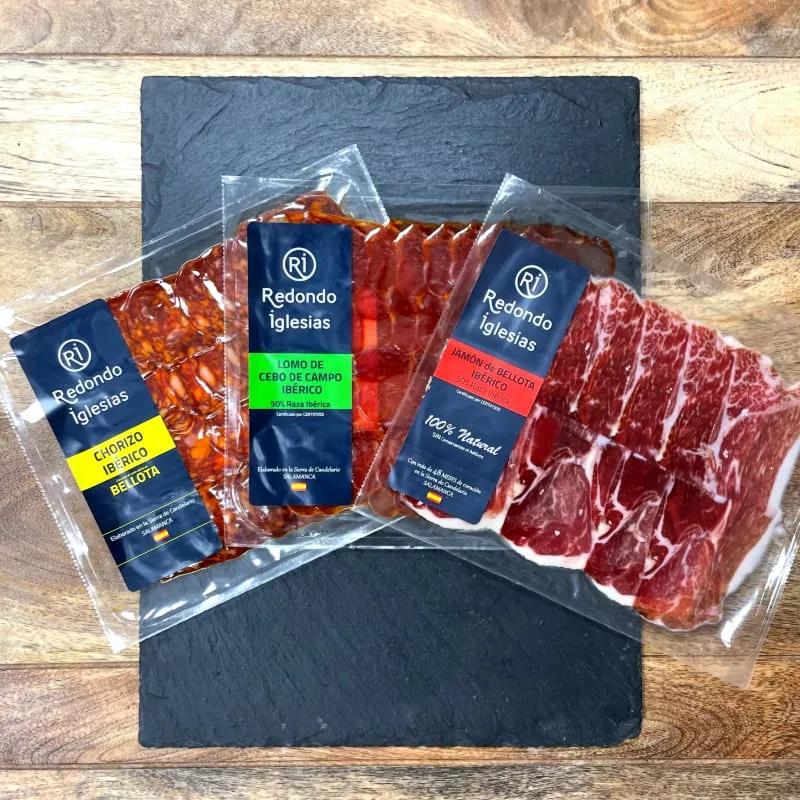
€19.90
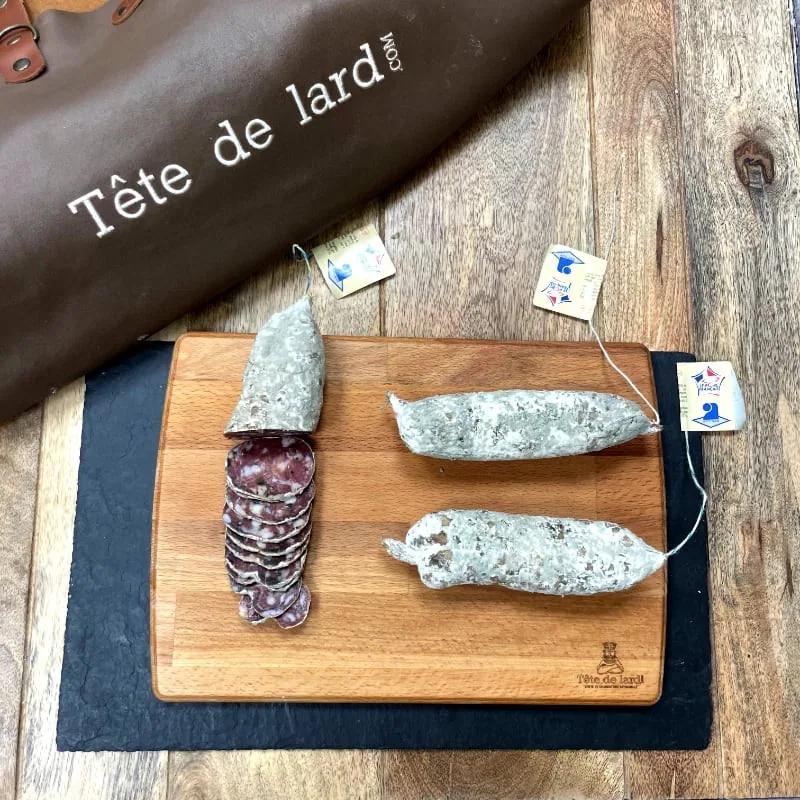
540 g
€13.90
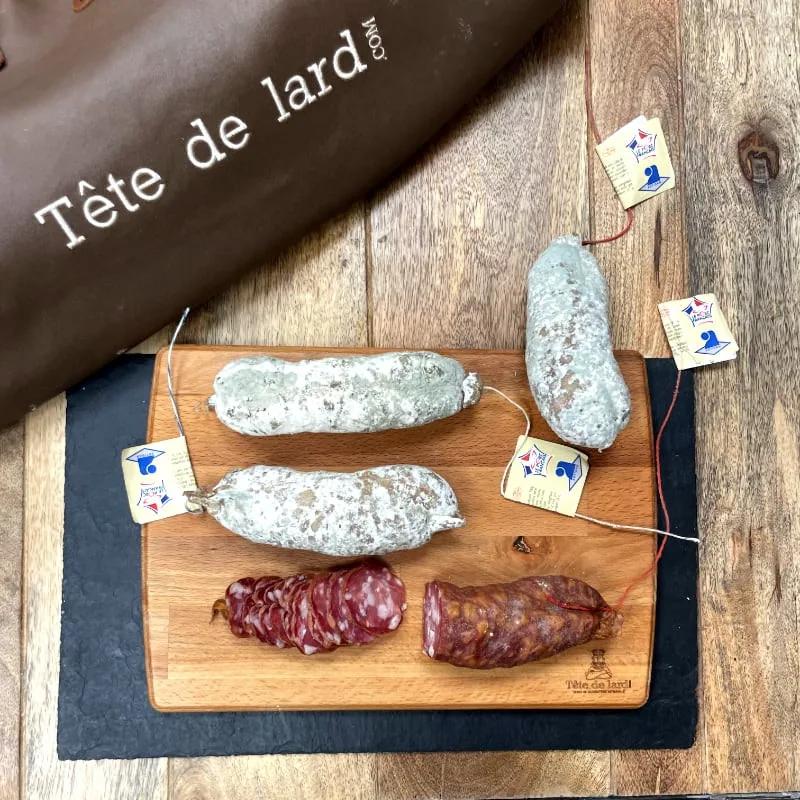
720 g
€17.90
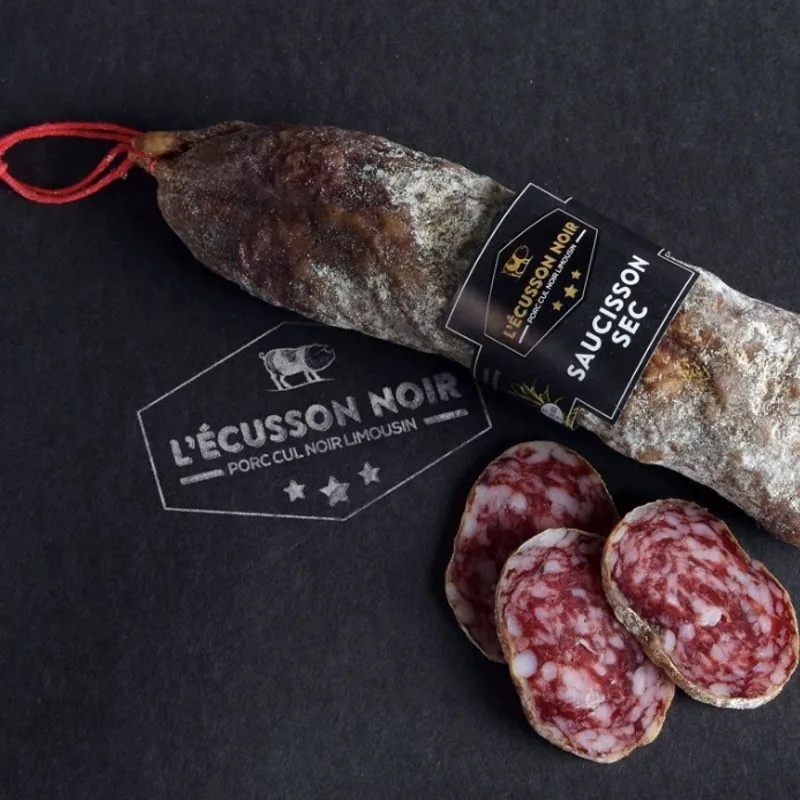
280 g
€14.50
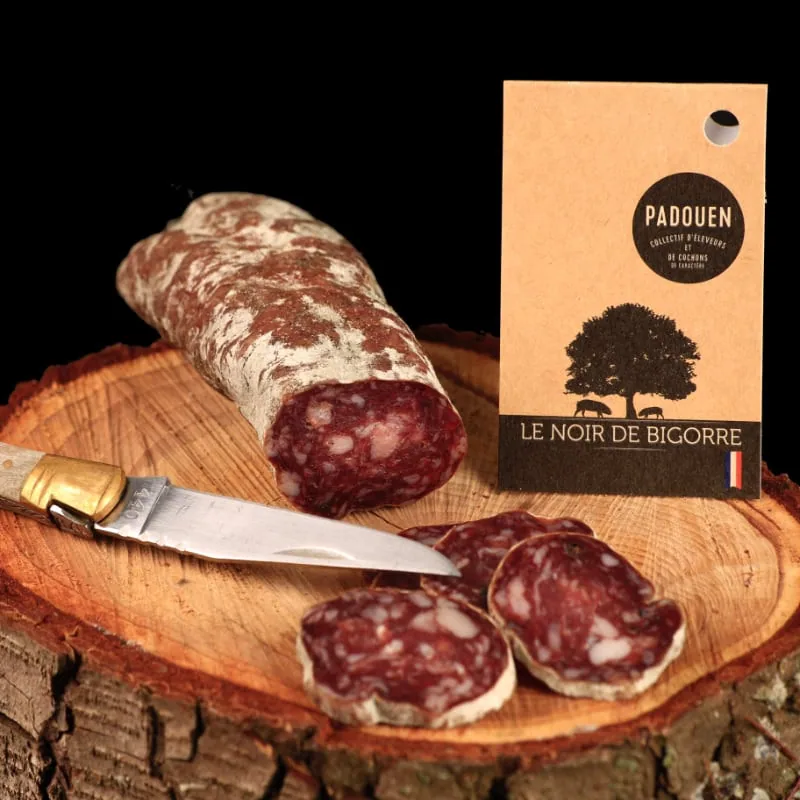
230 g
€15.50
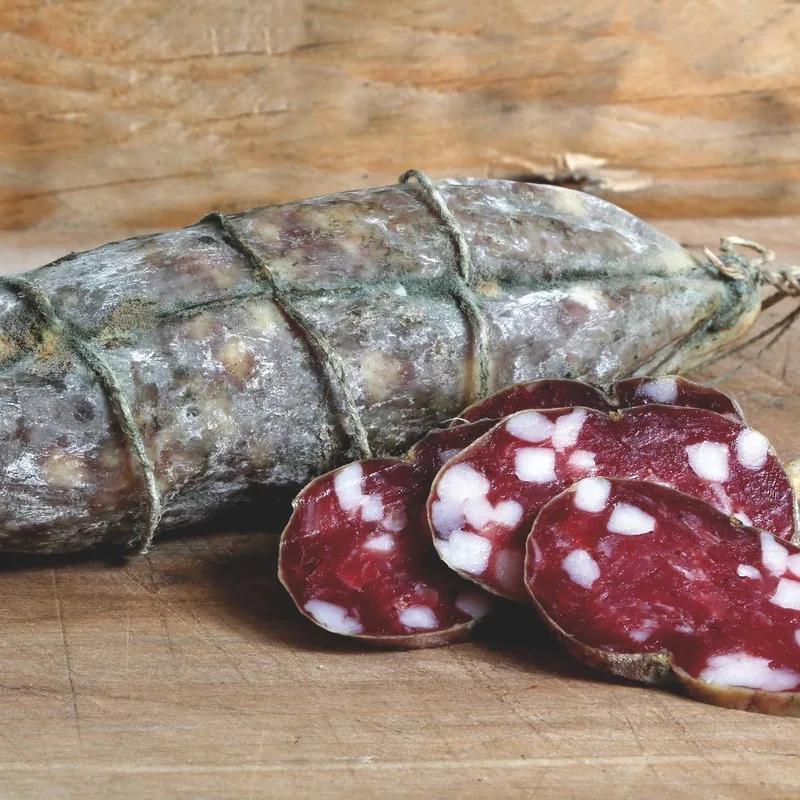
270 g
€12.50
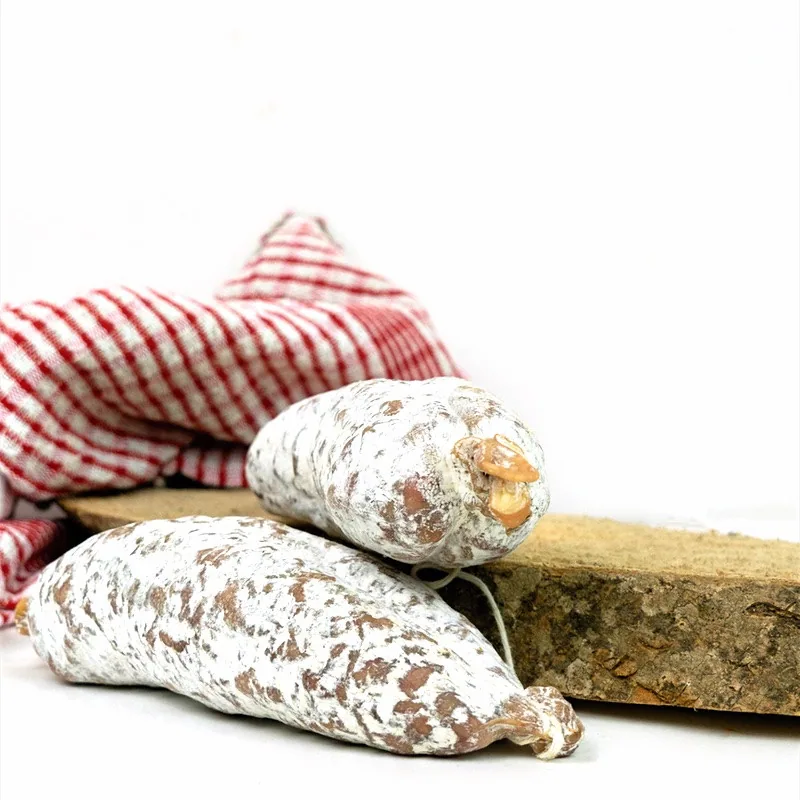
300 g
€12.90
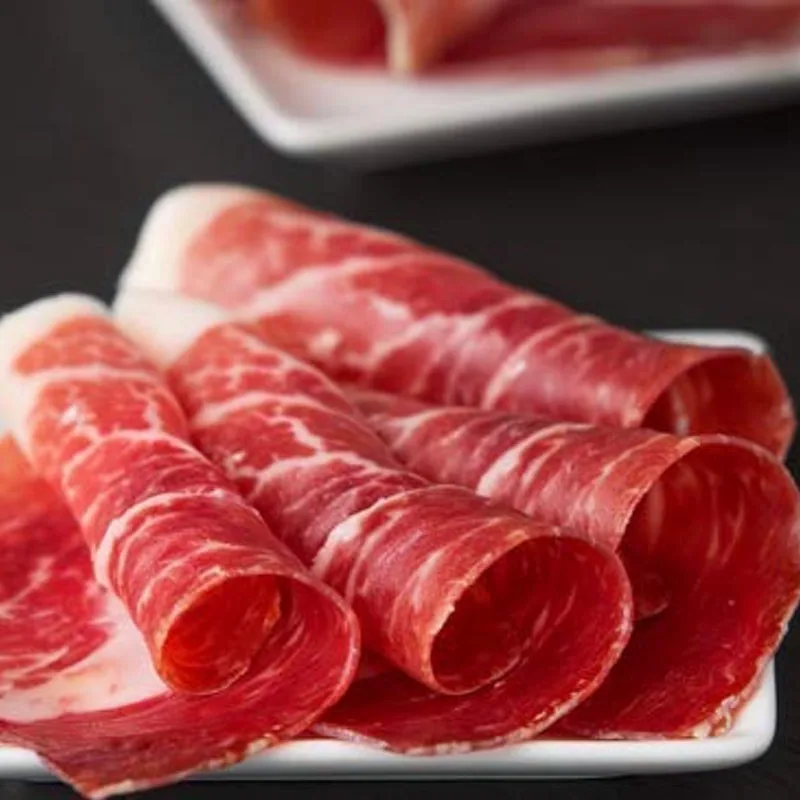
120 g
3 or more: €9.90 each
Nitrite-freeRedondo Iglesias
€12.90
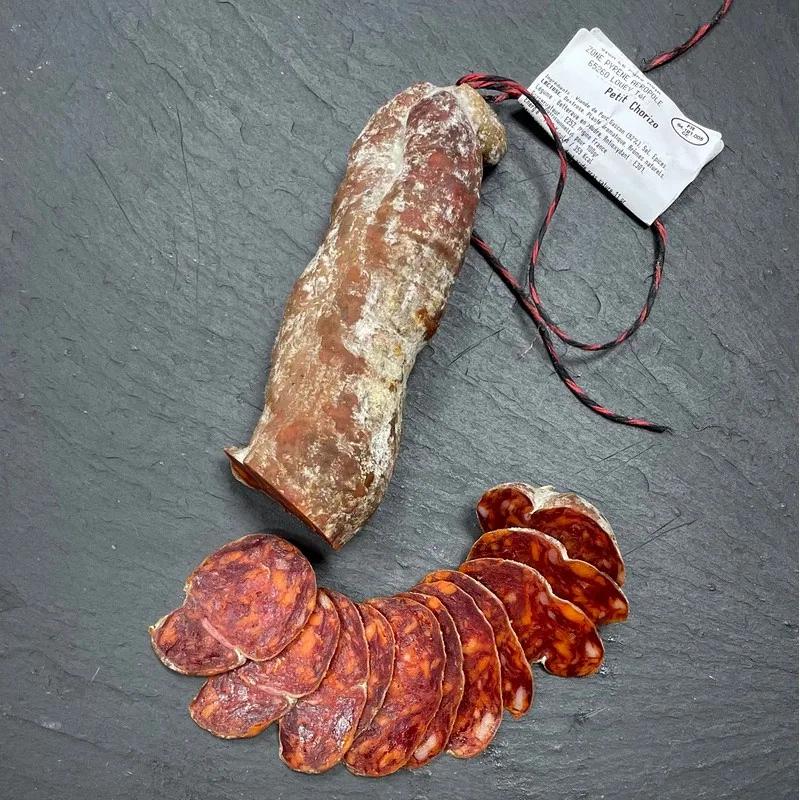
240 g
€14.90
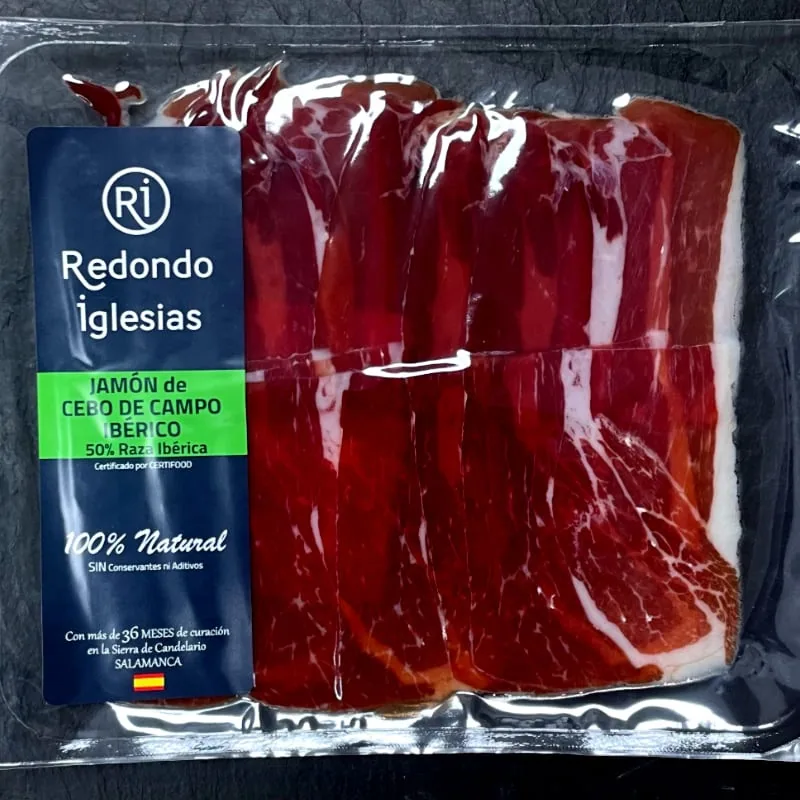
75 g
3 or more: €8.80 each
Nitrite-freeRedondo Iglesias
€10.90
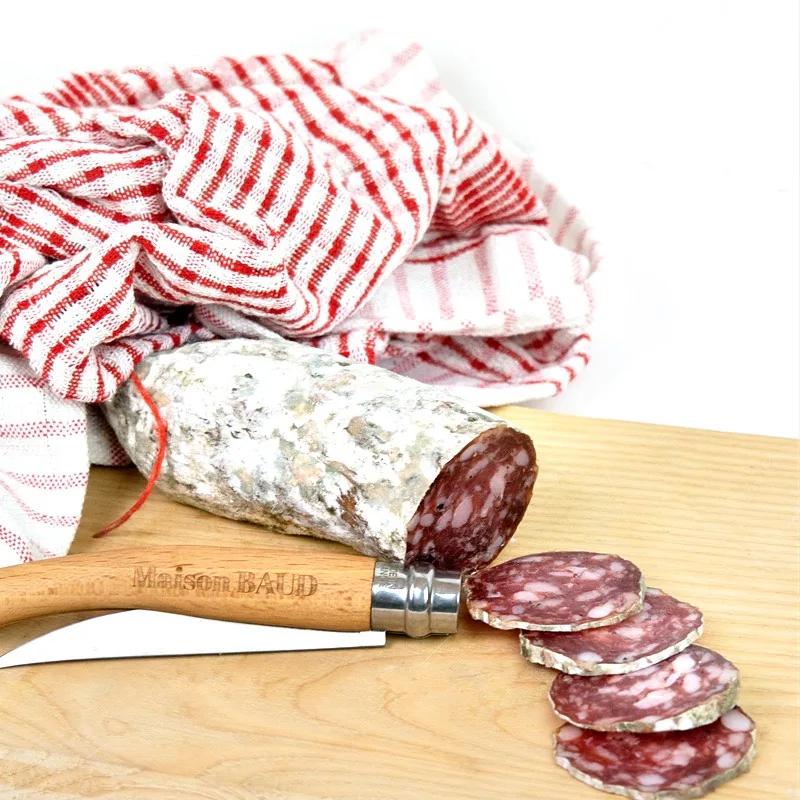
240 g
€13.90
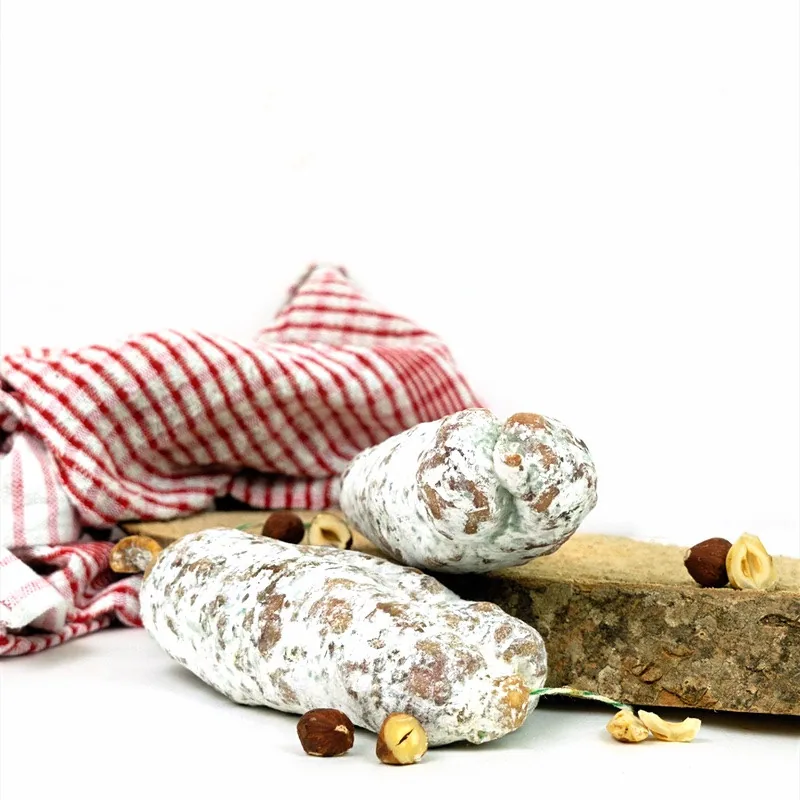
300 g
€12.50
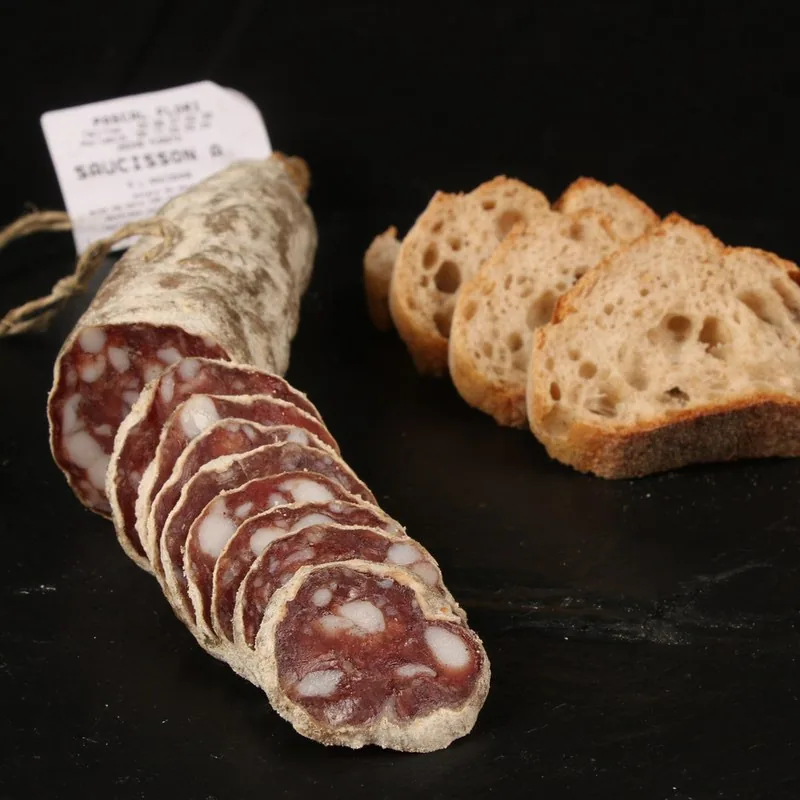
250 g
€14.90
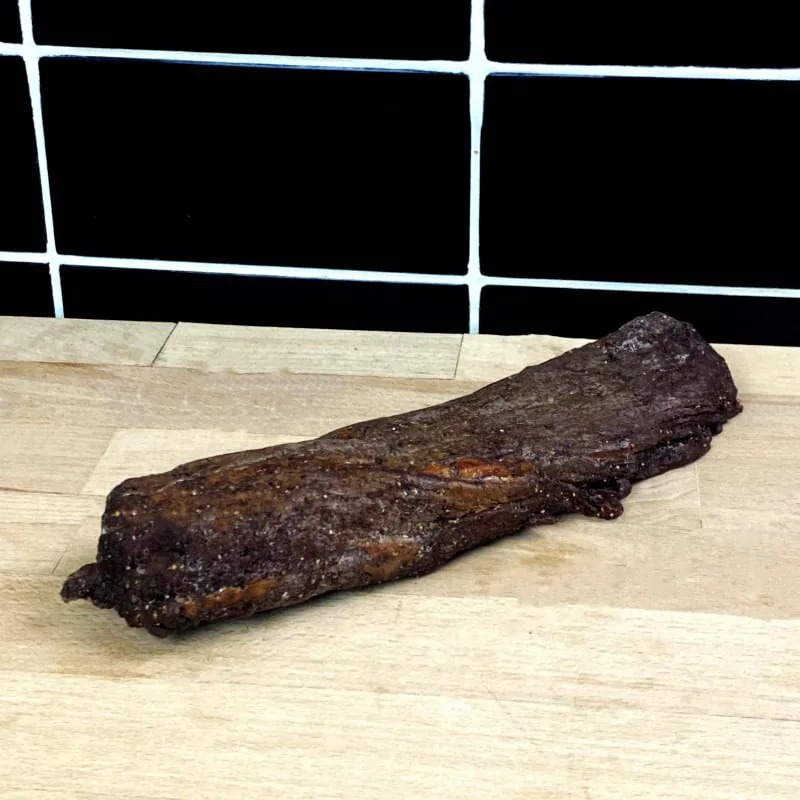
200 g
€14.90
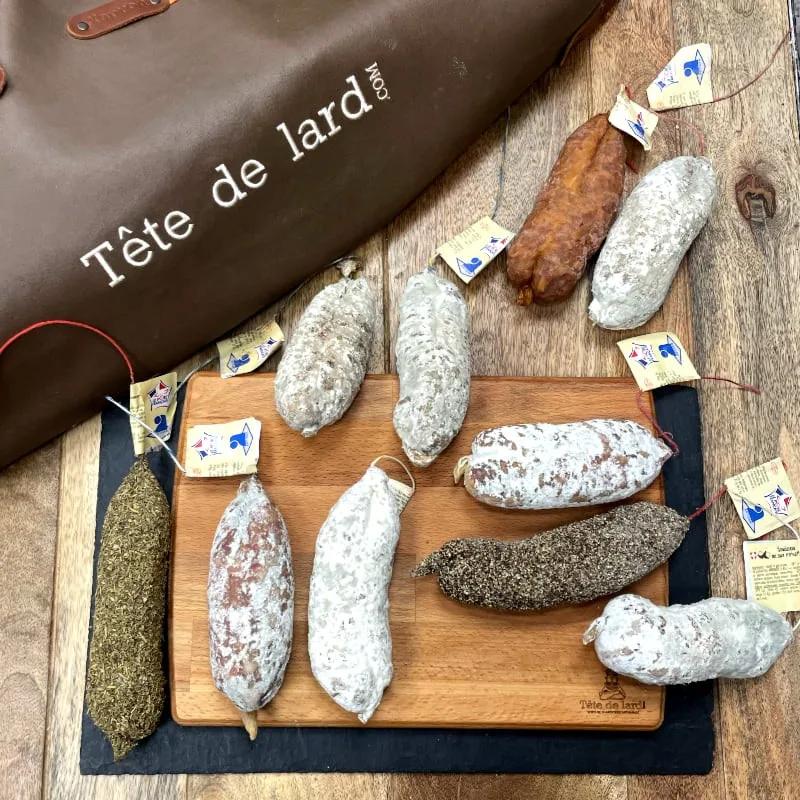
1.8 kg
€39.90
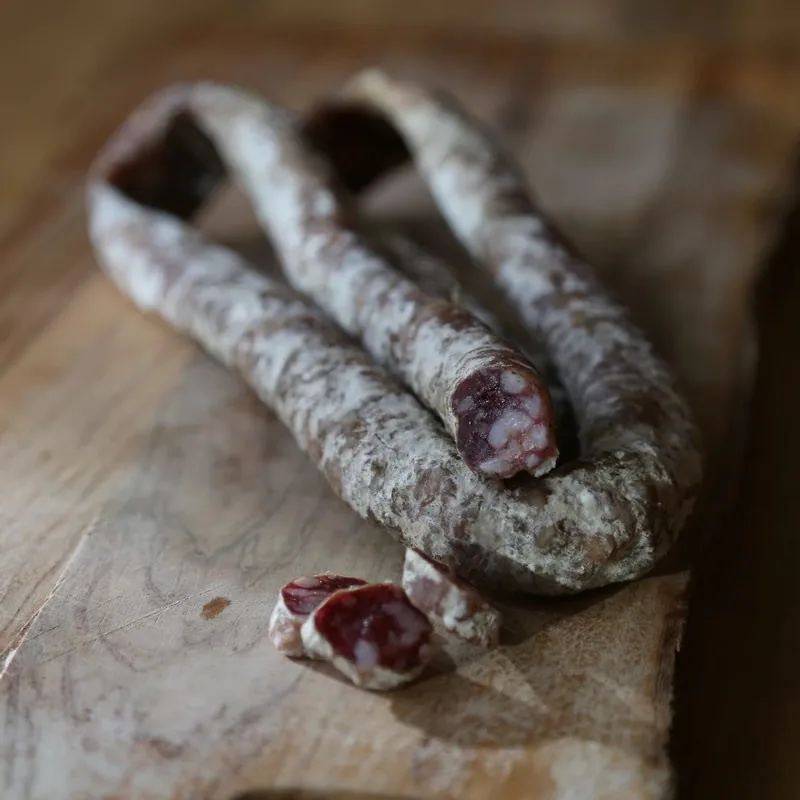
300 g
€11.90
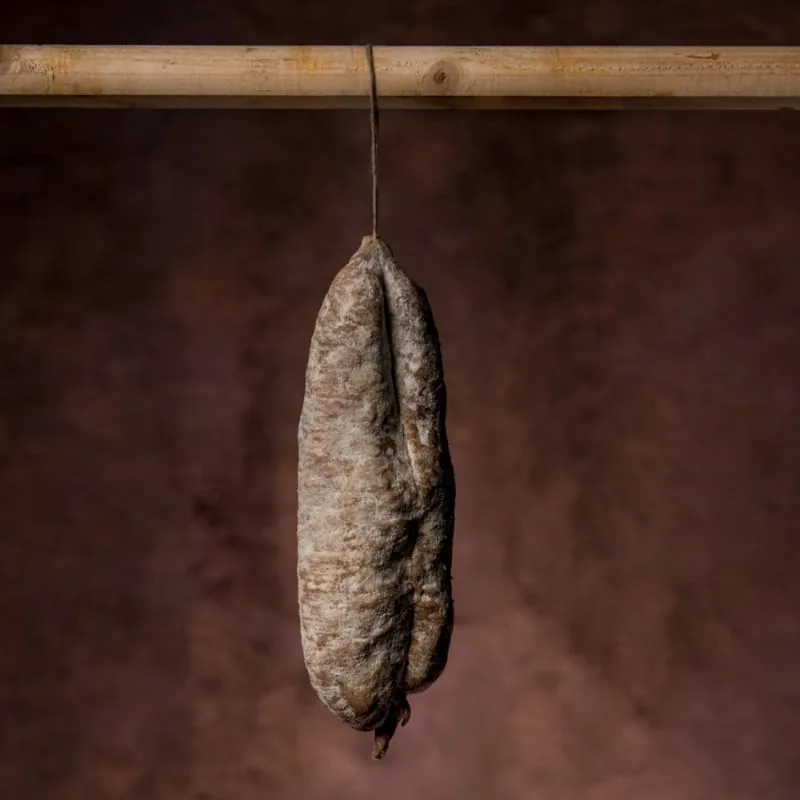
280 g
€10.90
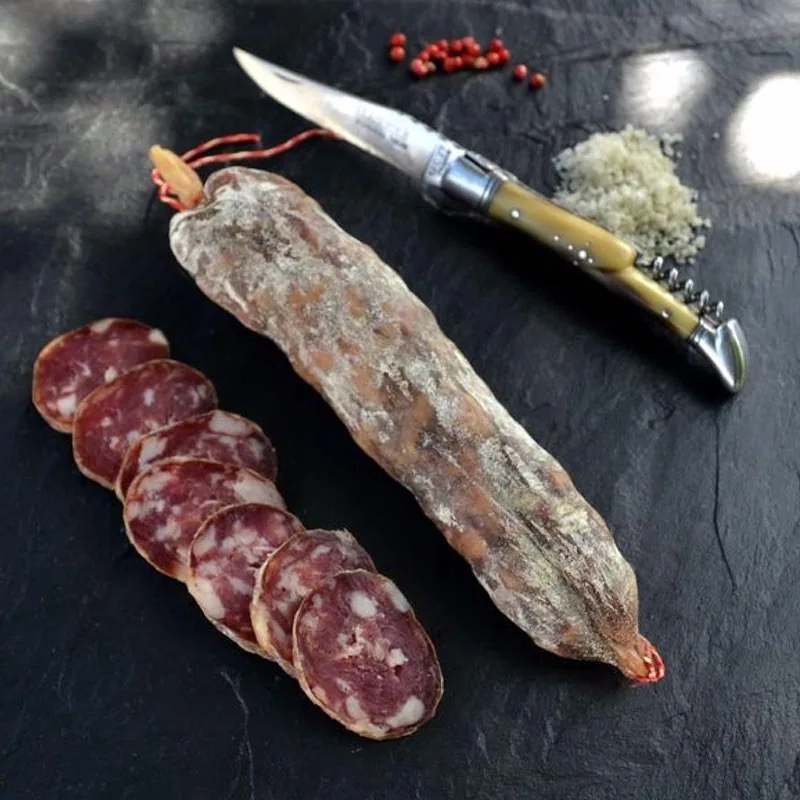
250 g
€10.90
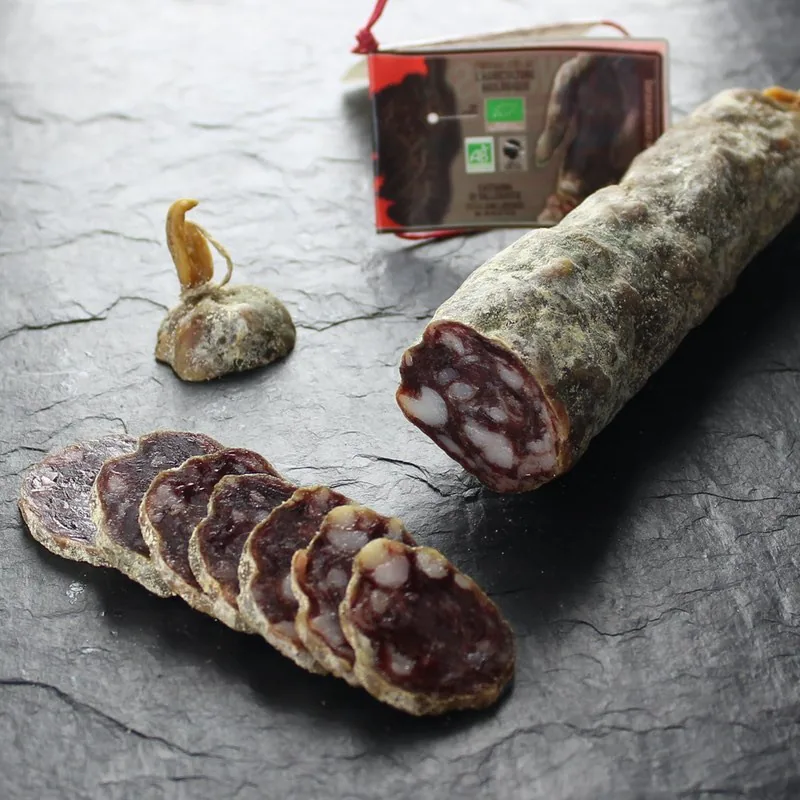
200 g
€16.90
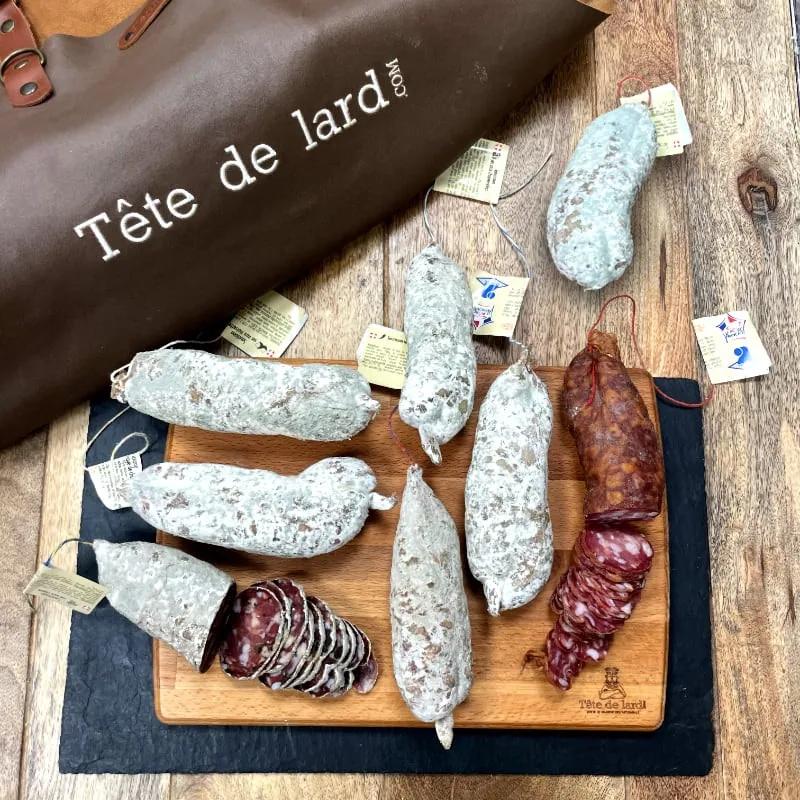
1.44 kg
€31.90
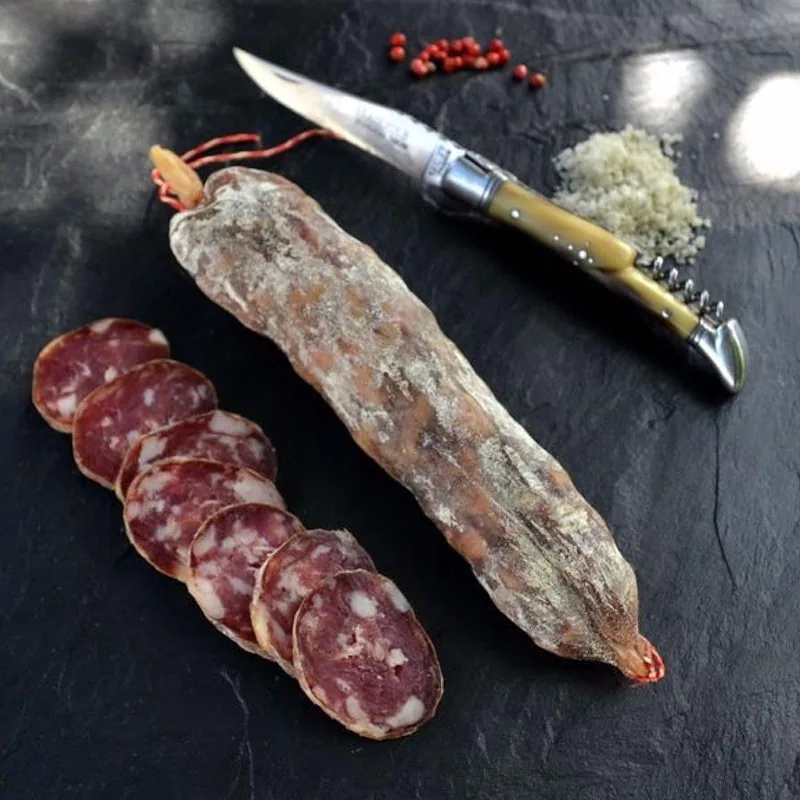
250 g
€9.90
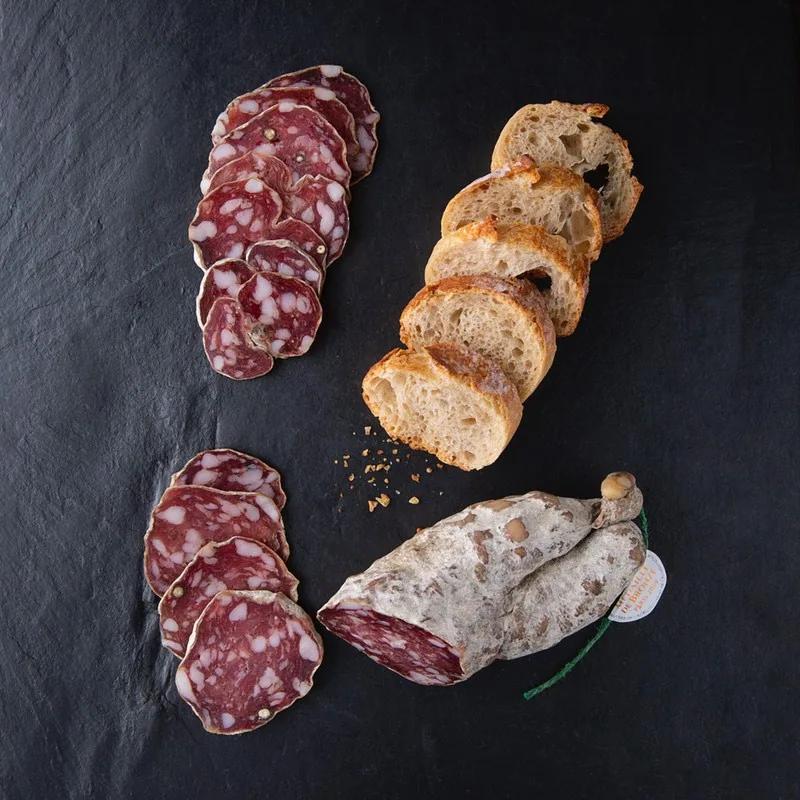
250 g
€9.90
220 g
€9.90
Products 1 to 24 of 210
The pig, the word used for the animal, is omnivorous, so easy to feed.
Pork, the word used to describe the meat.
Indeed, rearing it isn't the most complex task, every part of the body is edible and its taste is delicious! This explains why, since the dawn of time, pork has been the most widely eaten meat in the world.
As far back as the Middle Ages, the trade of charcutier already existed. Its role was to turn this raw meat into cooked, smoked, dried or salted produce. Terrines, confits, pâtés, boudins, tripe, andouilles, sausages and saucissons were therefore on the menu!
Gradually, the trade developed and specialities emerged according to each region.
This has led to a multitude of recipes depending on the breed ofpig,the rearing, the preparation and the drying. When one thinks of pork and cooking, one immediately thinks of pig's trotters, sautéed pork, pork chops, pork fillets, or even a parillada of pork & potatoes.
There are more than 300 in the world, but let's take a closer look at the most dominant ones:
The Large White, a pig of English origin, is renowned for its adaptability, its breeding performance and the quality of its meat.
The French Landrace, a white pig with drooping ears, of Nordic origin, mainly reared in Denmark and Sweden, has only recently been introduced into France. Blessed with good growth capacity and prolificacy, it tends to be crossed with the Large White.
The Piétrain, a pig reared in Belgium and the North of France, which boasts an exceptional musculature. Patience is required given how slow its growth is. Quality, however, is there, and this breed remains a favourite among artisans. It yields produce of real quality. Not profitable enough for industry, this pig has been cast aside by the large firms in the sector.
The Duroc, originally from America, a pig breed with a “rustic” appearance, is world-renowned for its tender, juicy meat. It is recognisable in particular by its red, sometimes darker, coat. Slightly less productive than the Large White, this breed is nonetheless highly valued by producers. Its one drawback is that it is categorised as a pig with low reproductive yield.
However, a great many breeds with more qualitative attributes are also produced and consumed in our regions. All of them were pushed out of large-scale distribution channels in the 1980s following what was deemed slow growth.
The Pie Noir du Pays Basque breed (the Basque pig), part of the great Iberian family, is noted for its high reproductive yield. Hardy against harsh weather, with broad, sturdy limbs, it makes for a great walker. Its meat, for its part, is firm and flavourful, which has built the reputation of Basque charcuterie. Like other local French pig breeds, it was under threat of extinction, set to be replaced by more productive breeds such as the Large White or the Landrace. A handful of dedicated farmers managed to save this breed. Their first step was to obtain a protected designation of origin.
Among these breeds is the Mangalitza (mangalica). Well known to charcuterie lovers, this pig has highly sought-after flavour qualities. It is also the famous curly-haired pig, often compared to sheep. Hailing from Eastern Europe, notably Hungary, it was Christophe Guèze who played a major part in popularising it. With a very long maturation period, this pig develops intramuscular fat rich in Omega 3 and Omega 6. Products made from this breed are highly prized, including the Mangalitza, or mangalica, saucisson, awarded a prize at the world saucisson championship in Vanosc.
The Gascon black pig is a purebred pig from south-west France. A descendant of the Iberian pig, it is nowadays commonly known as the Noir de Bigorre and benefits from a protected AOP designation. With this designation, the consumer can have complete confidence in the quality of the meat. The Noir de Bigorre is also one of those pig breeds that have been neglected by large retail distribution networks. In the 1980s, this breed was on the verge of extinction. It was a collective of producers named PADOUEN who managed to save it and bring it back into fashion. It is with a highly qualitative vision of rearing and precise rules that these different producers have worked together to revive this breed of pig, which delights so many people nowadays.
Having told you about the most popular as well as the finest breeds, we couldn't possibly leave you without talking about the Iberian pig:
Coming from the south of the Iberian Peninsula, this breed of pig is particularly renowned for its tasty, tender and marbled meat. The Spanish have made it their speciality. Reared outdoors, in large pastures, these pigs develop a musculature that is very rich in fat. Everything a lover of good charcuterie could wish for! What's more, during the last four months, the pigs are released into the forest and gorge themselves on acorns, which is the whole particularity of Iberian charcuterie and the famous Pata Negra ham, so sought after. The products that result from this, such as the precious jambon, or indeed Spanish chorizo, are often aged between 30 and 60 months, giving way to an exceptional product that only the Spanish are capable of offering us.
Pigs are able to be self-sufficient in their natural environment, which makes the meat better quality. With a little patience and know-how, this meat can be transformed into an exceptional product. This multitude of breeds offers us a wide range of flavours, there is something for every taste.
Descended from the wild boar, the pig first began to be eaten around 8,500 years ago in the Near East. In antiquity, the pig was considered legendary. It was served at the table of the Gods, and mainly at that of men.
At the time, the pig was a reared animal, fed, slaughtered and butchered according to a Roman law called "La Porcella".
From 800 BC to 27 BC, in the Iron Age, during the Celtic period, Celtic civilisation placed great importance on wild boar: the animal can be found on statues, on coins and on many other fine objects.
In the Gallo-Roman period, herds of semi-wild pigs fed on acorns and beechnuts were reared by the Gauls.
It was during the Middle Ages that pork was developed into various forms and recipes. Since then, it has been found everywhere, with different methods of preservation: smoked, covered in salt, or even turned into rillettes, preserved under a layer of fat.
However, the pig sometimes became a nuisance to man, held responsible for numerous accidents in towns, villages and the countryside, as it fed on anything it could find. In the Middle Ages, a pig that misbehaved could be tried, like a man, and tortured in the public square.
From the 20th century until the 1960s, every family living in the countryside reared one or more pigs. This was very common practice. They were then slaughtered on the farm. These animals were often well cared for, as the meat produced fed the family for several months.
Nowadays, hygiene regulations no longer allow such practices. Today, pigs are reared on farms and must pass through an abattoir in order to comply with precise procedures.
As for the etymology of "charcuterie", the term was first heard in the 5th century and comes from the phrase "chair cuite" (cooked flesh). It was the Romans and Greeks who, as far back as antiquity, already ate smoked ham at feasts. In the 15th century, the butcher was known as a "chaircuiter".
 Award-winning
 Award-winning
 Award-winning
 Our favourite
 Award-winning
 Organic