Never without my saucisson!
The making of dry-cured saucisson
Dry-cured saucisson is quite an art! In France, eating saucisson is almost sacred. The best friend of our aperitifs is the result of multiple skills, varying according to…
8 min read· By Rémi Ledu
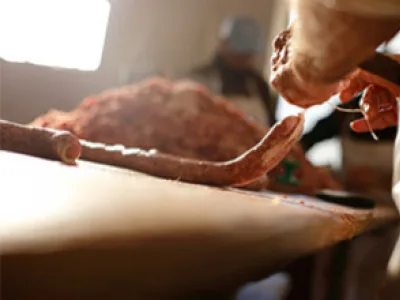
How artisanal dry-cured saucisson is made
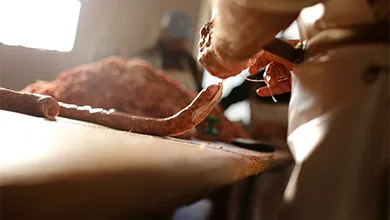
What are the ingredients of saucisson
What equipment is needed to make saucisson
What are the steps involved in making saucisson
Saucisson sec is quite an art! In France, the consumption of saucisson is almost sacred. The best friend of our aperitifs is the fruit of many different know-hows, varying from one region to another. When it comes to saucisson, the choice is vast, and the imagination of our regional producers keeps evolving every day to offer us varied recipes that find their perfect place on our tables. Different types of meat, different flavourings, from aromatic herbs to cheese to spices, there's something to suit every taste.
Discover, for example, our saucissons de Savoie, saucissons d'Auvergne, saucisson du Sud-Ouest, saucissons de Lyon, saucissons corses... and many more!
So, you may be wondering how saucisson sec is made? While there are many recipes, we'd like to walk you through the ABCs of making saucisson, from the ingredients to the steps involved.
What are the ingredients of saucisson?
To make saucisson sec, you can use several types of meat, and vary the seasoning by choosing different spices and ingredients. However, there are essential ingredients needed to achieve a saucisson sec worthy of the name! You'll find all our guidance in this article to help you make, or understand how artisanal saucisson sec is made.
Which meat is used for saucisson?
The best cut of pork for saucisson is sow meat, the term used for a female breeding pig. However, meat from a standard pork-producing pig will also do the job nicely. You can also make saucisson using meat from other animals, such as beef saucisson, bull saucisson, wild boar saucisson, venison saucisson... Or you can blend lean pork with one of these meats, as in the Aubrac beef and pork saucisson.
Which part of the pig is used for saucisson?
To make saucisson, the first step is selecting and sorting the meat. We'll need both lean meat and fat. Several parts of the pig can be suitable for making dry-cured saucisson, though some are more interesting than others - what are known as the noble cuts of pork:
- The shoulder
- The loin
- The ham
- The belly
The main ingredient in your saucisson will be lean meat. The cuts we've listed above are considered the leaner parts of the pork. However, they still contain some fat, even though part of it will be removed before continuing with the preparation - the softer fats in particular.
It's therefore firmer fats that are added to the lean meat to make dry-cured saucisson, with back fat, or fat from the belly, being particularly favoured.
How is saucisson seasoned?
The meat alone is, of course, not the only ingredient in saucisson. It's seasoned for flavour, but this is also necessary for the preservation and transformation of our dry-cured saucisson. Here, then, are the main ingredients blended with the meat to make artisanal dry-cured saucisson:
- Salt: Salt plays a leading role in the making of saucisson, and of charcuterie in general (hence the word "cured meats"). It doesn't just play a role in flavour! It helps preserve the meat, as it prevents the proliferation of bacteria. This method of preserving with salt has, in fact, been used for thousands of years. Generally speaking, in a dry-cured saucisson, around 30g of salt is used per kg of meat, though today there's an increasing effort to reduce the salt content of dry charcuterie such as saucisson, in order to meet consumers' taste expectations.
- Sugar: Its role is particularly important during the drying stage. Sugars allow the saucisson to ferment, meaning they feed the lactic bacteria, which acidifies the meat mixture. It also helps convert saltpetre, which is made up of nitrates, into nitrites. It also balances out the taste of the salt. Around 5g of sugar is used per kg of meat.
- Spices: It's the choice of spices that gives a saucisson its full depth of flavour, and therefore its distinctive character! More or less original creations of dry saucisson can be made thanks to spices, such as the Thai dry saucisson by Emmanuel Chavassieux (an absolute must-try!). All sorts of spices can be chosen to flavour saucisson, but the main ones, most commonly used, are:
- Garlic
- Pepper
- Nutmeg
- Chilli peppers
- Saltpetre and/or nitrite salt: These play a role in preserving the saucisson, preventing the growth of harmful bacteria and giving the saucisson its characteristic pink colour. However, their use is regulated, and more and more charcuterie is now being made without saltpetre or nitrite salt. We indeed have a wide range of nitrite-free saucissons at Tête de Lard! That said, there's no need to worry: while consuming nitrites is undesirable beyond a certain amount per day, the nitrite content of a saucisson won't be harmful to your health if, as with all foods, you enjoy it in moderation.
- Natural casing: Every artisanal saucisson must be encased in a natural casing. There are different calibres available depending on what's being made: dry sausage, dry-cured saucisson, rosette...
Now that you know the main ingredients used to make saucisson, it's time to talk about the equipment needed to produce it!
What equipment is needed to make saucisson?
To make saucisson, specific equipment is required. Here are the tools used to produce artisanal dry-cured saucisson:
- A mincer
- A sausage stuffer
- A boning knife
- A set of scales
- A hygrometer
- String
Professionals have specific tools and, above all, natural cellars/drying rooms and maturing chambers, since the humidity level (the degree of moisture in the ambient air) needs to be controlled at every stage to allow the saucisson to mature and the natural bloom to develop.
What are the stages in making saucisson?
Artisanal saucisson from A to Z
When making saucisson, it's important to follow several steps to achieve the desired result. Making saucisson is quite an art, one that our artisans have mastered over generations! We'll take you through these steps from A to Z so you can better understand this meticulous process:
- Preparing the meat: You need roughly 75% lean meat to 25% fat, though this naturally varies depending on the saucisson. The meat is boned, skinned, trimmed of fat and sinew.
- Mincing: After selecting and sorting the meat, it is minced. The fat and lean meat can be minced together or separately. The mince can be coarse, medium, or fine. Generally, the meat for saucisson is coarsely minced.
- Seasoning: The seasonings are added to the mixture and everything is blended together to ensure the meat is well combined.
- Stuffing: This involves pushing the meat into the natural casing, before sealing the saucisson at both ends. The casings are first rehydrated. This is a delicate step, as natural casings are relatively fragile, and air bubbles can form inside.
- Steaming: This step depends on the climate, and more precisely on the humidity levels of the production area. Steaming reduces the moisture content of the saucisson and helps develop the bacterial flora responsible for maturation. The saucisson is hung at a temperature of between 20 and 25°C for one or two days.
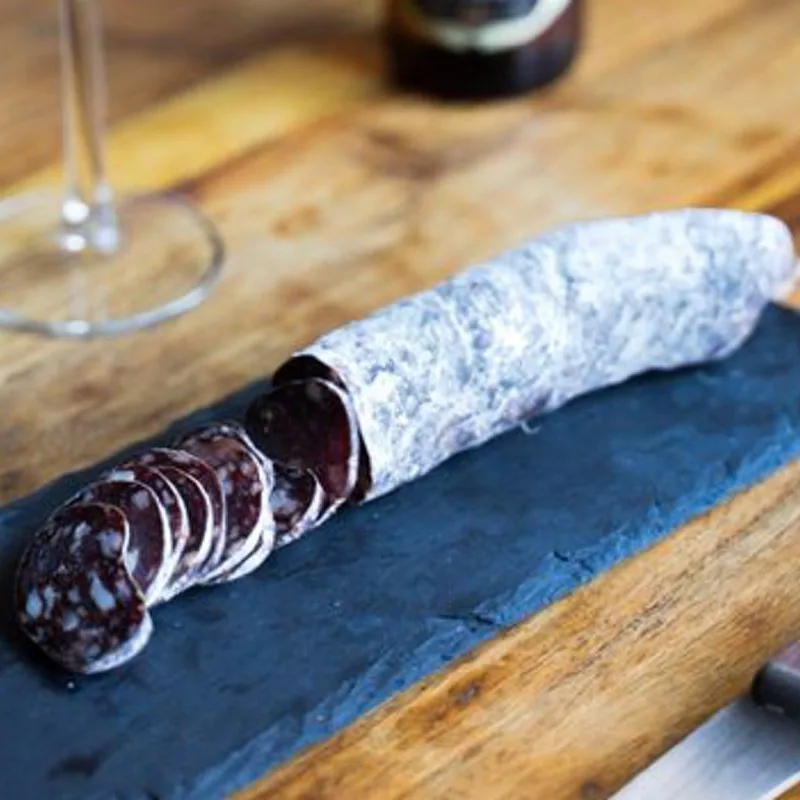
- Drying: A very important step! For several weeks, the saucisson is left to dry at between 10 and 15°C with a humidity level of 75 to 85%, allowing the natural bloom to develop. This bloom gives the saucisson its characteristic aromas and also helps with preservation. It's made up of noble moulds similar to those found on cheese. They are therefore perfectly edible, so there's no need to worry if you find some on your saucisson, as on artisanal saucissons, it isn't necessarily brushed off. If it bothers you, you can simply wipe the surface of your saucisson with a clean cloth to remove any excess bloom.
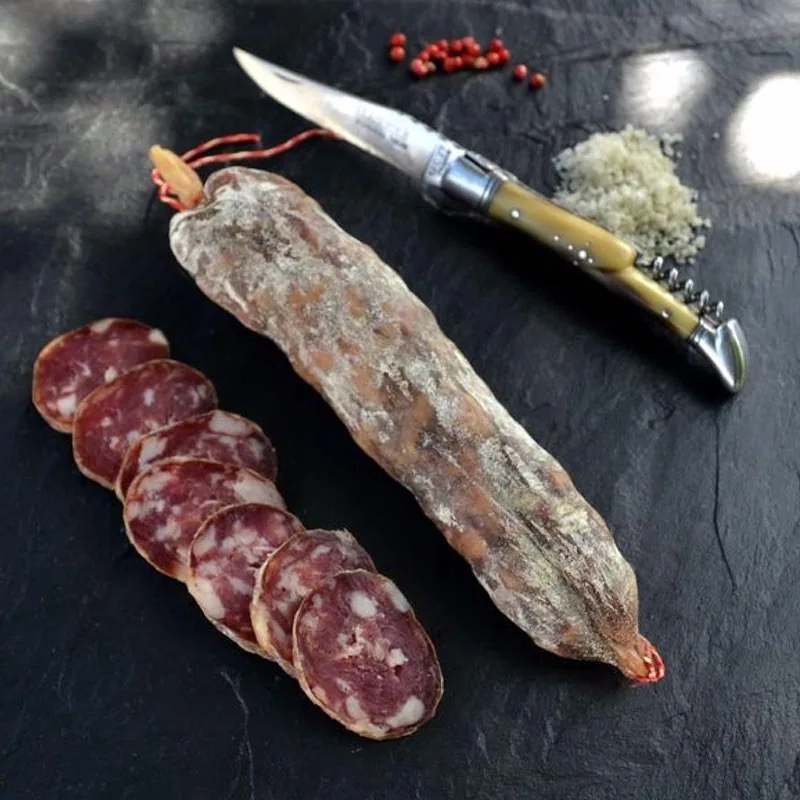
- Tasting: The best part of the process, wouldn't you say? Slice the saucisson thinly and share it as a nibble with drinks — that's the recipe for happiness!
Now that you know all the steps involved in making artisanal saucisson, you're probably wondering how best to store it?
How to store saucisson?
In order not to alter the character of our artisanal saucisson, there are several ways to store it so as to keep it as long as possible under optimal conditions, preserving both its flavours and its texture. It is also possible to let your saucisson dry out further for those who, like us, prefer a drier saucisson, as when purchased it may be softer or firmer depending on how recently it was made!
If you wish to let it dry, you will first need to remove it from its packaging, if it has any. If you have a cellar, this will be the ideal spot to hang your saucisson and let it dry for a few days. Otherwise, you can store it in a dry place such as a kitchen cupboard.
To keep your saucisson for as long as possible without it drying out, we recommend ideally storing it in a dry, well-ventilated place, between 15 and 19°C, or alternatively wrapping it in a clean cloth and storing it in the vegetable drawer of your fridge. As mentioned above, if a white bloom forms, there is no need to worry, this is perfectly normal! You can enjoy it as it is or gently rub off the excess.
It is worth noting that a dry-cured saucisson does not truly spoil, meaning it is not subject to a use-by date, but rather a best-before date. Consuming it before this date guarantees optimal flavours, however a saucisson that is "too old" will not make you unwell. That said, it may become rancid, which is not particularly pleasant.
And what if my saucisson is too dry? This is a little trickier, but a few tips can help you soften it slightly. You can wrap it in a damp cloth for a day and place it in the fridge's vegetable drawer.
You now know everything there is to know about your best friend at aperitif time: dry-cured saucisson! Fancy trying something different? Discover our chorizos too!