
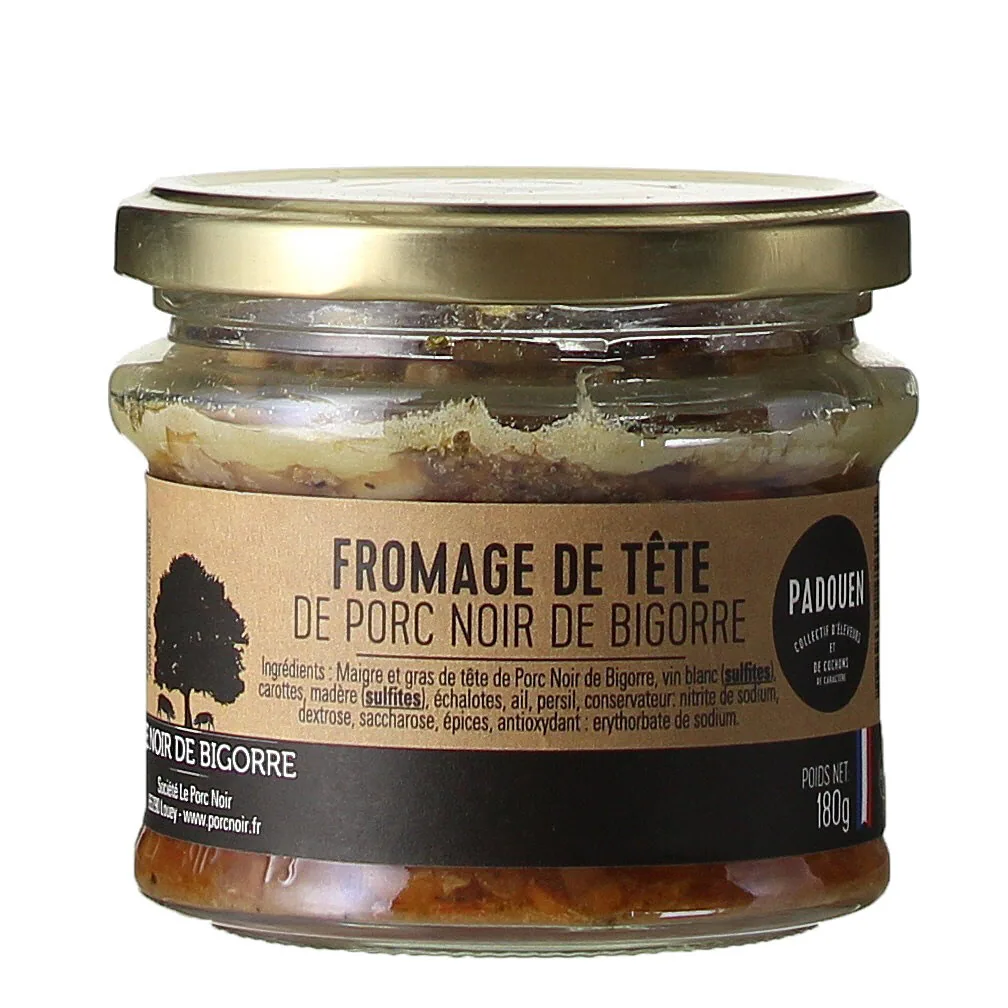
180 g
€7.50
2 products
2 products
180 g
€7.50
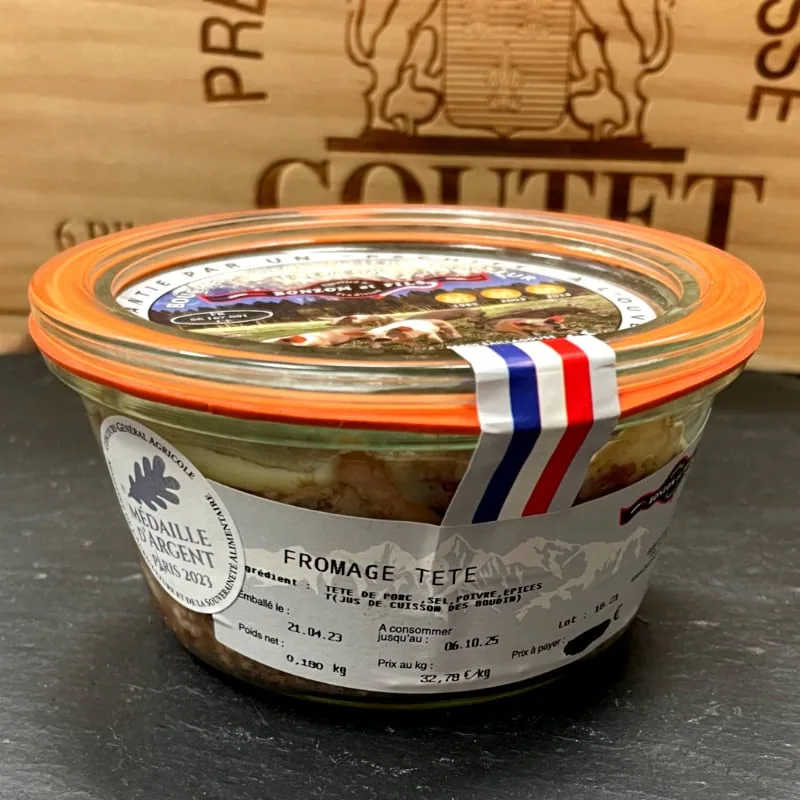
180 g
€7.90
The pig, the word used for the animal, is omnivorous, and therefore easy to feed.
Pork, the word used for the meat.
Indeed, rearing it is amongst the least complicated, every part of the body is edible and its flavour is delicious! This explains why pork has always been the most widely eaten meat in the world. The charcutier's trade has existed since the Middle Ages. Their work consisted of transforming this raw meat into cooked, smoked, dried or salted products. Terrine, confit, pie, black boudin, tripe, bratwurst, they were all there! Trades gradually developed, and specialist fields emerged according to region. There are so many different recipes depending on the breed, rearing, preparation and drying of the pig. When you think of pork, you immediately think of pig's trotters, sautéed pork, pork chops, pork fillet and even pork and potato parillada.
There are more than 300 in the world, but let us focus on the most prominent breeds:
The Large White, a pig of English origin, is highly regarded for its adaptability, its breeding performance and the quality of its meat.
The French Landrace is a white pig with drooping ears, originating from Northern Europe, mainly reared in Denmark and Sweden, and only introduced into France relatively recently. Endowed with good growth capacity and prolificacy, it is often crossed with the Large White.
The Piétrain is a pig reared in Belgium and in the North of France, which boasts an exceptional musculature. One must be patient given how slow its growth is. However, the quality is there, and this breed remains favoured by artisans. It yields quality products. This pig, not profitable enough for industry, is overlooked by the market's leading companies.
Duroc is originally from America, it is a pig breed of "rustic" appearance, worldwide renowned for its tender and juicy meat. It is recognisable in particular by its red, sometimes darker, coat. Although slightly less productive than the Large White, this breed is nonetheless highly valued by producers. The only drawback is that it is categorised as a pig with low reproductive yield.
However, a multitude of breeds with more qualitative merits are also produced and consumed in our regions. All of them were set aside from mass-distribution channels in the 1980s following what was deemed slow growth.
The Pie Noir du Pays Basque breed (the Basque pig) comes from a great Iberian family and has a high rearing rate. It is weather-resistant, and its broad, sturdy limbs make it a great wanderer. The meat is firm and delicious, and Basque charcuterie is renowned.
Like other local French pig breeds, it was put at risk when it was replaced by more productive breeds, such as the Large Whites and other native breeds. A handful of knowledgeable farmers saved this breed. The first step for these farmers was to obtain a protected designation of origin.
Le cochon noir de Gascogne is a purebred pig that is reared naturally in the south-west of France. A descendant of the ibérique pig, now commonly known as Le noir de Bigorre, it holds the AOP (Protected Designation of Origin). With this designation, consumers can be completely confident in the quality of the meat. The Noir de Bigorre is also one of the pig breeds that had been neglected by the world of mass retail. In the 1980s, this variety was on the verge of disappearing. It was a group of producers called PADOUEN who managed to save it and bring it back into fashion. Through highly dedicated rearing and a shared vision of precise rules, these various producers were able to work together to revive this breed of pig, which today attracts a great many people. Named the most popular high-quality breed, we simply cannot leave without telling you about Iberian pigs too:
This breed of pig, originally from the south of the Iberian Peninsula, is above all renowned for its delicious, tender, marbled meat. The Spanish have made it their speciality. These pigs, reared outdoors in vast pastures, develop beautifully marbled muscle. Everything a true pork lover could wish for! What's more, during the final four months, the pigs are released into the forest to feed on acorns. Left to roam freely in their natural environment, they produce meat of superior quality. With a little patience and know-how, you can transform this meat into a very special preserve. The diversity of this breed offers us a wide range of flavours for a well-stocked conserverie , with something to suit every taste.
Descendant of the
wild boar, pork began to be eaten around 8,500 years ago in the Near East. In antiquity, the pig was regarded as a veritable legend. It was
mainly served at the table of the Gods and of men. At the time, pigs were reared, fed, slaughtered and cut up according to a Roman law known as "La Porcella". From 800 to 27 BC, during the Iron Age, the Celtic period, the Celtic civilisation placed great importance on pigs: the animal can be found on statues, coins and many other fine objects. During the Gallo-Roman period, half-wild herds of pigs fed on acorns and beech nuts were reared by the Gauls. It was in the Middle Ages that pork was developed in various forms and recipes. Since then, we find it everywhere, preserved in different ways: smoked, covered in salt or even as
rilletteswith a layer of fat as a preservative. However,
porksometimes became a burden for man, blamed for numerous mishaps in towns, villages and the countryside, as it would eat just about anything. In the Middle Ages, badly behaved pigs were punished, as a man might be tortured in public. From the twentieth century through to the 1960s, every rural family reared one or more
pigs. It was very common. Afterwards, they were slaughtered in the garden. These animals were often well cared for, as the meat produced fed the family for several months. Nowadays, hygiene rules no longer allow such practices. Today, pigs are reared on farms and must pass through an abattoir in order to comply with a precise procedure. As for the etymology of "
charcuterie", the word was first heard in the fifth century and comes from the term "chair cuite" (cooked flesh).
It was the Romans and Greeks who already ate smoked
hamduring festivities in antiquity. In the fifteenth century, butchers were known as "charcutiers". In this section, you will find the opportunity to
buy artisanal pork charcuterie online. A wide range of pork charcuterie awaits your discovery. Our
charcuterieis available here with Next-Day Delivery!
 Nitrite-free
 Award-winning