
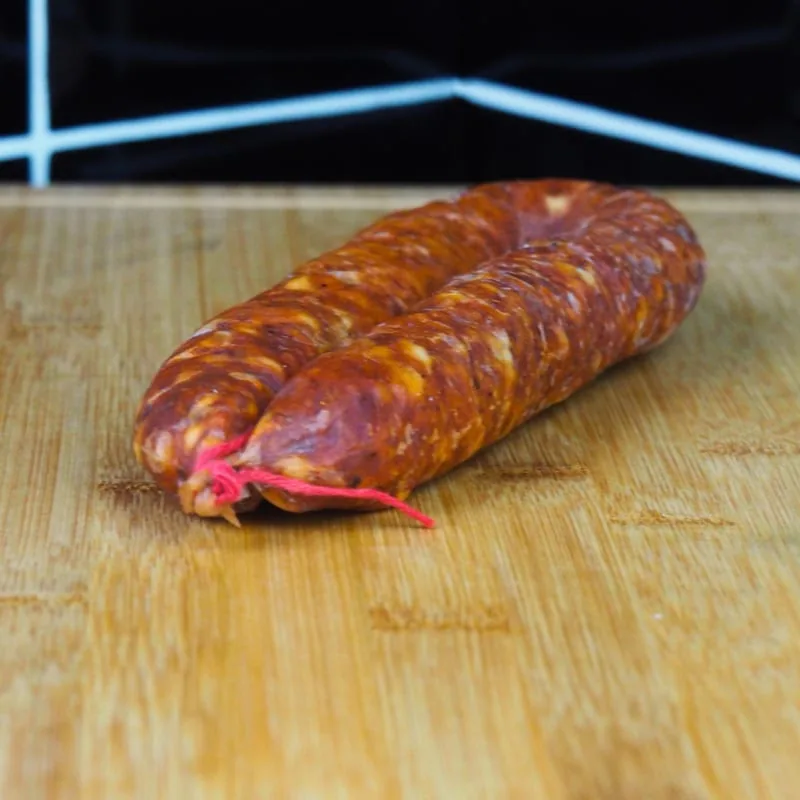
300 g
 Award-winning
€11.90
How to store chorizo
1 product
1 product
300 g
€11.90
Chorizo comes straight from the Iberian Peninsula and Portugal. But there are several varieties, produced in other countries such as France, Italy, Germany, Hungary, Latin America...
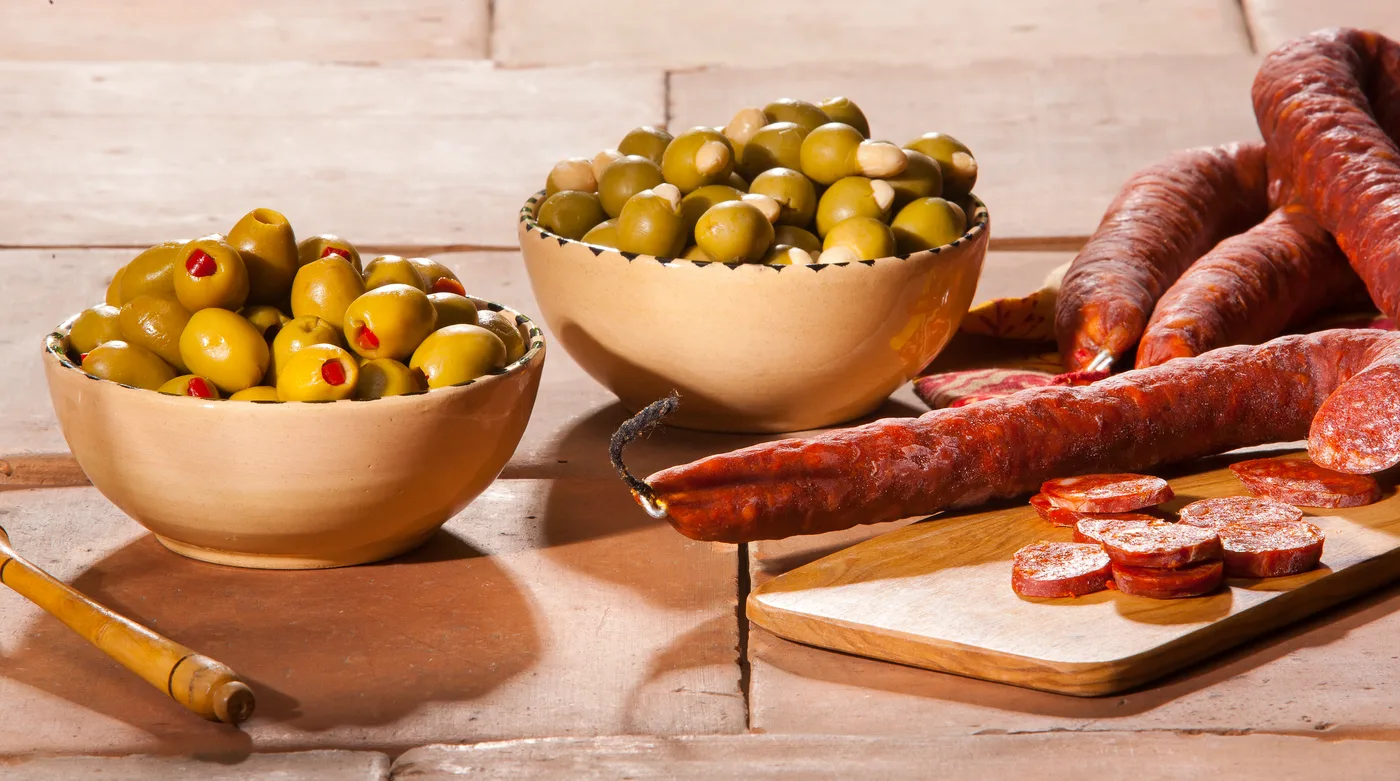
As we now understand, chorizo is a traditional Spanish charcuterie. It was born in the 17th century with the arrival of paprika from the Americas. This Spanish paprika is called pimentón español.
In Spain, chorizo is enjoyed both on its own, sliced as a nibble, in tapas or in a sandwich, and cooked with pulses such as lentils or white beans. A flagship product of Spanish gastronomy, chorizo is recognisable by its rust-red colour, which comes from the spices. It can come in different shapes depending on the casing it is stuffed into, thin and coiled, wide and straight, and so on. You may also choose between a mild or spicy chorizo. Spain has spread the enjoyment of chorizo across the Atlantic, to Latin America. Some countries now have their own types of chorizo, such as Mexico or Argentina. Depending on the pork used, and more specifically the rearing conditions of the Iberian pigs, we find several varieties of Iberian chorizos:
Quite similar to Spanish chorizo, Portuguese chorizo (called chouriço) is generally prepared with wine and is smoked. Just as popular as in Spain, it is an important part of Portuguese gastronomy, and you will find it in many national specialities, such as caldo verde, or the green cabbage soup. There are also plenty of fresh chorizos, to be cooked at home, which the Portuguese love to grill on the barbecue. There are several types of Portuguese chouriço:
In France, chorizo is often enjoyed just as it is, as part of an aperitif. But it's also common to cook with it, in rice dishes, fish dishes, quiches, gratins, mixed salads, pizzas... It's a wonderfully versatile product for enhancing a dish and giving it distinctive flavours! France also produces its own chorizo, a popular charcuterie in the Basque Country for example, close to the Spanish border. In the Basque Country, chorizo is made with Espelette pepper, a flagship spice of the region, known for its gentle kick and fruity aromas.
While there are many different variations of chorizo, its preparation always involves a few essentials that give it its distinctive character.
Pork is the main meat used to make chorizo, though you may also come across variations such as beef chorizo, duck chorizo, bull chorizo, donkey chorizo... Pork is also sometimes blended with one of these other meats, for example a pork and beef combination is entirely possible. This is of course not an exhaustive list, as creativity is always welcome in the world of charcuterie, though we do always have a soft spot for authentic recipes!
The key ingredient in chorizo is paprika, and more specifically Spanish pimentón. But once again, depending on the variety and the desired level of heat, the spices used will vary. Here is a list of the ingredients commonly used in making chorizo:
Given the many varieties of chorizo that exist, coming from several countries, several breeds of pig, or indeed several types of meat, producers never stop expressing their creativity to offer original and flavoursome recipes.
The chorizo-making process follows several steps, similar to those of saucisson-making:
These are the main steps involved in making a good chorizo, but just as with the choice of ingredients, they vary according to the traditions and recipes of each producer.
To find a good chorizo, you can turn to many expert artisans, who create different flavoursome recipes according to their know-how, their tradition, and their region. Turn to Spanish or Portuguese producers to savour genuine traditional chorizos, or to artisans from the south-west who will introduce you to the variations from the Basque Country. But nowadays, a great many small producers make delicious chorizos, both authentic and original. Discover, for example, the bull chorizo from Maison Perez, or the duck chorizo from La Sourbère, there's no shortage of surprises in store! At Tête de Lard, we choose our producers rigorously for the quality of their products, and the flavours of their recipes, which we've tasted and approved. So you can buy genuine chorizo, and even enjoy a variety of pleasures by sampling different chorizo recipes, all in the same online order with 24h delivery! We therefore guarantee the quality and taste of all the chorizos we offer in this category.
Here is an overview of the different chorizo recipes you can find at Tête de Lard:
While we've classified various spicy charcuterie resembling chorizo in this category, it's important to distinguish traditional chorizo from other Spanish or Portuguese artisanal charcuterie such as: chistorra (raw, red in colour and originating from Aragón in Spain), soubressade (more orange in colour and mainly made with black pork) or botelo (smoked bone sausage originating from the town of Vinhais in Portugal), for example, which also have "pimentón" or paprika as their main seasoning. One should also distinguish chorizo from Spianata, which originates from Italy, more precisely from Calabria, and is prepared mainly from pork thigh.
As chorizo can be enjoyed just as well as an aperitif as in a ready-made dish, here is an idea for an easy recipe to make with chorizo:
Ingredients for 6 people:
Method:
And all that's left to do is enjoy, bon appétit!
A little bonus especially for Tête de Lard to finish off, this recipe isn't made with chorizo itself but with Nduja, a spicy charcuterie speciality from Italy that you can find in this category. However, we enjoyed this little culinary gem so much that we wanted to include it in our content. To discover this recipe created by our partner Daily Family Cooking, it's right here: recipe for peppers stuffed with Nduja and Burrata.
A pregnant woman can eat chorizo during her pregnancy, provided it is thoroughly cooked, for example if it is on a pizza that has been baked in the oven at over 200°. As a general rule, eating charcuterie during pregnancy is not advised, since it is raw meat.
Guidelines advise pregnant women against eating raw charcuterie, as it may carry certain bacteria that are harmful to the foetus, such as toxoplasmosis. While this illness is almost harmless in humans, it can be dangerous during pregnancy for the baby and therefore for the mother, as it can cause miscarriages or abnormalities in the newborn. To check that you can eat a meat product while pregnant, you can use a thermometer: at the core, the meat must reach a minimum of 71° once cooked.
Chorizo is a foodstuff prone to desiccation (losing moisture). As such, it should be eaten fairly quickly and ideally kept for a shorter time than saucisson.
Dry-cured chorizo should be kept at around 15°C, away from light. Fresh chorizo, on the other hand, must be kept in the refrigerator and eaten within a few days of preparation to avoid any form of bacterial contamination, and thus any health risk.
Fresh chorizo spoils fairly quickly, as it is a fresh meat product. It should be eaten promptly and cooked before tasting. If you notice an unusual smell, it should be thrown away.
Dry-cured chorizo does not spoil quickly but does tend to dry out. It can therefore be kept for a long time. The bloom that appears on its surface is due to drying and fermentation and is entirely normal, as with cheese or saucisson.
That said, for the best tasting experience, we recommend enjoying your chorizo within a month of purchase, and storing it in a cool room.
Now you know everything there is to know about chorizo! All that's left to do is enjoy it!