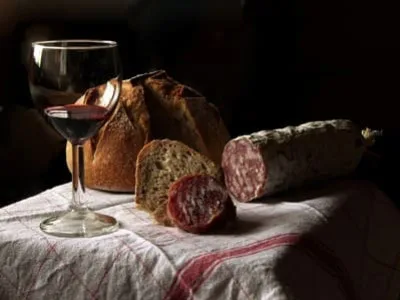
Charcuterie with friends
Guide: How to store your charcuterie?
Storing charcuterie properly depends on its type: dry-cured, tinned, vacuum-packed or fresh. To prevent it from losing quality or spoiling too quickly, certain…
13 min read· By Alex Foras
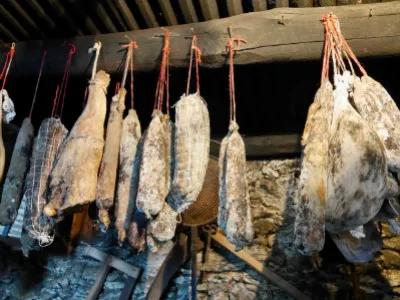
GUIDE: How to store your charcuterie? Our best tips
How you store charcuterie depends on its type: dry-cured, tinned, vacuum-packed or fresh. To stop it losing quality or spoiling too quickly, a few simple rules need to be followed.
- Dry-cured charcuterie (saucisson, jambon sec, coppa…) keeps best in a cool, dry and well-ventilated spot (12-15°C), but can also be stored in the fridge with the right precautions.
- Charcuterie in jars and tins can be kept at room temperature as long as they're unopened, then should be placed in the fridge once opened.
- Vacuum-packed charcuterie has a long shelf life as long as the packaging is intact, but should be eaten quickly once opened.
- Fresh charcuterie (pâtés, rillettes, boudin…) should be kept in the fridge between 0 and 4°C and eaten quickly after opening.
In this guide, you'll find clear and detailed answers on how to properly store each type of charcuterie and avoid common mistakes.
Storing charcuterie
Each type of charcuterie needs a suitable storage method to preserve its texture and flavour. Here are the best practices for keeping your products in the best possible condition.
Storing dry-cured charcuterie
Saucissons, jambons secs, coppa and other aged charcuterie should be kept in a cool, dry and well-ventilated spot (12-15°C), such as a cellar or a pantry. If kept in the fridge, it's best to wrap them in a clean cloth to stop them drying out.
Tip: avoid sealing them in a plastic bag, as this encourages moisture and mould.
Storing charcuterie in jars and tins
Pâtés, rillettes and other charcuterie in jars have a very long shelf life as long as they remain sealed. They can be kept at room temperature, away from light and moisture.
Once opened, they should be placed in the fridge (0-4°C) and eaten within 3 to 5 days.
Tip: after opening, cover the surface of the product with cling film or a little fat to limit oxidation.
Storing vacuum-packed charcuterie
Vacuum-packed charcuterie may be kept in the refrigerator until its use-by date. Once the packaging has been opened, it should be eaten promptly and stored as you would a dry-cured or fresh charcuterie, depending on its type.
Upon opening: take it out of its packaging and let it breathe for a few minutes before tasting, so it regains its texture and aromas.
Storing fresh charcuterie
Products such as pâté, rillettes, boudin or andouille are delicate and should be kept in the refrigerator (0-4°C). Once opened, they should be eaten within 2 to 5 days, depending on the product.
Tip: keep them in their original packaging or transfer them to an airtight container to prevent them from oxidising and absorbing odours from the refrigerator.
How should saucisson be stored?
Saucisson is a dry-cured charcuterie that should be kept somewhere cool, dry and well ventilated. Ideally, a cellar or a pantry with a temperature between 12 and 15°C and moderate humidity. If you don't have a cellar, you can wrap it in a cotton cloth or perforated food paper and keep it in a ventilated cupboard. It may also be placed in the bottom of the refrigerator, but you should avoid cling film, as it encourages humidity and softening. Tip: if you keep your saucisson in the refrigerator, take it out at least an hour before tasting so it regains all its flavour.
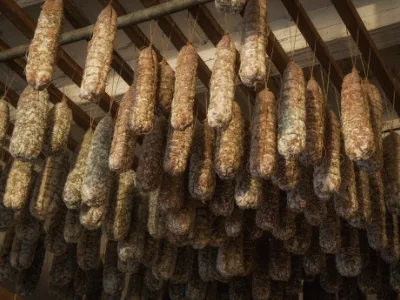
Where should you store your saucisson?
The best place to keep a saucisson is:
- A ventilated cellar (12-15°C, 70-80% humidity).
- A cool, airy cupboard, wrapped in a clean cloth.
- The bottom of the refrigerator, in a cloth or left uncovered, but never in a plastic bag, nor wrapped in butcher's paper, so as to avoid excess humidity.
How long can you keep your saucisson?
A whole saucisson can keep for several weeks to several months, depending on the environment. The drier the storage spot, the more it will continue to mature over time. Once cut, it's best enjoyed within 5 to 7 days, and you should protect the cut end with food film or apply a little fat (saindoux or oil) to stop it drying out too quickly.
How do you make your saucisson drier?
If you like your saucisson nice and dry-cured, hang it in a cool, dry spot for a few days or weeks. Quick method: wrap it in a cotton cloth and place it in the fridge's vegetable drawer for a few days to a week.
How do you stabilise the dryness of your saucisson?
If your saucisson becomes too dry, wrap it in a damp cloth and leave it in the fridge for 12 to 24 hours. You can also rub it with a little olive oil to soften the skin slightly. If your saucisson is too soft, place it somewhere drier or hang it with string to improve the drying process.
What is the bloom on a saucisson?
The bloom on a saucisson is that fine layer of white or bluish mould that forms naturally on the surface. It's beneficial, as it protects the saucisson from drying out and gives it its characteristic flavour. Don't remove it entirely, as it plays a part in the proper ageing of the saucisson. Simply rub it gently before tasting if it's too thick. Please note: if the mould is green or black and gives off an unpleasant smell, this is a sign of excess moisture. Solution: gently rub the saucisson with a dry cloth or soft brush. If needed, go over it with a cloth very lightly dampened with white vinegar.
How does Tête de Lard store its saucissons?
At Tête de Lard, the saucissons are stored with the greatest care to guarantee optimal preservation before dispatch.
- Storage in ventilated fridges: the saucissons are placed in ventilated fridges to avoid any excess moisture and ensure even ageing.
- Respecting natural drying: storage allows the saucissons to keep their natural bloom, essential to their maturation and unique flavour.
- Suitable dispatch: saucissons that are not vacuum-packed are wrapped in butcher's paper so as not to damage the skin and to preserve their texture.
Upon receipt, we recommend removing this paper and letting the saucisson air out so it can breathe.
The vision of Tête de Lard's partner producers:
At Tête de Lard, our partner producers all share the same goal: to offer quality saucissons, with an authentic taste and perfectly aged. However, there are two distinct approaches when it comes to preserving and ageing saucissons before they are sold.
- The vacuum-packing school: some producers choose to age their saucissons to the perfect stage, then vacuum-pack them to halt their evolution. This method guarantees a consistent texture and flavour, preserving the ideal moisture of the saucisson until it is opened.
- The free-ageing school: other producers prefer to leave their saucissons out in the open air until they are sold, allowing each product to continue ageing naturally. This approach gives charcuterie lovers the chance to choose a more or less dry-cured saucisson, according to their preference.
Each of these two methods has its own advantages, allowing our customers to find the saucisson that matches their expectations, whether they prefer a stabilised product or one that continues to evolve.
How long should a saucisson be aged?
Ageing a saucisson is an essential stage that determines its texture, aromatic strength and level of dryness all at once. It is a slow process, guided by time, humidity and temperature.
En règle générale, un saucisson artisanal met entre 3 et 8 semaines à atteindre sa maturité, selon sa taille, sa recette (plus ou moins grasse), et l’environnement dans lequel il est séché. Les petits saucissons secs (type fuseau ou mini-saucissons) peuvent être prêts en 3 à 4 semaines, tandis que les saucissons plus gros ou rustiques (comme ceux au poivre ou à l’ail) nécessitent souvent 6 à 8 semaines, voire davantage.
Mais attention, l’affinage ne s’arrête pas toujours au moment de la vente. Certains saucissons continuent de sécher légèrement chez vous, notamment s’ils ne sont pas sous vide. C’est pourquoi on parle parfois de saucisson "vivant" : il évolue au fil des jours, gagne en fermeté, en intensité, et peut même développer une fleur naturelle plus marquée.
Si vous aimez le saucisson plus tendre, consommez-le dès réception. Si vous le préférez plus sec, vous pouvez prolonger son affinage chez vous, suspendu dans un endroit sec et frais, ou même l’oublier quelques jours dans le bac à légumes du réfrigérateur, enveloppé dans un torchon en coton.
Il n’y a pas de "meilleure" durée : tout dépend de vos préférences. L’affinage du saucisson, c’est aussi une question de goût… et de patience.
How should you store your ham?
Ham can be sold in different forms: whole, in pieces or sliced. Each format calls for a specific storage method to preserve its texture and aromas. A whole ham, with or without the bone, keeps best in a dry, cool place (12-15°C), hung up or resting on a suitable support. Once you've started it, it's best to cover the cut part with a clean cloth or a layer of saindoux to stop it drying out. Ham in pieces should be kept in the fridge (0-4°C), wrapped in butcher's paper or a clean tea towel to stop it drying out too quickly. Sliced ham should be eaten shortly after opening and kept in the fridge, ideally in an airtight box to prevent oxidation.
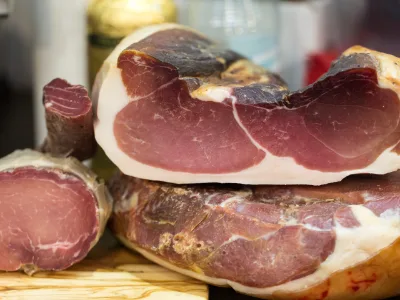
Storing ham under vacuum
Many hams, whether whole, in pieces or sliced, are kept vacuum-packed. This method of preservation extends the storage time by limiting contact with the air, which reduces oxidation and the development of bacteria. As long as the vacuum packaging remains intact, the ham can be kept for several weeks to several months in the refrigerator (0-4°C) or at room temperature, depending on the date shown on the packaging. Once opened, it should be stored like a regular ham:
- A whole ham should be protected with a clean cloth or butcher's paper.
- A ham in pieces should be wrapped in butcher's paper.
- Sliced ham should be placed in an airtight container to prevent oxidation, or in butcher's paper. It may even be wrapped in cling film.
Tip: Before tasting, leave the ham at room temperature for 10 to 15 minutes after opening so it can regain all its flavours.
How long can a ham for slicing be kept?
A ham that has been started can be kept for several weeks to several months, as long as it is stored in a cool, well-ventilated place, protected from excessive humidity. A ham cut into pieces will generally keep for 2 to 3 weeks in the refrigerator, provided it is well wrapped. Sliced ham should be eaten within 48 to 72 hours of opening to preserve all its flavour. With vacuum packaging, these timescales are considerably extended:
- Whole vacuum-packed ham: see the producer's instructions.
- Vacuum-packed ham in pieces: see the product's use-by date.
- Vacuum-packed sliced ham: see the product's use-by date.
- Once opened, it is advisable to eat the ham within 2 to 5 days if it is sliced. This rule does not apply to pieces or whole hams.
If you don't plan to eat it soon after opening, it is best to vacuum-pack it again if you have a suitable device.
Can ham be frozen?
Yes, a ham can be frozen to extend its shelf life.
- A whole ham generally doesn't need to be frozen if it's stored properly.
- A ham in pieces can be frozen, provided it's well wrapped in cling film or a freezer bag.
- Sliced ham can be frozen, but it may lose a little texture. It's advisable to freeze the slices in small portions, well wrapped to prevent them sticking together and drying out.
If the ham is already vacuum-packed, it can be placed in the freezer as is, which will preserve its texture even better. For defrosting, leave it in the fridge for several hours to avoid a thermal shock that would affect its quality.
Where should you leave your ham to dry?
If you'd like to age a ham at home, place it in a dry, cool and well-ventilated spot (temperature between 12 and 15°C, humidity around 70%). A well-ventilated cellar or an attic are ideal spots. Make sure the air circulates well around the ham to avoid excessive mould.
How does Tête de Lard store its hams?
At Tête de Lard, nearly all our producers favour vacuum storage, which guarantees optimal shelf life and preserves all the flavour qualities the product gained during its ageing at the producer's.
- Vacuum storage: most of the hams sold by Tête de Lard are vacuum-packed, whether whole, in pieces or sliced, to prevent oxidation and offer long-lasting preservation.
- Storage in ventilated fridges: to ensure maximum freshness, the hams are stored in ventilated fridges before dispatch.
- Secure dispatch: the hams are sent in their vacuum packaging, guaranteeing perfect preservation of the product until it reaches you.
- Upon receipt, we'd recommend:Leaving the ham vacuum-packed until the moment of eating so that it keeps all its flavour.
Taking the ham out of its vacuum pack a few minutes before tasting to bring back all its texture and natural aromas. A few hours or days for whole pieces.
How to store a charcuterie board?
A charcuterie board is often made up of a mix of dry-cured, fresh and sometimes vacuum-packed charcuterie. It is therefore essential to adopt good practices to prevent it from losing quality too quickly. If the board is already prepared and vacuum-packed, it should be kept in the refrigerator (0-4°C) and can be kept until the date shown on the packaging. Once opened, the charcuterie should be eaten quickly to prevent it from oxidising or drying out too much. If the board is homemade, here are the rules to follow:
- Before eating: keep it in the refrigerator in an airtight container or covered with cling film.
- After opening: eat it within 24 hours to preserve the texture and flavours of the different charcuterie.
How long can you keep a charcuterie board?
- Vacuum-packed: up to 2 weeks in the refrigerator, depending on the use-by date.
- Homemade: 24 to 48 hours in the refrigerator, provided it is well wrapped.
- At room temperature: a charcuterie board should not be left out for more than 2 hours if it contains cooked ham or fresh products, especially in summer or in a warm environment. A dry-cured charcuterie board (for example: cured ham, coppa, lomo...) can be left out for longer.
Tip: to stop certain charcuterie from drying out too quickly (such as cured ham or sliced saucisson), you can cover them with a clean cloth after opening.
Can you freeze a charcuterie board?
Yes, but this isn't recommended for all types of charcuterie.
- Dry-cured charcuterie (saucisson, dry-cured ham, coppa, chorizo) freezes well, but should be wrapped in cling film or vacuum-packed to prevent it from taking on the taste of the freezer.
- Fresh charcuterie (pâtés, rillettes, boudin) can be frozen, but its texture may be slightly altered on thawing.
- Sliced charcuterie (cooked ham, rosette, mortadella) can be frozen in small portions, well wrapped to prevent them from sticking together.
To defrost, place the charcuterie in the refrigerator for several hours, without exposing it to sudden changes in temperature.