Charcuterie with friends
Everything you need to know about artisanal charcuterie!
Charcuterie refers to the whole range of food preparations, raw or cooked, generally made from pork, with salt used as a preserving agent.
20 min read· By Rémi Ledu
CONTENTS
What is charcuterie
Hams
Saucissons
Terrines and pâtés
Boudins
Andouilles and andouillettes
Pastry-based charcuterie
Rillettes
Tripe
A word on vocabulary
Recipes
What is charcuterie?
Charcuterie: definition
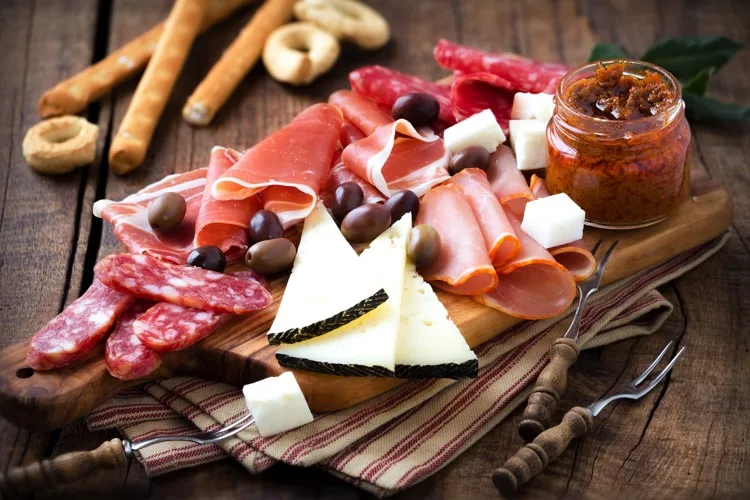
Charcuterie refers to all food preparations, whether raw or cooked, generally made from pork, with salt used as a preserving agent.
The history of charcuterie
It is mainly pork that is used, but you will also find charcuterie made from poultry (duck), beef, goat, as well as game such as roe deer, deer and wild boar.
But why does salt play this leading role in charcuterie? It is because, in days gone by, meat was very difficult to preserve without access to refrigeration. Transforming it therefore emerged as a solution. More specifically, pork lent itself particularly well to salting and smoking. It was in this way that charcuterie came to be.
Charcuterie then went through industrialisation, which sadly greatly deteriorated its quality. It became a source of environmental destruction, of intensive farming that kills animals that have barely lived at all. However, consciences are awakening and we are tending to move back towards products that are more respectful of the environment and of the animal. Artisanal charcuterie is coming back to the forefront. A multitude of producers are also moving towards producing organic charcuterie, free from additives: these products are often of very high quality and much sought after.
To pay tribute to true charcuterie, let us go back to its origins and take a little tour of what is traditionally made in France: Savoie, Corsica, Auvergne, Ardèche, Provence...
Today, there are many kinds of charcuterie, produced in each of France's regions.
Hams
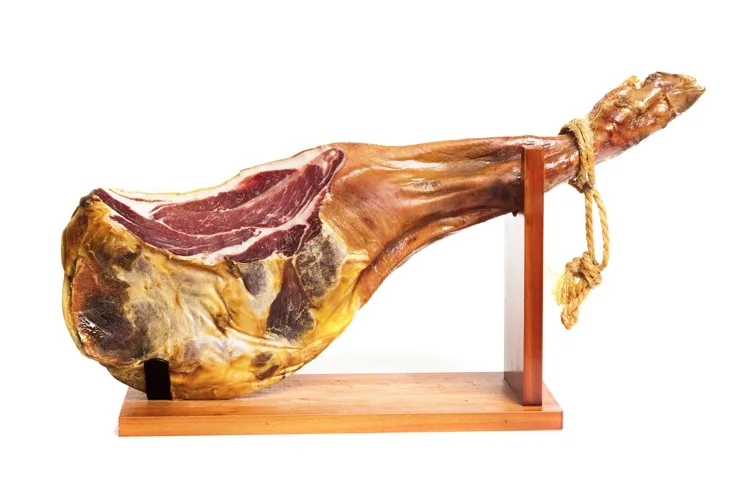
Charcuterie is traditionally associated with ham, particularly cured ham. Traditionally, it is made with pork, so from the pig.
Throughout the ages and across civilisations, this animal has been at times revered, at times reviled. It occupies a very varied and complex place in the way different cultures view it, with some refusing to eat it at all.
In France, it is associated with the country's gastronomy, which has indeed been inscribed on UNESCO's World Heritage list. It is an essential feature of French tables.
Cured ham or cooked ham?
Within ham, there is the dry-cured category and the cooked category.
Le jambon cuit: preparation and characteristics
Pigs appeared on earth nearly fifty million years before our era. The domestic pig is a descendant of the wild boar. The Gauls were the first to develop their know-how and became the best at this speciality. They were highly skilled at salting, smoking and oiling ham. It kept very well. Its reputation soon spread throughout Europe. It became much appreciated during banquets. Each country then began to adapt this recipe to its own terroir.
The ham is cut from the hind part of the pig. This is a noble cut that made ham a sign of abundance and opulence in the Middle Ages. Thanks to this history, ham is today a cornerstone of our gastronomy.
Today, cooked jambon is the most important charcuterie production in France. It must comply with a very strict set of specifications for its preparation:
- The meat must come from the hind leg of the pig.
- It is, quite simply, a salted ham.
- Its curing must be carried out by brining*.
- It can be found steamed, braised, cooked in a cloth, or in stock, with or without the bone.
Other ingredients may be added to enhance its flavour: spices, wine-based aromatics, spirits, sugars… but the classic white ham remains the most common.
Jambon cru or dry-cured ham
Next comes the dry-cured category. Dry-cured jambon is today the favourite little pleasure of French tables. This product has indeed been enjoyed and appreciated since time immemorial. Legend has it that a pig once fell into a stream fed by a salt spring in the Pyrenees and was found a few days later by shepherds. The exquisite taste of this meat is said to have given them the idea for the salting process.
It then follows the same history as cooked ham, remaining at the heart of culture and the table throughout the different periods.
For its production, like cooked ham, only the hind part of the animal is allowed. It requires real know-how, and is a true art of the table. The artisans must show great patience. Each ham is rubbed several times with salt in the traditional, artisanal way. They are then left to mature.
Their flavour can vary according to several criteria:
- The salting technique
- The breed of the pigs
- Their feed and how they are reared
- How the drying is carried out
- The length of maturation.
Lastly, these hams can carry different designations and special labels that help them gain in reputation and recognition.
Saucissons
Its history is rather simple, as for 2,000 years, the making of saucisson has remained much the same, with a few exceptions. It is a product that has delighted young and old alike since time immemorial.
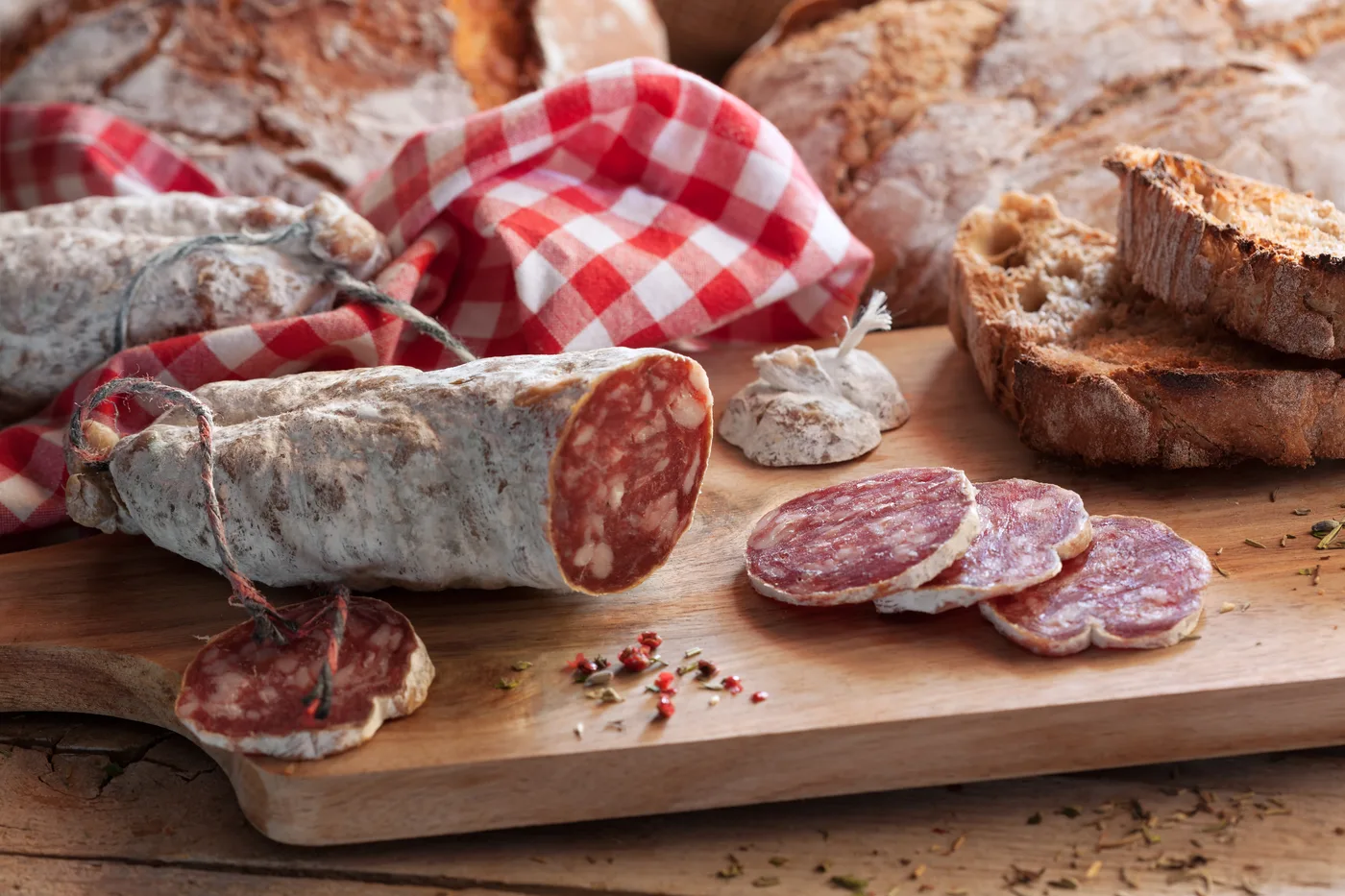
In Antiquity, everyone shared their know-how, and pigs were reared outdoors around the farms. Farmers have always shown a genuine spirit of teamwork. Over the ages and depending on the region, several kinds of saucissons emerged, allowing different cuts of pork to be used, and sometimes even mixed with beef. Today, we can see that the French regions most renowned for their cured meats are large former Roman towns.
The saucisson became so popular that in the 13th century the authorities had to restrict the variations, as they had become quite far-fetched. Thanks to this regulation, the traditional saucisson recipe has lived on.
Do also discover our chorizos
Pour sa fabrication, c'est là encore un vrai savoir-faire. Un saucisson, c'est environ 3/4 de viande et 1/4 de gras. La viande est hachée plus ou moins finement. Ce mélange est ensuite assaisonné, puis mis sous boyau. Il faut ensuite patienter et attendre qu'il sèche.
Il est en général composé de maigre de coche* ou de porc charcutier. Mais il existe également des saucissons de bœuf, de cheval, d'âne, de chèvre ou de mulet. Les épices varient aussi selon l'envie du producteur. Un saucisson peut donc être classique, traditionnel ou surprenant.
Le boyau est également à choisir avec soin. Il peut être naturel ou artificiel. Si il est naturel, l'artisan devra choisir le morceau en fonction de la taille qu'il souhaite donner à son produit.
Pendant la période de séchage qui dure de 4 à 10 semaines, à une température de 12 à 14 °C, le saucisson va développer des micro-organismes qui vont participer à sa saveur finale : c'est ce qu'on appelle la fleur naturelle. Ainsi, si vous constatez une pellicule blanche sur la surface de votre saucisson, c'est normal, et c'est même tout à fait bon signe ! C'est ce qui fait toute la saveur du saucisson et garantit une fabrication artisanale. Certains producteurs, notamment dans l'industrie, ont recours à de la fleur artificielle, poudre blanche qu'ils disposent sur le saucisson de manière à lui donner son aspect typique. Mais la fleur naturelle apparaît sur les saucissons artisanaux réalisés avec des boyaux naturels, c'est de la "bonne moisissure". Cependant, si vous trouvez qu'il y a trop de fleur à votre goût, vous pouvez tout à fait frotter la surface de votre saucisson pour éliminer le surplus. Dans tous les cas, cette fleur n'est en aucun cas signe de péremption, bien au contraire.
Il existe enfin différents types de saucissons qui ont tous leurs particularités :
- The saucisson de Savoie from the mountains, pure pork, coarsely chopped and packed into a chaudin* casing.
- The dry sausage, prepared with fresh meat, trimmed of sinew and salted. It is coarsely chopped and has a diameter of 30 to 40 mm.
- The saucisson à la perche, an endless tube of small diameter, coiled onto a pole.
- The saucisson de ménage, the most common of saucissons, commonly known as saucisson sec. It is pure pork, medium-chopped and stuffed into a chaudin casing.
- The rosette, also known as fuseau, is the largest of the saucissons.
- The pavé, the miche, the galet or rouelle. It is flattened and slightly elongated.
- The jésus sec has a very wide diameter, around 10 cm, with a medium chop.
- Finely chopped saucissons
- The salami, it is pure pork or pork and beef, lightly smoked, with a very fine chop.
Terrines and pâtés
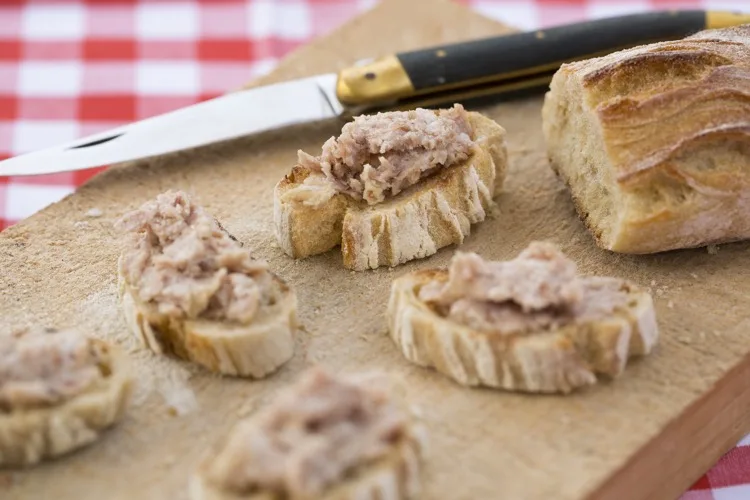
The pâté was the first of the two to be invented. It was created in Roman times. Then, in the Middle Ages, it was its method of cooking that gave the latter its name. Indeed, the terrine is cooked in an earthenware dish, whereas the pâté is cooked inside a crust, not necessarily edible at the time.
The pâté of that era had a very thick crust that protected the filling during cooking and when being transported. It was a prized dish, readily offered to lords. Over time, many recipes emerged using meats other than pork: pâté made with poultry and feathered game (duck, capon), mutton, veal, hare, but also with seafood (carp, eel, monkfish, sturgeon, cod), and many others besides.
Each province went on to develop its own speciality.
In Napoleon's time, a long-lasting preservation method that we still use today came into being: appertisation*. Pâtés and terrines could thus be kept for far longer than before.
Nowadays, pâtés and terrines are spreadable and the flavours are ever more original to vary the pleasures.
There are:
- Finely minced pâtés, such as duck mousse.
- Coarsely minced pâtés, such as pâté breton.
- Mixed-mince pâtés, such as forest pâtés and pâté ardennais.
- Celebration pâtés, these are the pâtés en croûte enjoyed for grand occasions. Foie gras or truffles may be added.
- Ballottine and galantine, these are preparations made from meats called lèches which are cooked sous vide. Ballotins are round and galantines are rectangular.
Pâtés and terrines may also be subject to regulations under certain labels. It is then up to each producer to let their imagination and creativity speak.
Boudins
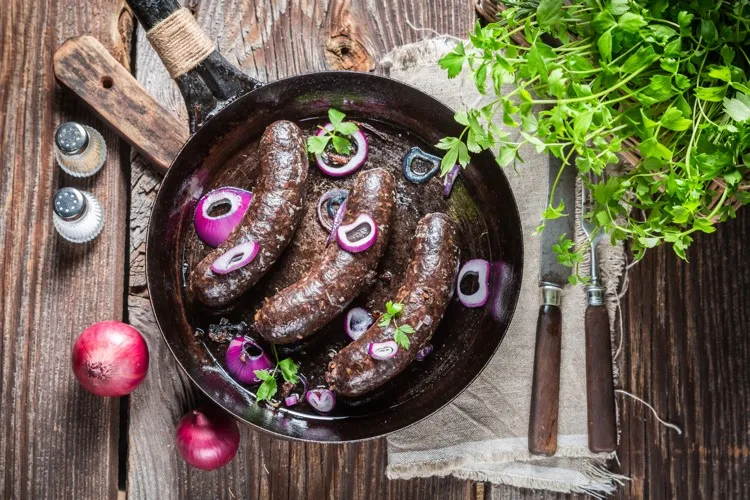
There is black pudding and white pudding.
As for black pudding, it is one of the oldest known charcuterie. It is said to have been invented by Aphrodite, not the goddess everyone knows, but rather an ancient Greek cook. In the Middle Ages, it was a dish of the common people, enjoyed in taverns. Today, there are many variations even though the basic recipe has changed very little. Each region has created its own speciality.
Black pudding was traditionally eaten when the pig was slaughtered. A “boudin meal” would be organised the following day. It was therefore relatively rare to find. Today, it is enjoyed all year round.
A boudin is made of blood, pork fat and onion. The blood comes exclusively from the pig. The mixture is then wrapped in a pork or beef casing.
Every boudin is different, each artisan seasons it in their own way. It is appreciated for its aroma and its softness.
As for white pudding, the story begins in the Middle Ages. There was a tradition of beginning the Christmas Eve feast with warm milk porridge served hot. The ancestor of white pudding was born.
The first recipe for boudin blanc dates back to the seventeenth century. It was originally a kind of porridge that a cook had the idea of placing into a casing to make it easier to eat. It is also said that boudin may have been invented by monks so they could eat something resembling a sausage on Fridays, when they were not allowed to eat meat.
Boudin blanc is a very pale mixture made from white meat, lean pork, poultry or veal. Cream, eggs or milk may also be added. The whole mixture is encased in a pork casing. For seasoning, boudin can be flavoured with carrots, onions, thyme, parsley, cloves, truffle and, more surprisingly, vanilla, orange blossom or cinnamon.
Andouilles and andouillettes
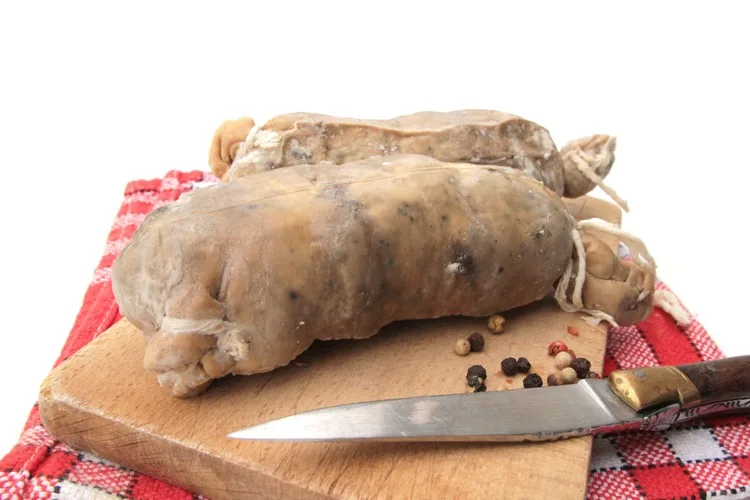
Andouille:
The first recipe for andouille dates back to 1393, published in the Ménagier de Paris*. Andouille has since stood the test of time, always valued for its fine flavour and exceptional quality. It was in Brittany that it earned a fine reputation, as with andouille de Guéméné. Breton andouille has gained a fine reputation.
Nowadays, andouille de Revin, a speciality from the Ardennes, has even been included in the Code de la Charcuterie* as a regional speciality.
Andouille is made from chitterlings, certain cuts from the lower parts of the pig, fat and pork meat. The mixture is then seasoned with spices, salt, aromatics, spirits, liqueurs, wines, condiments and flavourings. This mixture is then placed into a natural casing.
Andouillette:
Andouillette, for its part, also appeared in the Middle Ages, but much later. At first, the term only referred to a small andouille. The earliest written record dates back to 1560 in the town of Troyes. The story goes that the men of the royal army were trying to retake control of the town. At the same time, they had decided to pay a visit to the town's tripe butchers. It was then, so the tale goes, that they discovered the andouillettes of Troyes, which would go on to become famous.
Andouillette has evolved enormously over time. The old recipe bears little resemblance to the one we know today. It has not always been made solely from pork; there were once recipes using udders and calves' mesentery flavoured with vinegar. In 1864, the Troyes recipe specified that andouillettes should be made from pork alone. Over time, this would become the standard.
Making andouillette is a craft that few master to perfection. A mixture must be prepared, whole intestines are used, and the whole thing is then stuffed, either by hand or by machine, into a natural casing. The seasoning is then added — salt, spices, herbs and condiments. Finally, they must be simmered in a broth for many hours.
There are a few specialists, such as Joël CADET, three-time European andouillette champion, nicknamed the king of andouille. He creates exceptional products that only he knows how to make.
Pastry-based charcuterie
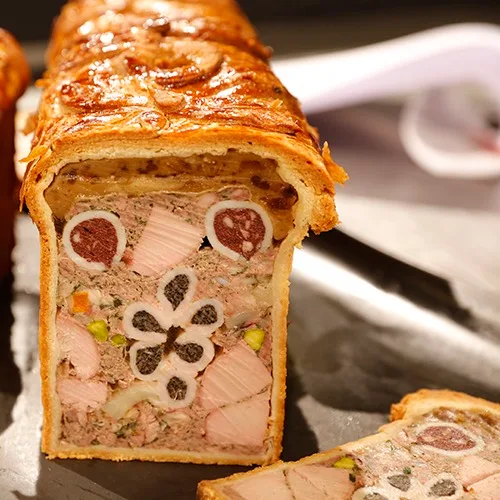
A pastry-based charcuterie is, first and foremost, a pastry — shortcrust, puff, flaky or brioche-style, among other specialities — combined with a meat preparation, most often pork. The most common and best known is pâté en croûte.
The earliest trace of pâté en croûte dates back to the 14th century. During the Middle Ages, all pâtés were encased in pastry. The crust served to protect the pâté during cooking and transport. Very thick and very hard, it was not meant to be eaten.
At the time, pâté en croûte was the pastry chef's speciality. He made it in the back of his shop, in a rather secretive manner. The finished product gave no hint of the ingredients within. It thus became the source of many superstitions.
Over time, the recipe changed and the crust gradually became edible.
Today it is one of the most popular French specialities. There is even a world pâté en croûte championship held every year. Different teams from different nationalities compete against one another, which bears witness to its success.
There are also other pastry-based charcuterie dishes such as the friand, the vol-au-vent, the croque-monsieur and even the hot dog.
Pastry-based charcuterie is an art form, both in taste and in appearance. Pâté en croûte can be a truly intricate masterpiece. To prepare it, the meat must be lean, coming from pork, veal, game or poultry. This meat is then cooked together with a stuffing inside a fine pastry that is very often decorated.
It may be eaten cold or hot, straight out of the oven.
Rillettes
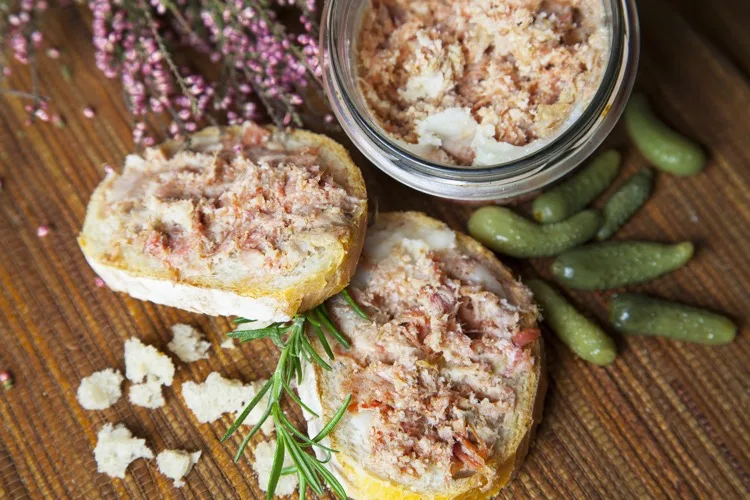
Rillettes first appeared as early as 1480. The name refers to a lath, a plank or even a ruler. Rillettes were used to preserve the pork that was slaughtered twice a year. It was therefore a home-made preparation. Many recipes developed over time, but rillettes de Tours gained particular renown. In the 20th century, rillettes du Mans stole the limelight thanks to their commercialisation.
Rillettes are made from pork cooked in pork fat. You may also find versions made with goose or duck. This meat is cooked for a very long time, so it must be mature and full of flavour to withstand such cooking. Producers vary their recipes with seasoning based on salt and pepper, as well as spices, aromatic herbs or condiments. Altogether, this gives a smooth, rich texture that is either preserved in a jar or simply served fresh.
Tripe
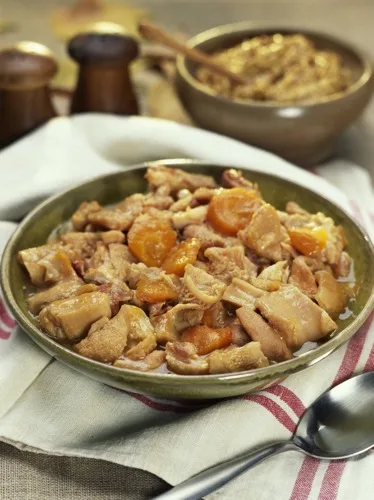
One could say that tripe is as old as the world itself. Writings mentioning it have been found dating back to Antiquity. It was a dish for great warriors, making them strong and invincible.
Tripe used to be spelt, at the time, with two P's. The term "trippe" thus appeared for the first time in 1243. Its origin is said to be Arabic.
In the Middle Ages, its production was very strictly regulated. Very few families were allowed to produce it. It was finally in 1738 that the trade was opened up to everyone, and so tripe became more widely available.
Tripe can be presented in different forms, sold by weight or tinned. It is made from the stomach of beef, veal, mutton or pork. Generally, the whole stomach is used, and boned trotters may also be added. These pieces are then cooked for a very long time in a stock seasoned with vegetables, herbs, wine or cider.
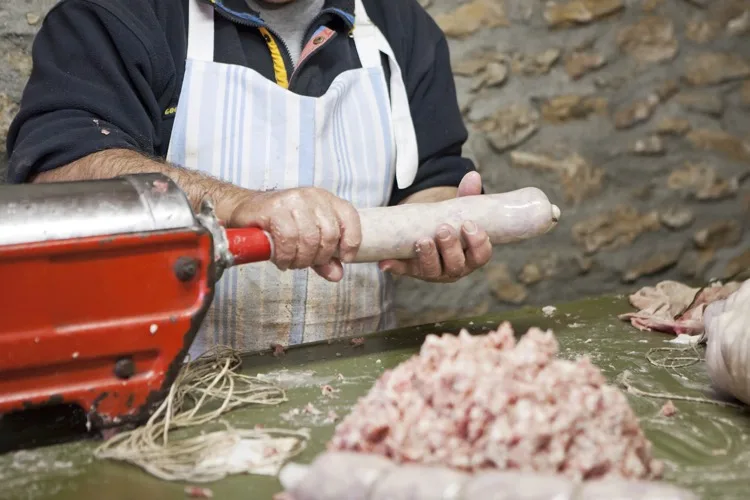
As you will have understood, charcuterie is a craft that brings together a great many specialities.
Many industrial producers have taken up these recipes, most often with mediocre quality. All these specialities require particular know-how; they have no need of chemical products or added preservatives.
From every corner of France, small producers, hunters or cooking enthusiasts make their own artisanal charcuterie,
A nod against intensive farming, which also helps counter the excesses of large-scale distribution.
A fervent defender of artisanal charcuterie, Tête de Lard offers discerning food lovers who care about eating good products the chance to have them delivered at home.
Antoine and Rémi champion responsible consumption. They are committed to
- Product traceability
- Animal welfare
- Respect for production methods
- The absence of chemical products
Let us pay tribute to the artisans who continue to produce true charcuterie in keeping with tradition, who possess real know-how. They are the guardians of our terroir, of French gastronomy.
Find their products on our website.
A spot of vocabulary:
Appertisation: A method of preserving foodstuffs through heat sterilisation, in hermetically sealed containers.
Meat preparation: This is the preparation of raw materials before really working with them and thus beginning the production of the product.
Chaudin: This is offal, more specifically the pig's intestine.
Charcuterie code: This is a document that brings together the laws and rules governing charcuterie production. It can serve as a reference for the courts to ensure the fair and commercial nature of products from our tradition. It is written by numerous professionals in conjunction with the DGCCRF (Directorate General for Competition, Consumer Affairs and Fraud Control).
Stuffing: This is the stage where the meat preparation is placed in a stuffer that pushes it all into the casing.
Maigre de coche: This is a sow that has finished her breeding cycles.
Ménagier de Paris: This is a handwritten book on domestic and culinary economy written in the 14th century. It is attributed to a Parisian bourgeois and was written for his young wife, to teach her how to run her household and how to cook.
Salting: This is simply the act of salting the meat.
Brining: This is a curing process that involves plunging the food into a bath of more or less salted water.
Recipes
Charcuterie is delicious, and even more so when paired with good cooking!
First recipe :
Country-style cake with rillettes and nettles.
A perfect dish for family or friends' picnics, this cake is a nearly foolproof preparation. To your ovens!
Preparation time: 65 minutes
Suitable for all seasons
Recipe for 6 people
Moderately expensive.
You will need:
- 200g flour
- 5g bicarbonate of soda
- 3 eggs
- 10 cl whole milk
- 10 cl olive oil
- 180g duck rillettes
- A large handful of nettles
- 50g tomme cheese
- 50g Saint Nectaire
Put on some gloves and pick the nettles, wash them and cut the leaves without touching them. Nettles sting as long as they haven't been cooked. Then place them in a large covered frying pan and cook for a few minutes. Next, cut the cheese into small pieces. Preheat the oven to 180°, then in a bowl mix the flour with the bicarbonate of soda, the eggs, the oil and the milk. Separate out the rillettes so they blend evenly into the mixture. Add them to the mix along with the cheese and the nettle leaves. Mix well, then pour everything into a buttered loaf tin. Bake for 45 minutes.
Check that the loaf is cooked by inserting the blade of a knife into the centre: if it comes out clean, it's done; if not, pop it back in the oven for a few more minutes.
Food and wine pairing: Pinot noir Louis Latour - Bourgogne
All that's left is to enjoy your meal!
Second recipe:
Mussels with lomo and leeks
A dish that will take you straight back to your seaside holidays, let yourself be carried away!
Preparation time: 90 minutes
Suitable for all seasons
Recipe for two people
Fairly expensive
You will need:
- 1kg mussels
- 2 small leeks
- 15cl single cream
- Butter
- 80g sliced dry-cured lomo, or other charcuterie of your choosing such as Chorizo and Coppa.
- 1 small glass of dry white wine
- 2 cloves of garlic
Begin by washing your mussels, removing the beards and scraping them if needed. Then remove the first leaves of the leeks and cut them in half lengthways. Clean them thoroughly. In a sauté pan, add a good knob of butter, then once it starts to sizzle add the charcuterie. Add the garlic and let it brown. After 5 minutes add the leeks and let everything cook for a few minutes. Finally add the white wine and let it cook for a few more minutes. Then add the cream and let the sauce thicken over a low heat. Heat the plancha to full power, and once it's nice and hot pour in the mussels, stirring regularly. Once all the mussels have opened fully, remove them from the plancha without their juice, and place them in a deep dish. Finally pour the sauce you prepared earlier over the mussels, stirring gently so that all the mussels are well coated in sauce.
Food and wine pairing: Sauvignon Blanc - Chile
Serve it all piping hot, and enjoy!
Third recipe:
Cured ham, mango and passion fruit bites.
A summery recipe for canapés that will delight your guests!
Preparation time: 20 minutes
Suitable for summer
Recipe for 18 pieces
Moderately priced
You will need:
- 6 slices of Iberian ham
- 1 mango
- 1cl of passion fruit vinegar
- half a bunch of chives
- half a bunch of fresh coriander
- 30g of poppy seeds
- 30g of golden sesame seeds
- 18 pinches of fleur de sel. To begin, peel the mango, then cut it into slices 1cm thick, then into batons 1cm wide and 4cm long.To begin, peel the mango, then cut it into slices 1cm thick, then into batons 1cm wide and 4cm long.
To begin, peel the mango, then cut it into slices 1cm thick, then into batons 1cm wide and 4cm long.
Then wash the herbs and gently pat them dry. Set aside about twenty sprigs of chives for the presentation, which should be plunged into boiling water for 10 seconds. Finely chop the rest of the herbs. Use a pan to toast the sesame and poppy seeds. Then mix the seeds with the herbs, and roll the mango sticks in the mixture. Season them with fleur de sel and a few drops of passion fruit vinegar. Finally, place the sticks on the slices of ham and wrap them to form little parcels. Use the cooked chive sprigs to tie the parcels on each side.
Food and wine pairing: a very good Gamay would be perfect for this tasting.
All that's left to do now is serve them, time to enjoy!