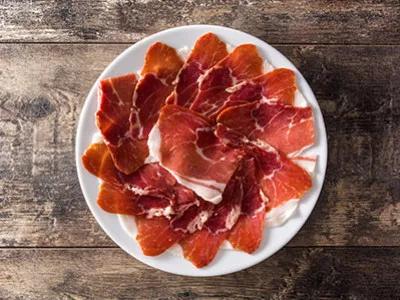
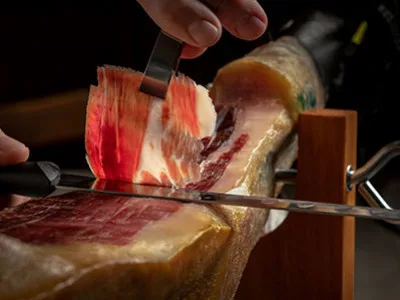
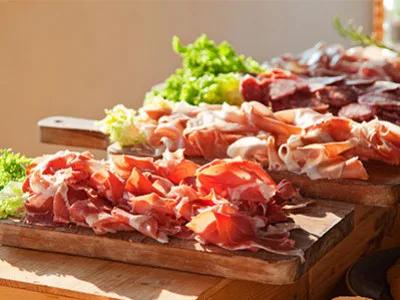
Ham, and how good it is!
Buy cured ham online: Savoie cured ham, Iberian cured ham and black pork cured ham
Cured ham is known and loved by everyone, but choosing it isn't always easy, and finding a ham that's both tender and firm, and above all fatty but not too much so... unless you know…
5 min read· By Rémi Ledu
Cured ham.
Do you really know cured ham?
Cured ham, is known and loved by all, but it's not always easy to choose one and find a lovely ham that's tender and firm at the same time, and above all fatty but not too much so... Unless you know artisanal charcuterie better than anyone else, are advised in a specialist shop or pick up your phone and do some digging to find out everything about ham!
We shall thus get a better understanding of how cured ham is made and shine a spotlight on three exceptional cured hams:
- Savoie cured ham
- Black pork cured ham
- Iberian cured ham
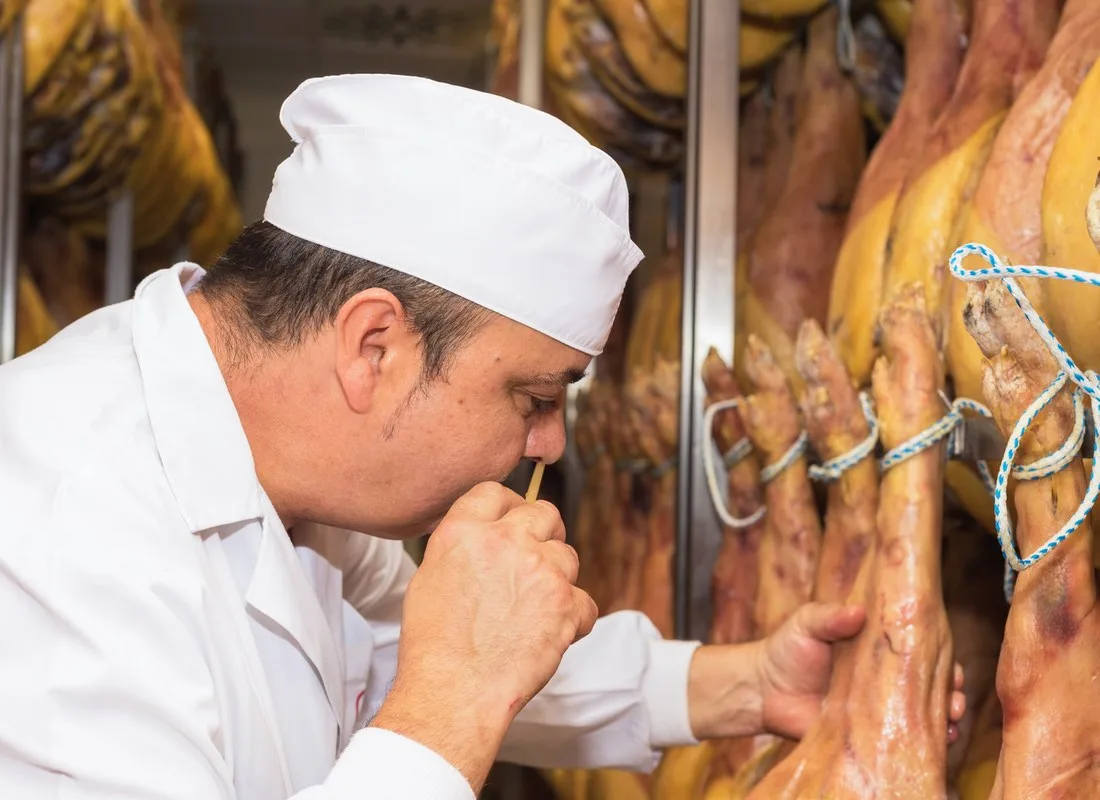
What is cured ham?
First of all, cured ham, what is it exactly?
Ham is the charcuterie term used for the whole leg or shoulder of an animal (here, we're talking about pork), prepared either raw or cooked. Most often it's pork that is used, but nowadays there's also turkey, chicken, or even wild boar or reindeer ham, for example! Cured ham should not be confused with dry-cured ham! Indeed, dry-cured ham will be saltier, as the meat's drying time is longer (six months more, on average).
How is cured ham made?
Le jambon cru est donc une viande préparée et crue ! Cette viande est salée et le goût variera selon la température et le degré d’humidité de la pièce où elle sera stockée. Ainsi la cuisse de porc fraîche est recouverte d’une épaisse couche de sel qui pénètrera la chair de la viande en piégeant l’eau et en déshydratant les cellules. Ensuite, une fois la couche de sel retirée, les jambons sont entreposés dans des caves réfrigérées puis séchés dans des séchoirs naturels par exemple. C'est avec le type de salage et la quantité de sel ajoutée que les jambons auront un goût plus ou moins différent. Ainsi, l’origine de la viande reste l’un des critères principaux à connaître pour garantir la qualité du produit. Alors pour bien choisir son jambon, il faut surtout les goûter et connaître vos préférences !
Le jambon cru de Savoie
Le jambon dit "de Savoie" est un jambon cru élaboré à partir d'un jambon frais (élevé en Savoie) pesant 9,5 kg minimum après parage. Le salage de cette viande de porc est fait au sel sec marin et d'une durée plutôt lente de minimum 10 jours. Le jambon de Savoie est salé à la main, frotté avec le sel et quelques épices. La durée de salage est proportionnelle au poids du jambon et donc plus le jambon est lourd et plus il restera au sel. Il est ensuite mis au froid et séché pendant plusieurs mois après avoir perdu au moins 35% d'eau. Après une période de maturation, il peut être enrobé d'une panne de gras de porc salé et de poivre afin de faire ressortir tous ses arômes. Un bon jambon aura au minimum 12 mois.
Le jambon cru de Porc Noir
The black pigs are raised outdoors on vast land between the Hautes Pyrénées, the Haute Garonne and the Gers. They enjoy an excellent quality diet, based on 70% cereals and free from GMOs. The pigs are of the Gasconne breed and the number of animals must be fewer than 25 per hectare. The pigs are slaughtered at 12 months of age. As for the making of cured ham from Black Pork, in order to be well preserved, it is covered in dry salt from the salt marshes of the Adour Basin. As with all cured hams, the salting time varies according to the weight of the ham. The salt contributes to the development of the aromas and to the colour so distinctive of Black Pork ham.
Next comes the maturing of the ham, carried out at low temperature, between 10 and 16 weeks. During this time, the salt diffuses evenly and the ham loses moisture. After the cold resting period, the hams enter the drying rooms for up to 10 months. During drying, the hams are covered with lard on the lean part, in order to obtain an even drying of the slice.
Finally, the hams spend at least the last 10 months of the cycle in a drying room with windows and dry thanks to the "foehn effect" (see the article on Noir de Bigorre Black Pork), a wind specific to the foothills of the central Pyrenees.
Ibérico cured ham
Ibérico cured ham comes, as its name suggests, from Spain, and more precisely from the south of the Iberian Peninsula! The meat used for Ibérico cured ham is Iberian pork. Raised outdoors between pasture and mountain, it is renowned for being a tender and lightly marbled meat. This breed, like the Gascon pig (a cousin of the Iberian pig), develops a wonderfully flavoursome fat. The Iberian pig is fed mainly on acorns, which gives it its very particular character. Do treat yourself to discovering this surprising and delicious ham!
To recognise Iberian cured ham: its leg is slender, the outer surface is covered in white or grey-blue yeasts and moulds, and the hams are always longer than they are wide. When sliced, you'll discover a wealth of fatty marbling, and the flesh varies from pink to deep red depending on the length of ageing, with a glossy appearance.
Finding the best ham
All cured hams have their own particularities, it's up to you to decide whether you prefer French cured ham, Spanish, or indeed French. The flavours and qualities will differ depending on the meat used, the secrets of production and the ageing periods. They can be enjoyed plain, with a good glass of red wine, on a slice of bread, alongside cheese, in a salad, and even in typical dishes close to our hearts such as raclette!
To make sure you choose well, at Tête de lard you'll find a wide selection of artisanal charcuterie, including dry-cured hams and cured hams of exceptional quality! We offer a range of nitrite-free charcuterie, nitrate-free, even organic! Discover your favourites online, place your order, get delivered within 24 hours and enjoy!
It's up to you to find your delight and choose THE cured ham that will fill you with pleasure!
Warm regards, your Têtes de lard, Antoine and Rémi.