
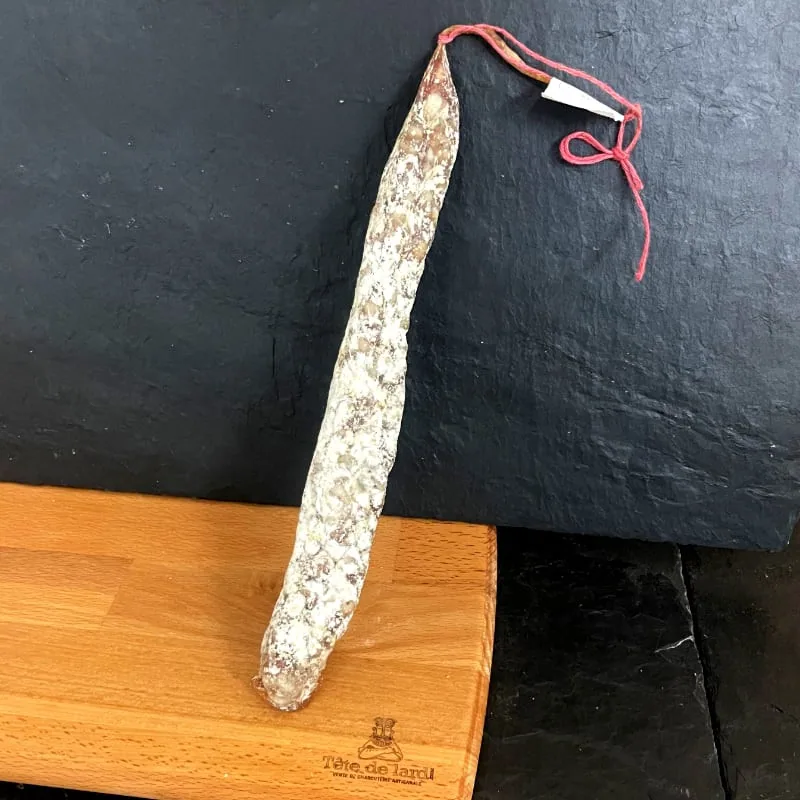
120 g
3 or more: €6.50 each
−34.34% from 3 Nitrite-free
Le Séchoir du Bugey
Plain troquet stick of outdoor-raised farm pork
(1)€9.90
6 products
6 products
120 g
3 or more: €6.50 each
Nitrite-freeLe Séchoir du Bugey
€9.90
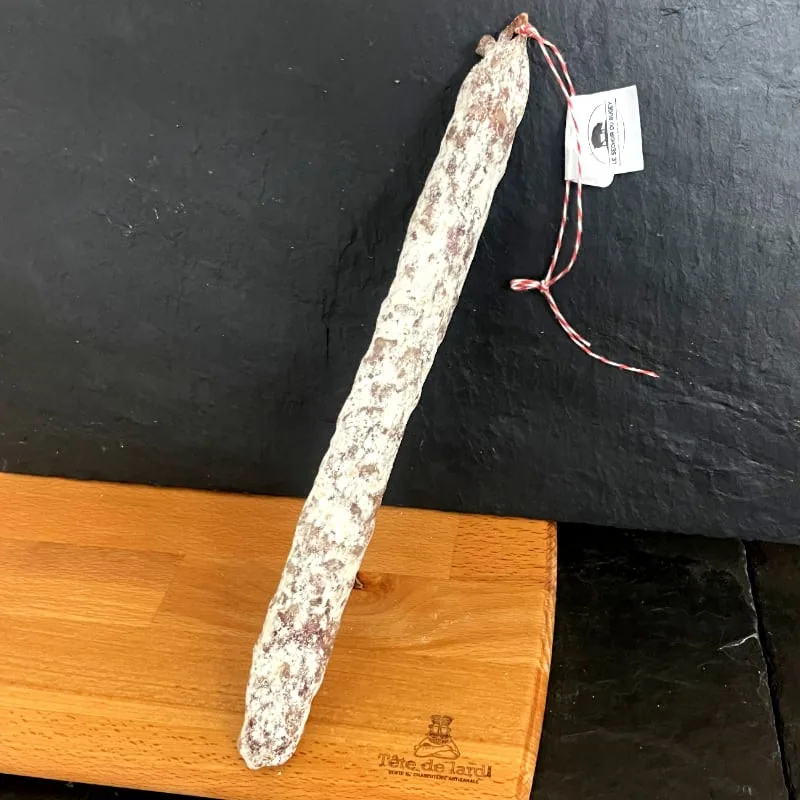
120 g
3 or more: €6.50 each
Nitrite-freeLe Séchoir du Bugey
€9.90
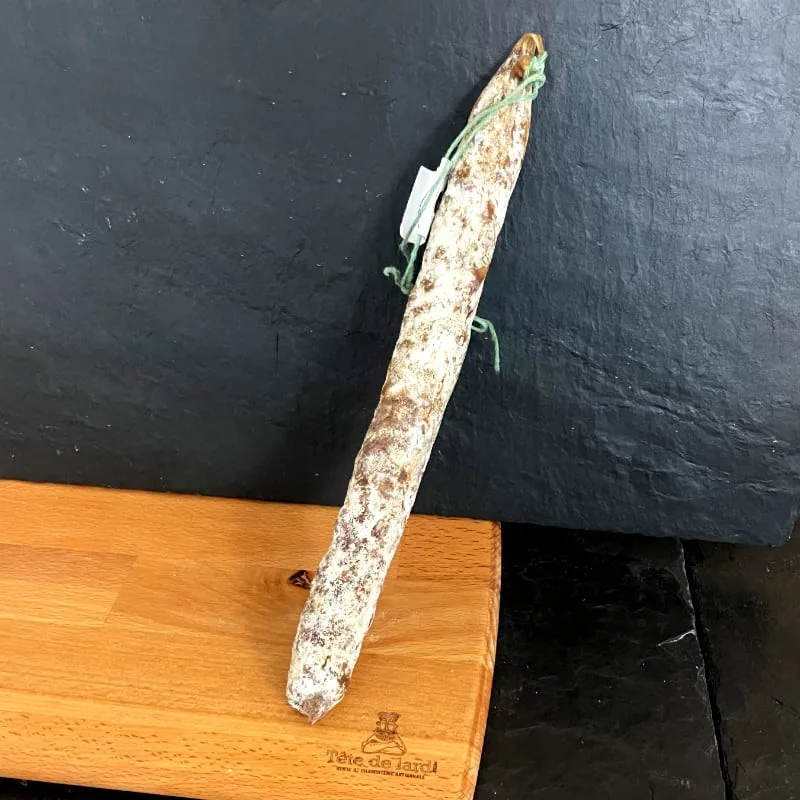
120 g
3 or more: €6.50 each
Nitrite-freeLe Séchoir du Bugey
€9.90
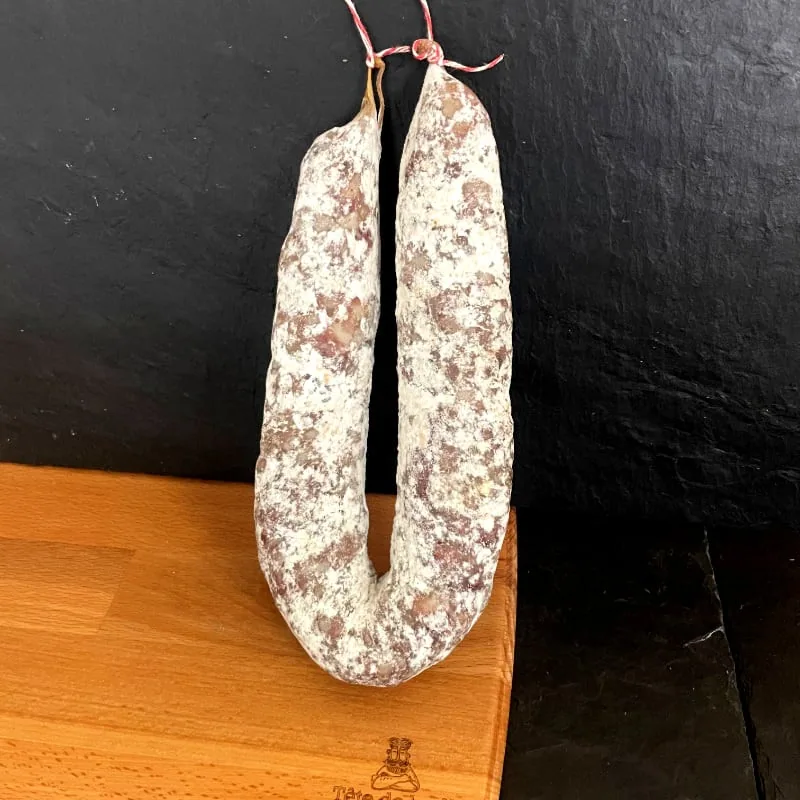
350 g
Nitrite-free Award-winning
Le Séchoir du Bugey
€17.90
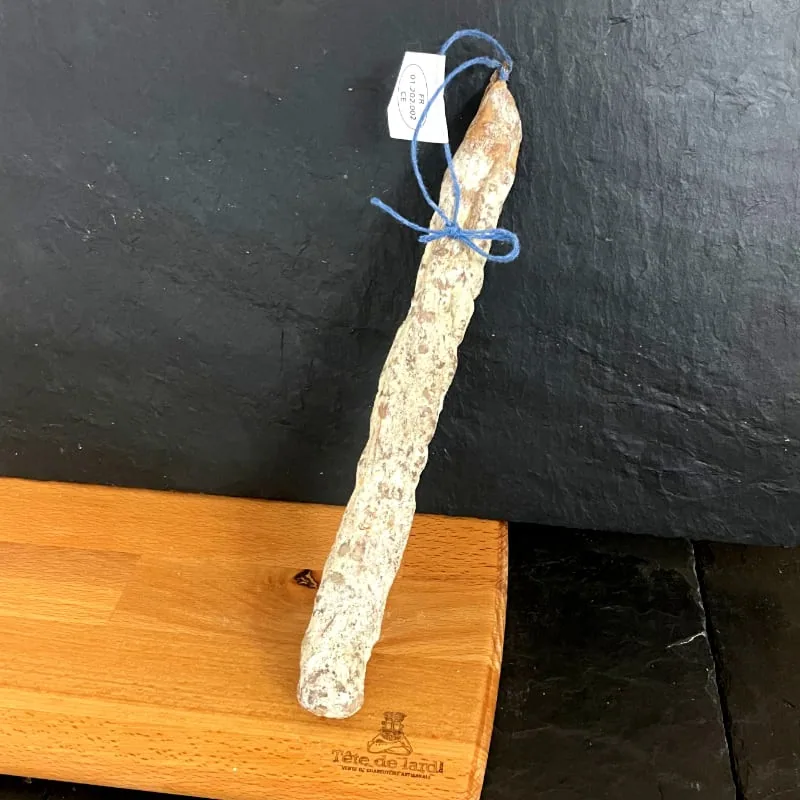
120 g
3 or more: €6.50 each
Nitrite-free Our favourite
Le Séchoir du Bugey
€9.90
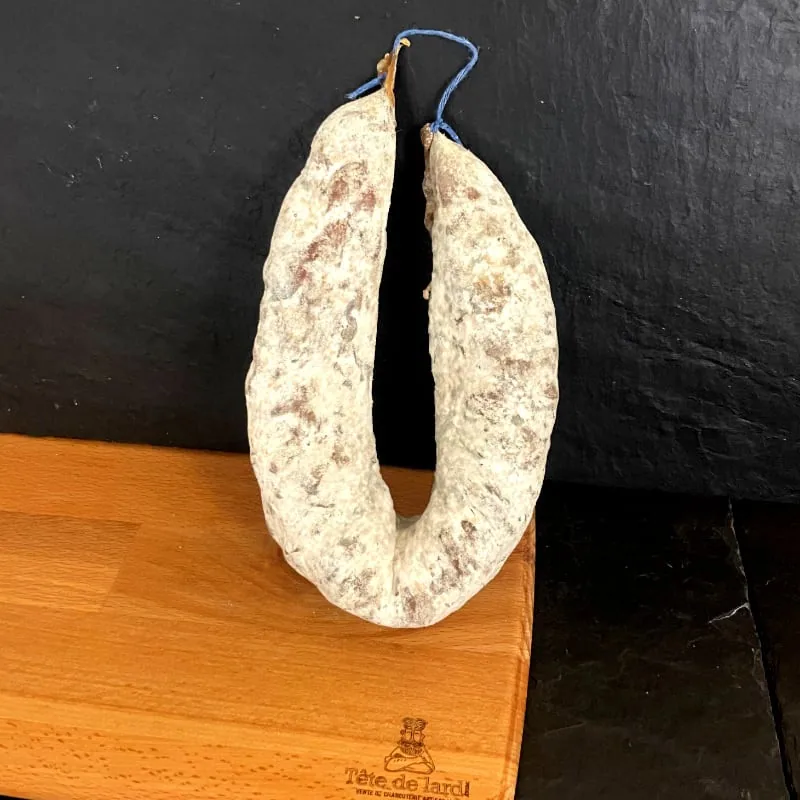
350 g
Nitrite-free Award-winning
Le Séchoir du Bugey
€17.90
The hot Lyon saucisson is a culinary speciality typical of Lyon, cooked in several different ways from saucisson à cuire de Lyon. It is served in the traditional bouchons lyonnais, prepared according to various recipes. Among these recipes, the pistachio or truffle saucissons lyonnais are rather popular, served with potatoes, lentils, salad, or in the form of a brioche-wrapped saucisson. It is traditionally paired with a red Beaujolais wine sauce, or a red Coteaux du Lyonnais.
In existence since the 1830s, the saucisson de Lyon was originally made from several lean meats, generally pork and beef. Some variations made purely with pork have been seen, but many chefs point out that the distinctive flavour of this Lyon speciality comes precisely from the blend of meats. The lean meat is finely minced and mixed with diced hard pork fat, generally back fat. The recipes have changed over time, which is why you may come across quite a variety of them. The whole is seasoned with pepper and sometimes garlic and other condiments. One of the popular versions is the saucisson de Lyon pistaché.
There are several ways of cooking the saucisson de Lyon. As for cooking time, we recommend cooking it for 30 to 45 minutes depending on the method used. For example, you could cook it:
To know whether your saucisson de Lyon is cooked through, its colour should be even, right to the centre. Depending on the cooking method, it may also be slightly golden on the surface, as is the case when baked in the oven.
One of the traditional recipes for saucisson de Lyon is made with red wine. Here's how to prepare one of the classic recipes for hot saucisson in red wine:
You can dress up this recipe however you like, for example with mushrooms, shallots, garlic... For the side dish, you could also swap the potatoes for lentils or beans. If you're cooking brioche-wrapped saucisson, you can serve it alongside a mixed salad or baby vegetables. Let your creativity run free, and enjoy!
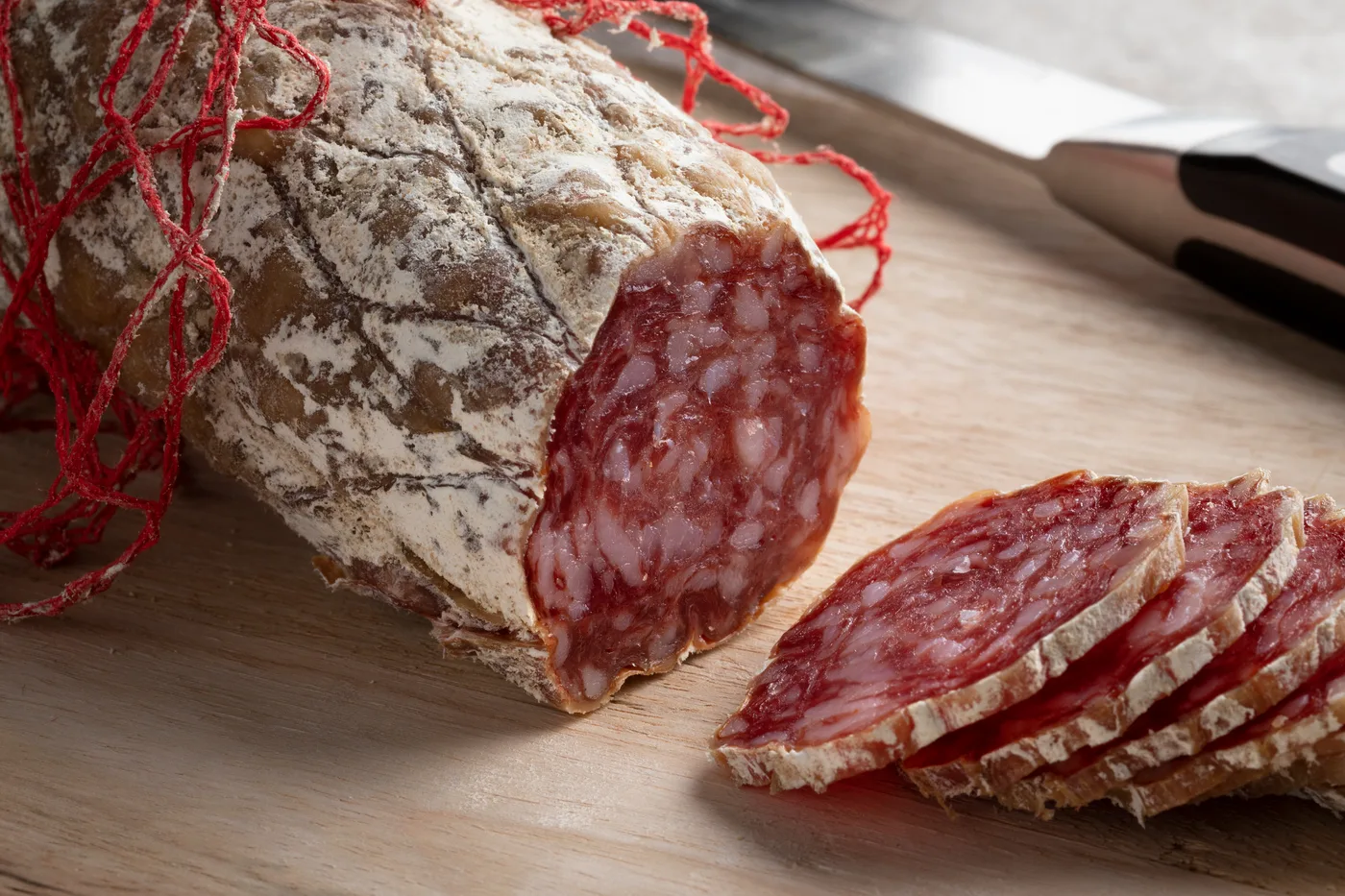
The dry-cured saucisson from Lyon is typically a blend of finely minced lean pork, mixed with diced back fat. Lean meat is favoured, giving it a dark hue, so the saucisson de Lyon never exceeds 20% fat content. What really sets the saucisson de Lyon apart is the red wine. Red Beaujolais wine is often chosen for the making of the saucisson de Lyon.
The typical saucissons from Lyon are the rosette and the jésus:
The rosette de Lyon takes its name from the casing in which the meat is stuffed, which gives it its characteristic pink colour. The rosette is heavier than a saucisson, weighing up to 3 kilos. It is generally enjoyed in thick slices. This large Lyonnais saucisson is a must-have for raclette evenings in the Auvergne-Rhône-Alpes region!
The jésus de Lyon is also a type of saucisson de Lyon, much larger than a classic saucisson. In particular, it has a shape rather like a pear. It is classified by the DGCCRF as a "Charcuterie sèche de qualité supérieure" (premium dry-cured charcuterie). Indeed, the meat used to make the jésus comes from the noble cuts of pigs raised in the region, meeting a strict set of specifications to guarantee this traditional recipe. Quite similar to the rosette, the jésus de Lyon is mainly distinguished by the casing in which it is stuffed, known as the "sac de porc", which gives it the size and shape we know. The name jésus comes partly from its shape, reminiscent of a swaddled infant, and partly from a tradition of keeping the noble cuts of the pig until Christmas to make it. Naturally, it's also most welcome on our special raclette boards!
Online sale of saucisson de Lyon with 24h delivery :
If you're not lucky enough to be able to wander the stalls of Lyon's markets to find these traditional saucissons, you'll find them, thanks to our artisan producers, online on our Tête de Lard website! You can have genuine saucisson de Lyon delivered within 24 hours, as well as artisanal Jesus, lovingly made according to the rigorous know-how of our producers. We work in particular with Patrimoniam, a house widely recognised in the region and even nationwide, for the quality of its Lyon charcuterie. Treat yourself now to dry-cured sausages from Lyon, or to a Lyon-style saucisson in red wine.
Lyon is renowned for its gastronomy, particularly through its famous bouchons lyonnais, traditional restaurants where you eat just as well as at our talented grandmothers' tables! Its heritage, rich in specialities, offers us all sorts of charcuterie specialities, besides saucisson. There, for example, you'll be able to taste:
So, have you already tasted the flavours of Lyon? Journey to the heart of this city of many gastronomic treasures with Tête de Lard!