
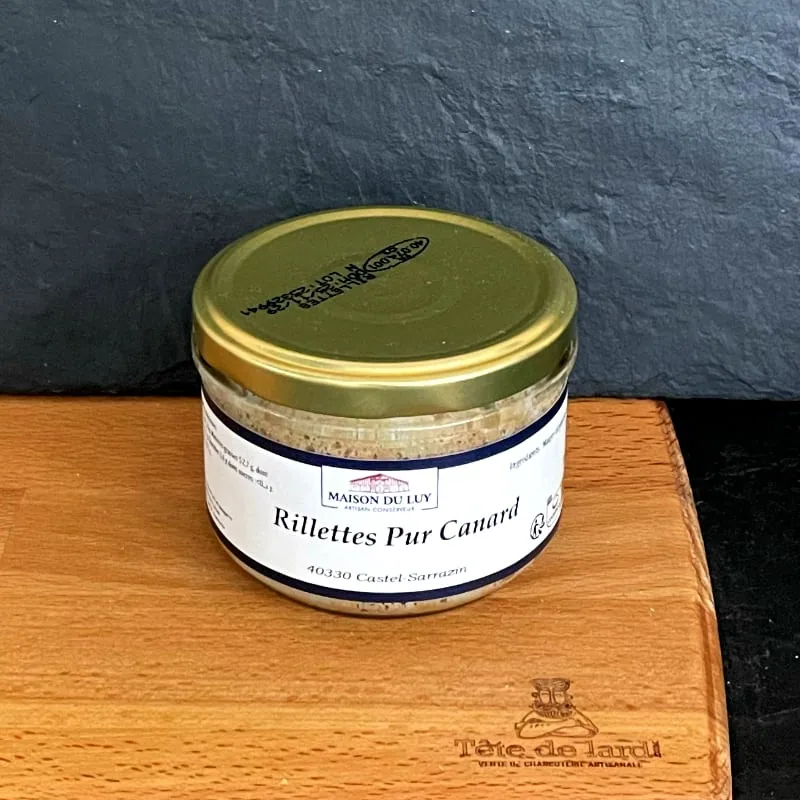
110 g
 Nitrite-free
from€4.90
Discover a wide range of artisanal rillettes!
2 products
2 products
110 g
from€4.90
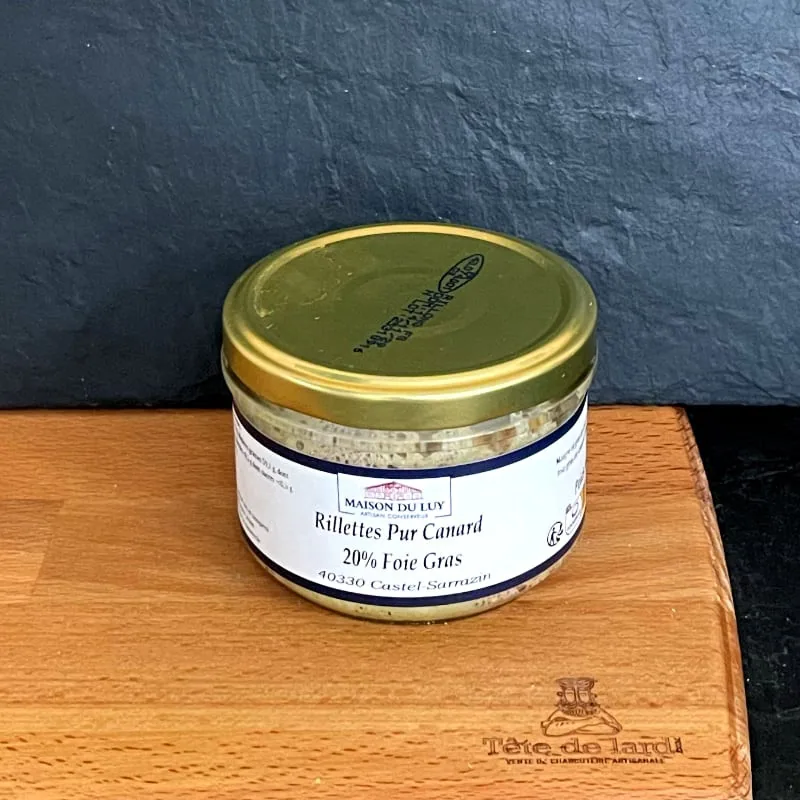
110 g
from€5.90
Rillettes first appeared in the Middle Ages in Touraine, allowing peasants to preserve meat over long periods without refrigeration by storing it in earthenware pots. The production process involved deboning the meat and cutting it into pieces, then slowly cooking it in pork fat until it could easily be shredded.
Its name comes from the verb riller, which in old French means to reduce into small pieces or to shred (the word rillettes refers both to the production process and to the dish itself).
The popularity of rillettes grew thanks to the expansion of the railway. Indeed, Albert L'huissier took advantage of the train's refuelling stops to sell his rillettes to mechanics and travellers.
A European decision in 2013 granted rillettes de Tours Protected Geographical Indication (IGP) status, meaning that only artisans from Indre-et-Loire who comply with these specifications are authorised to use the name “Rillettes de Tours”. As the Sarthe cannot guarantee the local provenance of the meats it uses, it is for this reason that it cannot benefit from an IGP.
It involves slowly cooking pork (shoulder, ham, belly, shoulder blade…) over a low heat in fat so that the strands of meat come apart, which also allows the meat to become tender; it is then seasoned with salt and pepper, and as the rillettes cool, the fat rises to the surface.
The cooking time for rillettes varies from one producer to another, but it generally takes around 8 to 14 hours.
The original recipe includes only pork, fat, salt and pepper as ingredients. That said, it is not uncommon to find a hint of wine flavouring in rillettes du Mans.
The distinction between rillettes de Tours and rillettes du Mans lies in the fact that those from Le Mans are richer in fat and the meat is less finely chopped.
In the Sarthe, the cooking is slow, whereas in Touraine a quicker cooking method is used, carried out in the open air.
The industrial recipes are similar, except that the pork used does not necessarily come from the region or even from France, the manufacturing process is also quicker, the containers are larger, the cooking time shorter, and the potting is done mechanically. This affects the texture of the meat, causing the pieces to disappear and turning the texture into a sort of stringy purée.
This can be confusing, but not all rillettes du Mans come from the region! Only the recipe is protected, not the place of production, because unlike rillettes de Tours, rillettes de Mans do not benefit from the IGP (protected geographical indication) label.
Unlike rillettes, pâté is a blend of meats, often seasoned with herbs and spices. As for appearance, pâté has a smooth texture. Pâté is typically baked in the oven, either in a terrine or encased in pastry.
What sets it apart even further from rillettes is that it is served in slices.
The Sarthe departmental competition for the best rillettes was won by Ludovic Delhommeau of the artisanal butcher's shop du Miroir in Le Mans.
Although rillettes were originally made from pork, other varieties have since come about, such as goose, duck, chicken, salmon, and smoked trout rillettes. Chicken rillettes are becoming the best alternative to pork rillettes, as they are presented as being less fatty.
As a rule, rillettes are eaten cold, most often enjoyed on a slice of bread. However, new recipes using rillettes are emerging. We can now find them used as a topping for a burger or sandwich. Rillettes can also be served in a salad for a lovely starter.
Discover our rillettes and have them delivered to your door!