
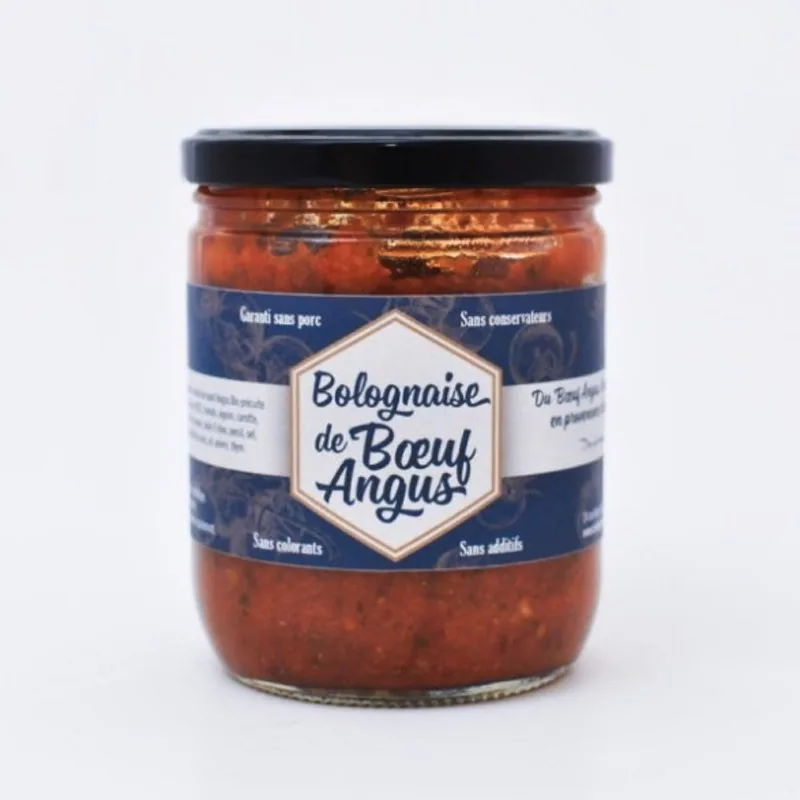
375 g
 Organic
 Nitrite-free
€14.90
5 products
5 products
375 g
€14.90
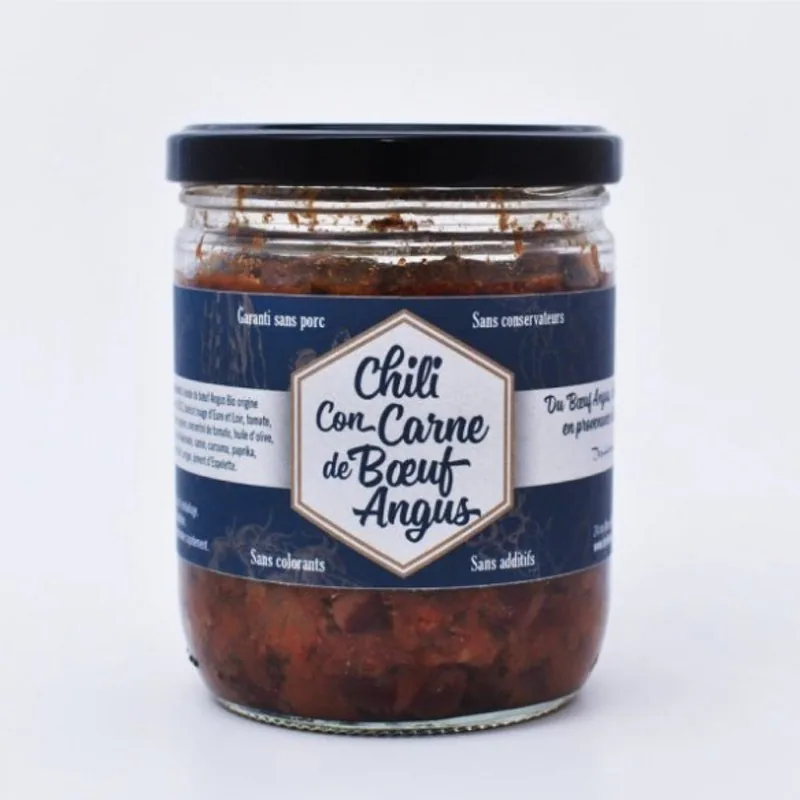
375 g
€14.90
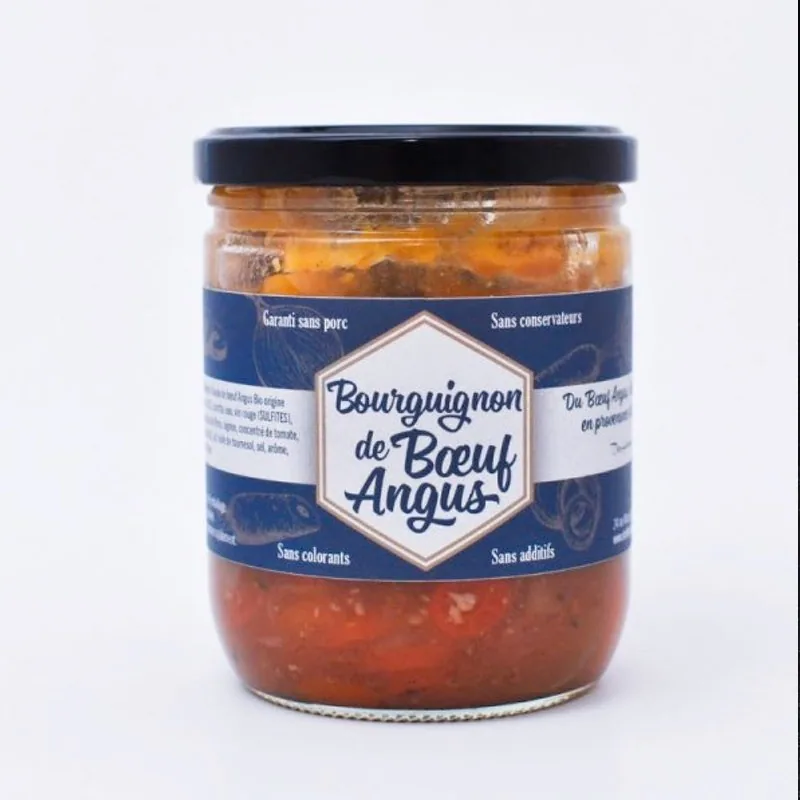
375 g
€14.90
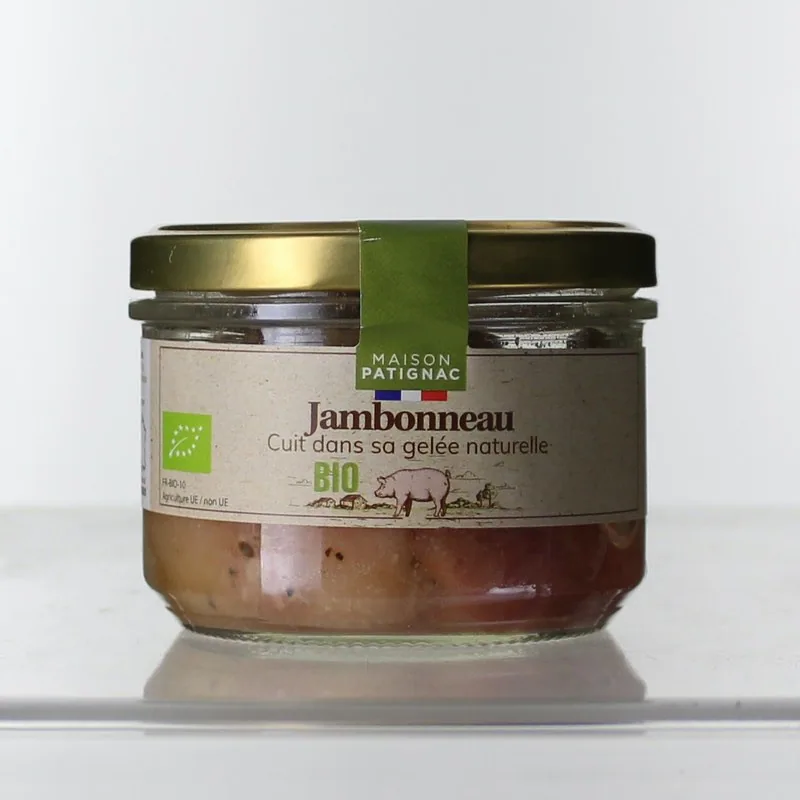
180 g
€8.10
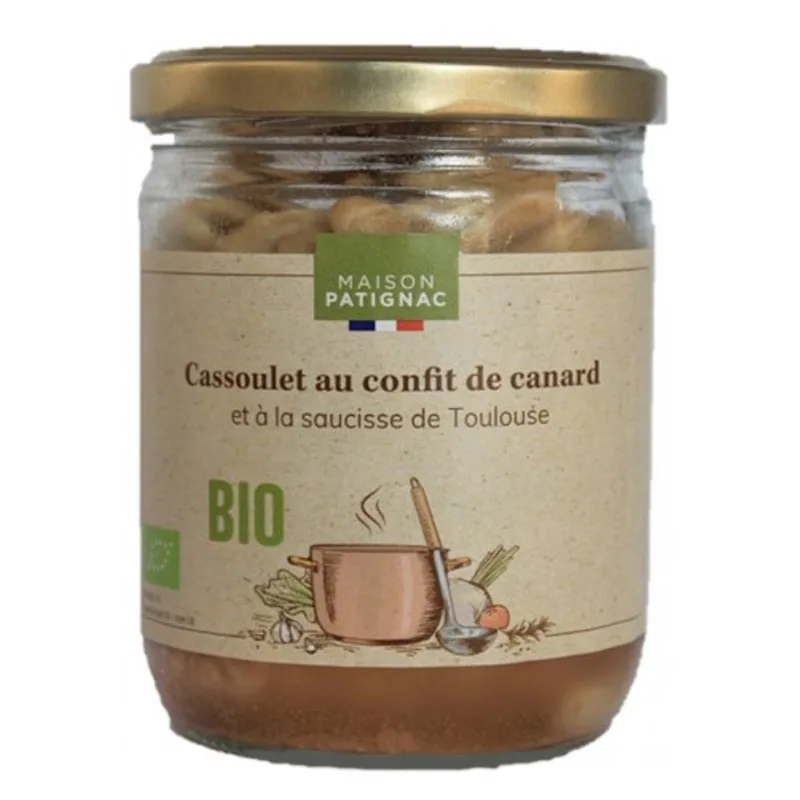
350 g
€12.40
Indeed, it is one of the most visible signs for identifying the quality and origin of a product. In addition to providing high-quality products, organic farming fits perfectly within a sustainable development perspective. This type of production is ideal for respecting and protecting the environment, biodiversity and animal welfare.
Products that are awarded the Agriculture Biologique (AB) label must contain at least 95% organic ingredients. The standards for this label are set by the Ministry of Agriculture in accordance with the European Organic Label. The Agence Bio (Agency for the Promotion of Organic Farming) and the French Development Agency promote this label and are certified by certifying bodies such as Qualité France SA, Agrocert, Ecocert SA and Aclave. These bodies screen the companies applying for labels. They are also responsible for reviewing applications and producing detailed reports.
In this report, several criteria are assessed in order to obtain the organic farming label. The non-use of fertilisers and the non-use of land treated with chemical substances over the previous 3 years are among these criteria. The companies involved must also be able to carry out quality audits that maximise the likelihood of the organisation obtaining this label. Please contact one of the certifying bodies of the French Agency for the Promotion of Organic Farming for more information about the label.
So if you're looking for artisanal organic charcuterie with no additives or preservatives, you've come to the right place! Tête de Lard is committed to a selection of certified organic, nitrite-free artisanal products made by the finest producers!
As the land becomes ever more densely populated, more and more people need to be fed. Humanity has found a solution to this: intensive farming and production.
Cereal field Intensive farming, or productivist farming, involves optimal production using inputs. The aim is to maximise output through labour and land use in the most efficient way possible, which is of great importance. The best means of achieving this is through the use of fertilisers, fungicides, insecticides, herbicides, growth regulators, pesticides... highly sophisticated mechanisation is also an important factor. Farming as it once was is slowly disappearing. The techniques and chemicals used allow, for instance, the Land to be used intermittently. Herbicides can replace crop rotation. They prevent weeds from growing. These new products have also pushed farming towards monoculture. This means that the farm produces only one type of vegetable or cereal. Water is also used in large quantities to irrigate crops and boost production. These processes allow us to produce ever more at a lower cost, but this is not without risk.
When farmers produce intensively, the effects can be very harmful. Over 66,600 tonnes of pesticides are used in France every year. 2 kg of pesticides are released every second.
Environmental risk
The main cause of the problem here is pesticides. Farmers use pesticides and herbicides to ward off pests and weeds. However, these products seep into the soil and, over time, into waterways. These pesticides have destroyed the entire ecosystem, plant species have disappeared, and marine life has been severely affected.
Fertilisers are sometimes used. They provide the minerals needed for plant growth. Over time, this fertilisation has led to the homogenisation of the environment. This disrupts the functioning of the ecosystem. Intensive farming also means it is impossible to let the land rest. As a result, it places a great strain on the land. Farmers plough too much and disrupt the natural movement of the soil. Drainage and irrigation reshape the landscape in the long term.
Risk to animals
Pesticides and herbicides are toxic to all living creatures. When sprayed over fields, they also affect watercourses, killing many species. They interfere with reproduction or simply kill outright. This affects not only insects, but also small mammals and birds.
There is a technique known as aerial spraying for treating fields. Agricultural chemicals are sprayed over fields from aircraft. Clearly, the fields themselves are not the only ones affected. Every plot of land in the area will suffer the same problem. Hyper-mechanisation leads to the death of many young animals who often take refuge in the fields and end up crushed by machinery.
Intensive farming is one of the greatest risks for animals. In France, it is estimated that around 8 animals out of 10 are reared under intensive farming conditions and never have access to the outside world. If an animal does not meet requirements at birth, it will be killed on the very first day of its life, whether male or female. What awaits the others is not always any better. The young are separated from their mothers very early on, which causes trauma.
Mothers' productivity is pushed to the maximum, and they give birth far more often than nature would normally allow. For example, hens lay close to 300 eggs a year, compared with 15 in the wild. From a very young age, animals are mutilated so that they can live together without causing problems. Beaks are trimmed, ducks' claws are removed, tails are docked, pigs' teeth are filed down, and there are many other such atrocities.
In such cases, animals are packed in very large numbers into buildings and their movement is severely restricted. The consequences of this treatment are, unsurprisingly, a very high mortality rate. Nearly 20% of pigs die before the day of slaughter. If they do not die, they are sometimes slaughtered under horrific conditions. They die in suffering, having been subjected to great stress.
Risk to humans
Unfortunately, intensive farming contributes to the development of certain diseases. These viruses can infect humans. There are well-known examples of flu scandals and mad cow disease. Farmers must also use antibiotics to prevent infections within the herd. In some countries, farmers use antibiotics to promote growth. When we eat this meat, we consume the antibiotics that the animals have ingested. Over time, our bodies become accustomed to them. As a result, antibiotics will become ineffective within a few years.
Pesticides present other risks to humans. These enter our bodies through skin contact, inhalation, or ingestion. Farmers are the first to be affected. They are sometimes in lifelong contact with these harmful products. The long-term effects become worrying. Cancer develops and some farmers die.
Unfortunately, it can happen that one inhales them inadvertently, if one lives next to a field for example. This becomes problematic when a woman is pregnant. Indeed, this product can have side effects on the unborn infant, such as malformations. The pesticides used in crops sometimes end up on our plates. As a result, we eat them every day and the effect can be dramatic. Unfortunately, this is not the end of it, after the production of raw materials, industry takes over, and it is not always better.
Manufacturers are currently fighting over prices. One must always produce more cheaply and sell more cheaply, in order to sell more than one's competitors. Unfortunately, this comes at the expense of quality.
Let us take the example of industrial dry-cured meat. Manufacturers use raw materials from intensive farming. Pigs are slaughtered after only 6 months. As a result, the meat is of poor quality, it does not have time to develop, the muscles are too small, the flavour is very weak, and the fat is poor. Furthermore, to save time and money, the meat fillets are not always properly cut and cleaned, so there is a risk of leaving unpleasant sinews in the mouth.
That's not the only deception. Nowadays, there is a powder inserted into the meat during its preparation. This powder is a fraction of pig's blood, blood-coloured, with a texture similar to that of meat but which isn't actually meat. Manufacturers make the most of this powder because it is considerably cheaper than meat. As a result, they have revised their recipes to produce with only 70% meat instead of the traditional 100%. Consequently, industrial terrines and rillettes have far less flavour than the traditional ones. However, there are alternatives. Farmers and artisans are fighting against this intensive production and creating other forms of farming for the future.
France Télévision made a wonderful report on this subject.
Organic farming is becoming increasingly demanding, both from consumers and from farmers. It is a matter of excluding not only the use of synthetic chemical products, but also animal suffering. Organic farming is in fact a large family that covers different types of farming.
This type of farming is not entirely organic, but it aims to minimise the use of outside inputs on farms. They only use pesticides as a last resort. Farmers practising this form of farming try to return to a natural cycle. They allow the land to regenerate by creating long rotation cycles. They use animal manure and crop residues to feed the soil. This allows for the use of agricultural products and reduces pest and disease problems. You create healthy soil without outside influences. These farmers take a holistic approach to their trade, where everything can be complementary and everything can be useful.
This form of agriculture exists in Europe. The principle is to cherish and make use of areas rich in biodiversity. Cultivation is complementary and avoids the addition of chemical products. We shall develop permaculture within this great family of high natural value. Permaculture uses this overarching method to design systems inspired by natural ecosystems. It leaves room for wild nature and for the relationships between different ecosystems. This method is very energy-efficient and respects living things. Designed to be sustainable and economical in energy, both mechanically and in terms of human effort.
Nature must be self-sufficient and complete. Because the seeds are linked to one another, they can protect the seeds from outside risks and, as a result, do away with chemical products. The old pear-tree farms are a classic example of this type of agriculture. They make use of everything available on their land and even turn their weaknesses into strengths. In time, the couple hopes to become self-sufficient thanks to the resources of the land and the animals that live there.
This is a model with the tree at its heart. On the same plot, farmers grow trees and raise animals. The two cannot exist one without the other. The trees provide the animals with healthy food, protection from predators, and help to retain water and fight erosion. The Padouen group makes use of this technique.
A group of farmers raises black Bigorre pigs that are reared outdoors. The pigs feed mainly on what they find along the way. They live in a space made up of meadows and forest edges that meet their needs. The pigs also have time to grow up naturally, in the best possible conditions. The farmers give the animals time to live, to build muscle and to grow.
This agriculture aims to ensure the health of soils and plants in order to provide quality food for humans and animals alike. It takes a holistic view of nature. The most striking difference with traditional organic farming is that it also takes more subtle energies into account. It factors in the stars and follows the lunar calendar for agricultural work. The stars affect plant growth and can make them stronger and more robust. As a result, no chemical products are used and very strict standards are respected.
This farming model is far more scientific in nature. The principle is to study the soil's microbiology in order to understand its needs, strengths and weaknesses. Thanks to this highly precise information, farmers can choose the best crop for their soil. They can also discover what it needs to become more fertile. These farmers understand that they must not overuse the soil and try to use it as wisely as possible. To be considered organic and recognised as such, it must meet a specific set of standards. These specifications are particular to each label.