
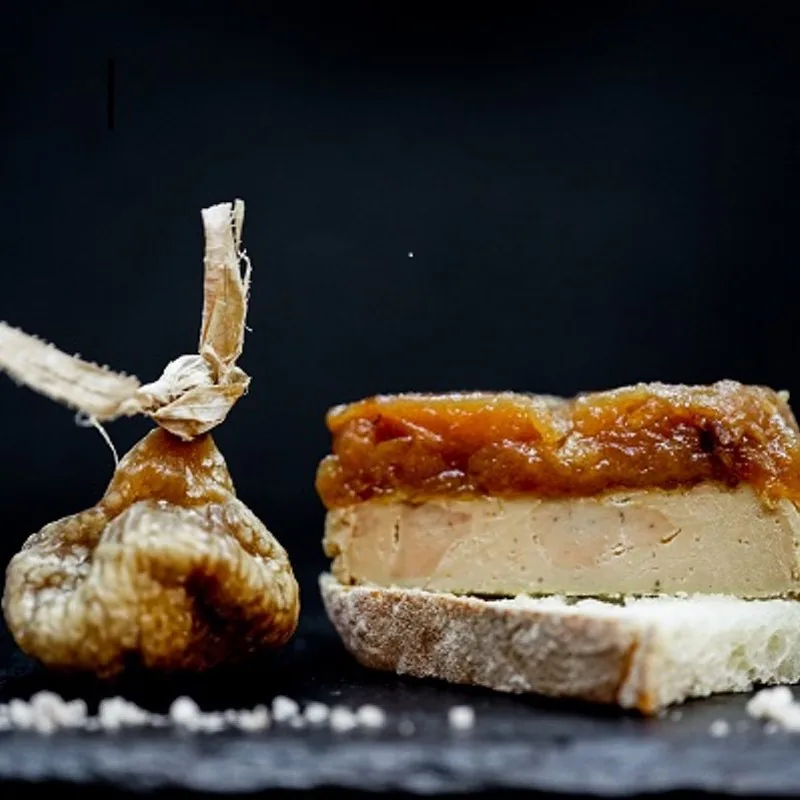
130 g
Only 3 left in stock Nitrite-free
Maison Lepetit
Foie gras duo with caramelised apples, tatin style, 130g
(2)€14.50
3 products
3 products
130 g
Nitrite-freeMaison Lepetit
€14.50
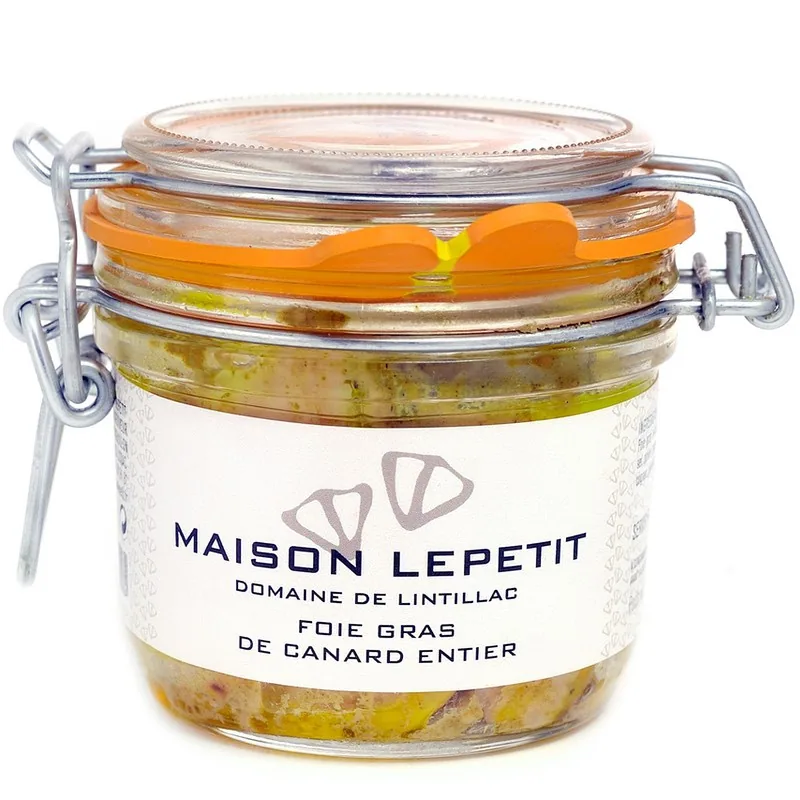
100 g
€18.90
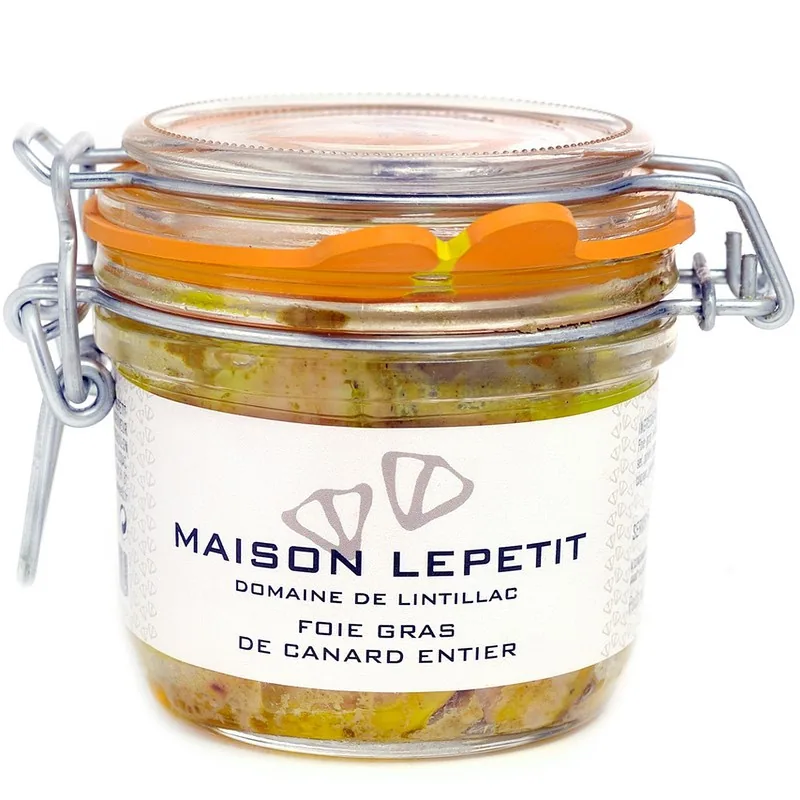
180 g
€29.90
Foie gras, a French gastronomic landmark generally enjoyed during the end-of-year festivities, is a delicacy cherished by all. It brings unique flavours to every meal, and it is savoured each year with just as much pleasure. Here, it will reveal itself so it no longer holds any secrets!
Foie gras is obtained by fattening goose or duck. To fatten the animals, the technique of force-feeding is used. The constitution of these waterfowl allows them to ingest starch-rich foods, such as maize, in large quantities.
Indeed, their bodies convert carbohydrates into fats, which are largely stored in the liver. The liver of the duck or goose has a natural function of storing fat, so foie gras is a wholesome product, and the animal is in no way ill throughout the process.
France ranks first worldwide in foie gras production, with 18,820 tonnes per year. It is produced mainly in three regions: Aquitaine, Midi-Pyrénées and Pays de Loire. These three regions alone account for 92% of French production.
There are two kinds of foie gras: goose foie gras, which is finer and milder, and duck foie gras, which is more full-bodied and rustic, yet also the one preferred by consumers. Indeed, 92% of the market is reserved for duck foie gras.
A fine foie gras is smooth, supple and firm to the touch, and its colour should be uniform. Its shade may vary depending on the maize chosen to feed the animals.
Foie gras contains mostly good fats, which are beneficial in preventing cardiovascular disease. It also provides iron, vitamin A and vitamin B9 (folic acid). According to regulations, foie gras must have a minimum weight of 300g for duck and 400g for goose.
To delve further, the history of this flavourful delicacy is a rich one. The earliest traces of foie gras date back some 4,500 years, to Egypt. The Egyptians, observing the stopovers of migrating geese, soon noticed that the animals gorged themselves before resuming their flight. Recognising the benefits of this diet, they invented force-feeding to eat both the flesh and the liver.
With Greco-Roman domination, foie gras spread throughout Romanised Gaul, and goose rearing became widespread, particularly in the south-west, during the 16th and 18th centuries. This is how we now enjoy, with great pleasure, this delicious delicacy every year.
To make foie gras, at the rearing stage, certain steps must be followed:
Once the liver has been taken, it needs to be prepared. For a traditional foie gras, the recipe is fairly simple.
We have just presented you with traditional foie gras, as we all know it, but there are many variations that we will now highlight.
Indeed, foie gras allows you to vary the pleasures. For example, there are many cooking methods depending on everyone's tastes, as well as the equipment and time available.
It is therefore possible to cook your foie gras in the oven or in a bain-marie, in foil parcels in the oven, steamed, in salt, in a cloth, or simply confit in its own fat.
As you will have understood, everyone can find something to their liking. We shall go into detail about certain types and variations of foie gras.
Get ready, your taste buds are in for quite a treat!
As you will have gathered, foie gras is a true essential on French tables during the festive season, but also throughout the rest of the year, for those with a taste for the finer things.
It can be enjoyed in countless ways thanks to the many, always successful, flavour pairings. It is a simple delicacy that does not necessarily call for elaborate preparation, it speaks for itself and quickly becomes the star of your meal!
This French speciality can be enjoyed without moderation, it's a product that is very easily found Made in France, so you should make the most of it! To support French producers and buy local, head over to Tête de Lard.
To buy quality foie gras, head to local producers or fine food shops. There you'll find whole foie gras, terrines, pâtés, and many other foie gras preparations.
The finest artisanal foie gras can be found at Tête de Lard, available for delivery to a collection point or straight to your door.
The craft of foie gras is a true know-how passed down from generation to generation. Artisans take great pride in selecting the finest ingredients and following traditional production methods.
Every step, from feeding to preserving, is carried out with care to guarantee an exceptional product.
By choosing an artisanal foie gras, you not only support passionate producers, but you also ensure you're enjoying an authentic, quality product.
Happy discovering.
See you very soon,
Your Têtes de Lard