
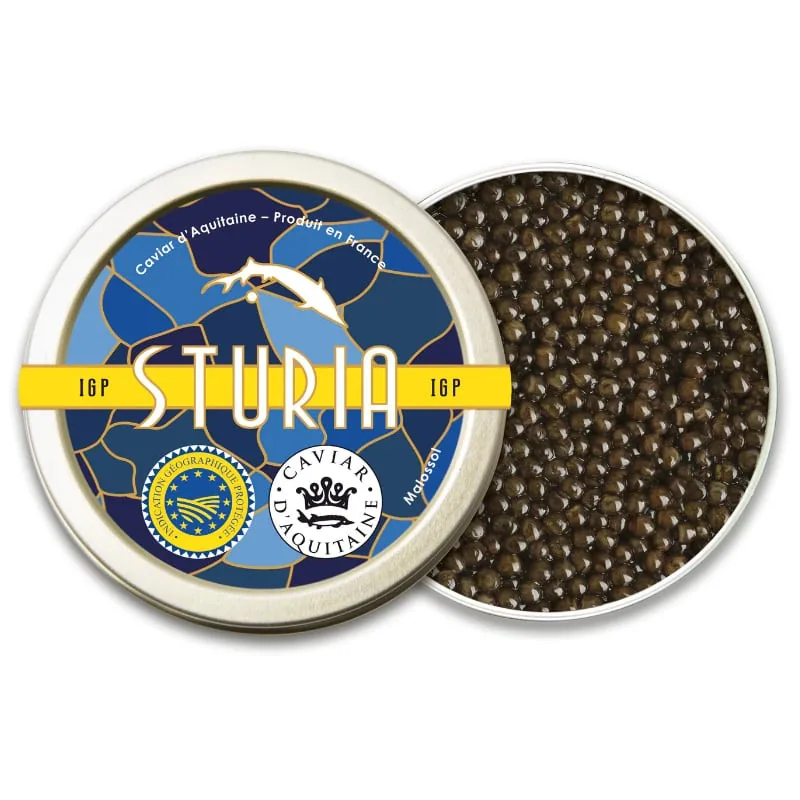
30 g
€78.00
5 products
5 products
30 g
€78.00
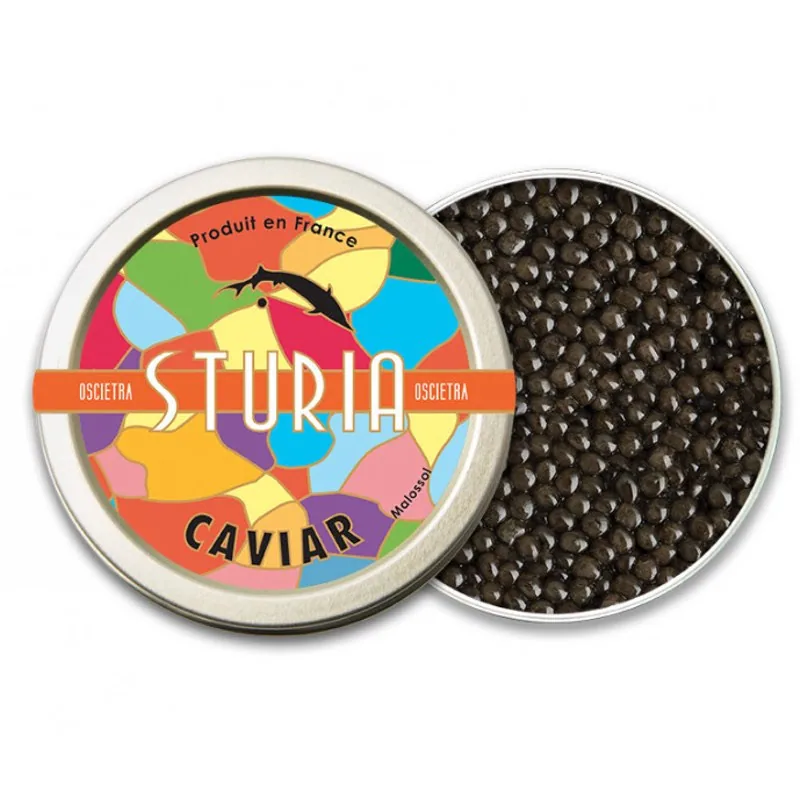
15 g
from€44.00
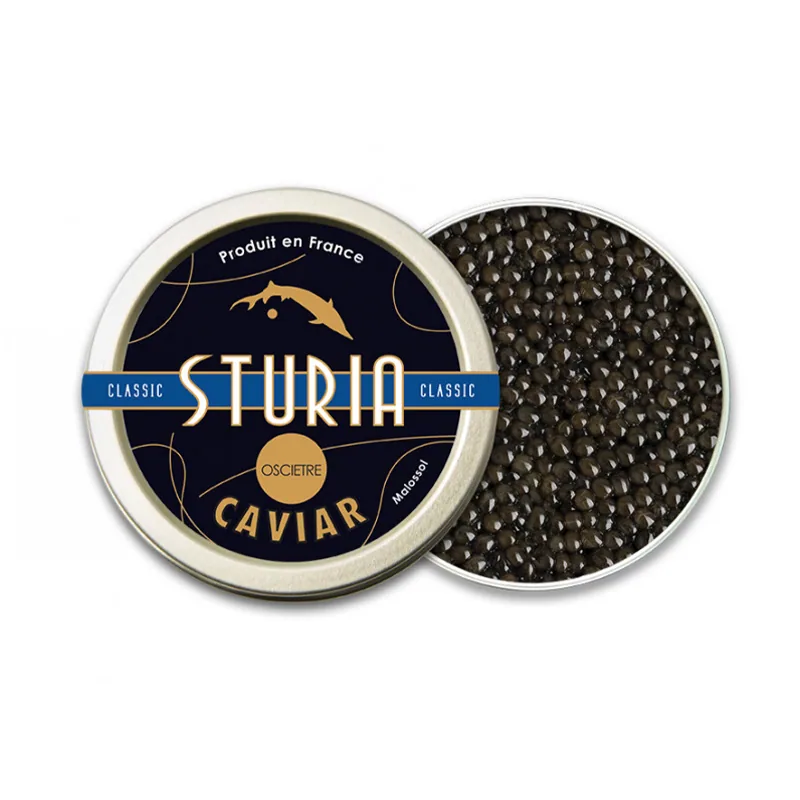
500 g
from€1,080.00
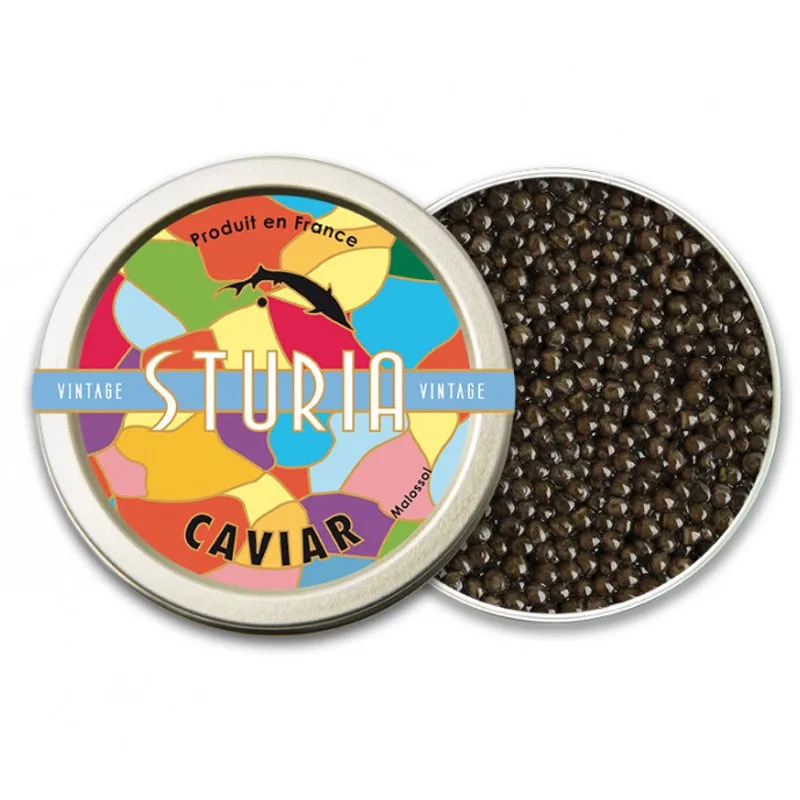
500 g
from€1,242.00
500 g
from€1,361.00
Caviar, which comes from the Greek “avyron” meaning “egg”, or from the Persian “havia” meaning “fish eggs”. Caviar dates back to Antiquity! Traces of caviar, and therefore of sturgeon fishing, can be found in the texts of Herodotus. Sturgeon eggs themselves are thought to have been discovered in the 9th century, with the Persians being the first to eat them. Sturgeon were then fished in the Caspian Sea, and caviar soon appeared in Russia, where the Tsars were particularly fond of it and served it at sumptuous banquets! Caviar went on to be enjoyed in many European countries and became an essential feature of festive end-of-year meals!
In France, it was during the Années Folles that it became truly indispensable, above all as a symbol of luxury, wealth and celebration!
Following this rise in popularity, sturgeon farms began to develop in the 1990s to help offset the disappearance of sturgeon from the Caspian Sea, thereby helping to protect marine and wild wildlife. Farms also developed in countries other than France, notably in Italy, China, the United States, Israel and Bulgaria.
Caviar is made from the eggs of the sturgeon, an anadromous migratory fish. This fish is one of the largest to be found in fresh water, weighing up to 400 kg and measuring up to 6 metres! The sturgeon lives between 50 and 100 years, resembles a small shark and comes in white, black or yellow.
Caviar is made up of sturgeon eggs, or more precisely immature female cells (or oocytes). The sturgeon's reproductive cycle is a long one, as it reaches sexual maturity between the ages of five and twenty, which explains why caviar is so rare.
Making French sturgeon caviar can involve up to thirteen separate steps and calls for a perfect mastery of the craft. French caviar is handled with the greatest of care, following strict hygiene rules, for instance when it comes to sterilisation. As a result, everything that comes into contact with these eggs is sterilised (hands, clothing, equipment…).
The fish is therefore carefully selected, with females chosen as they alone produce eggs. A few male fish are kept for breeding purposes.
The fish is first opened by hand, and the pouch containing the eggs (the roe sac) is carefully removed and then weighed. The caviar is roughly sieved to remove the skin and remaining membranes. Next comes the salting, which depends on the size of the caviar grains, as well as the preferences of consumers and retailers. If the salting is too light, the eggs can deteriorate quickly, and if it is too heavy, the caviar dries out and becomes sticky.
Finally, drying is the last stage in making caviar, carried out to remove excess water (following the penetration of salt into the grains) and achieve a perfect caviar.
The caviar is placed into tins that are sealed under pressure in order to expel any excess liquid or air bubbles. A minimum level of moisture must be maintained so that the grains can move freely within the tin.
So, for a caviar to be good, producers must carry out precise salting, maturing and a meticulous selection of grains, and these steps are specific to each species of sturgeon used. The location where the fish are farmed has little bearing on the quality of the caviar – it is truly the species from which the caviar comes that makes all the difference!
Caviar is an exceptional delicacy, often enjoyed as part of a festive meal, at Christmas or at lavish banquets.
It can also be enjoyed at any time of year, kept chilled at around 4°C. It should be taken out half an hour before serving so it reaches room temperature of around 10°C, the ideal temperature for all the aromas to come through!
Caviar is best enjoyed in its simplest form, with a spoon (preferably mother-of-pearl), and some people like to have it on blinis with crème fraîche, for example, for a perfectly balanced pairing.
The sturgeon is a sea fish that breeds and spends part of its life growing in fresh water. The older it gets, the further it moves from the coast, while staying close to the seabed. It can weigh up to 400 kg and measure up to six metres! In France and in Europe, it measures on average one to two metres in length for a weight of 300 kg. The sturgeon lives between 50 and 100 years, resembles a small shark, and can come in different colours – white, black or yellow. It is a slender fish with a snout equipped with sensitive barbels.
It’s a fish found from Norway to Georgia, by way of the North Sea, the Atlantic coast, the Caspian Sea and also in Europe. It suffered a severe decline, coming close to extinction, and since 2007 it has been the subject of a restoration plan in France (the Garonne) and in Romania (in the Danube). The sturgeon is still critically endangered in 2020.
Giving caviar for Christmas and savouring caviar during the festive season has become a sure way to delight your loved ones and those dear to you! France is among the great producers and consumers of caviar. The French are enjoying it more and more, treasuring the know-how, the artisanal caviar and, above all, caviar made in France! Sales of French caviar rise every year, and France has shown off an exceptional artisanal know-how, as in Aquitaine, for instance!
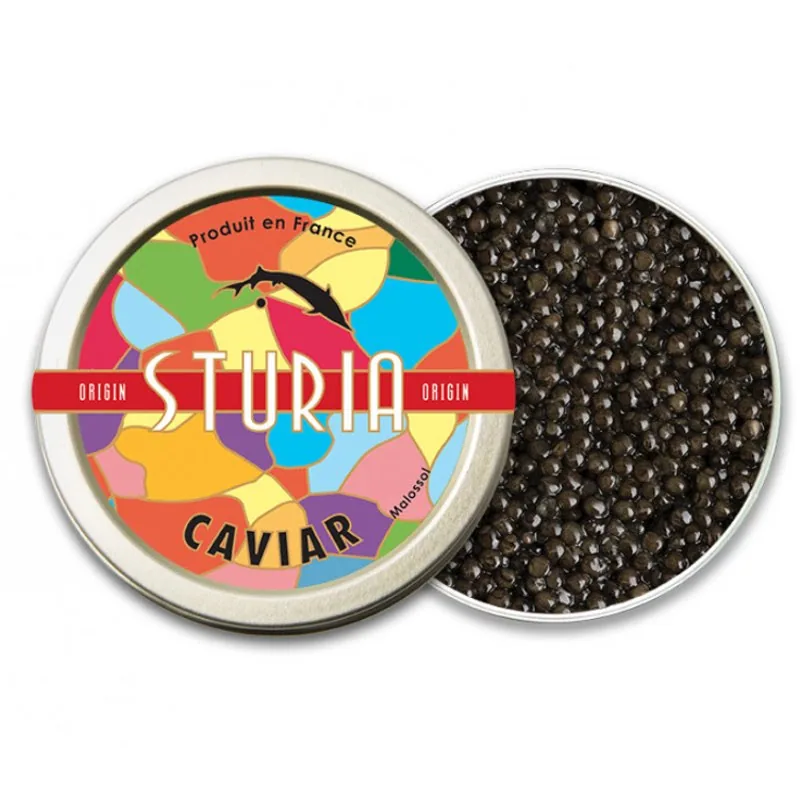
At Tête de Lard, we offer you caviar made in France, straight from Aquitaine: Sturia caviar. Sturia is the flagship brand of the leading Sturgeon producer. Tête de Lard works hand in hand with outstanding partners, inviting you to discover products of great quality.
We are delighted to introduce you to artisanal know-how that honours tradition. Other products, such as sturgeon rillettes, are also given pride of place, so you can treat yourself and, why not, give French caviar to your loved ones at Christmas with 24-hour delivery and Fresh delivery!