Charcuterie with friends
All you need to know about organic charcuterie!
The planet's population keeps growing, so more and more people need to be fed. To achieve this, mankind has found a solution: farming, and intensive production.
16 min read· By Rémi Ledu
CONTENTS:
What is intensive farming?
What are the risks of intensive farming?
What is industrial production?
Integrated farming
High nature value farming
Agroforestry
Biodynamic farming
Agrology
AB and Bio Europe
Bio Cohérence
Bio Partenaire
Demeter
Nature et Progrès
FairTrade Max Havelaar
USDA Organic
Best Organic Product
The planet is becoming ever more populated, so more and more people need to be fed. To achieve this, man has found a solution: farming, and intensive production.
What is intensive farming?
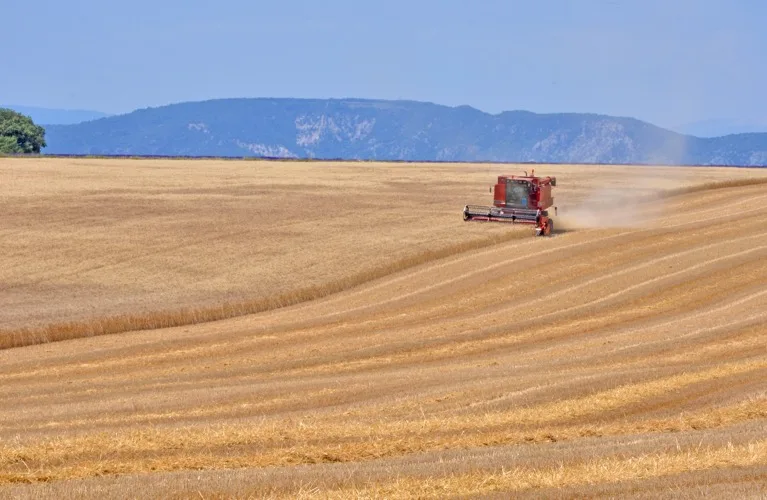
Intensive farming, or productivist farming, involves using inputs to produce in an optimal way. The aim is to maximise production through labour and very heavy use of the land. It also means the optimum use of chemical fertilisers, fungicides, insecticides, herbicide treatments, growth regulators, pesticides… Highly advanced mechanisation is also an important factor.
Farming as it once was is gradually disappearing. The techniques and chemical products used, for instance, make it possible to use the land discontinuously. Herbicides make it possible to replace crop rotation. They help prevent weeds. These new products have also steered farming towards monoculture. This means that farms now produce only one type of vegetable or cereal.
Water is also used in huge quantities to irrigate crops and boost production.
These methods do indeed make it possible to produce ever more at a lower cost, but this is not without risks.
What are the risks of intensive farming?
When farmers rely on intensive production, the repercussions can be very damaging. More than 66,600 tonnes of pesticides are used in France every year. 2 kilos of pesticides are released every second.
- Environmental risks
Pesticides are, here, the main cause of the problems. Farmers use pesticides and herbicides to keep pests or weeds at bay. However, these products seep into the soil and, over time, into streams. These pesticides disrupt the whole ecosystem, plant species disappear, and marine life is also badly affected
Sometimes, fertilisers are used. They provide the minerals plants need to grow. Over time, this fertilisation has led to a homogenisation of habitats. This upsets the way ecosystems function.
Intensive farming also means it's impossible to allow the land any rest. The soil is therefore put under enormous strain. Farmers plough it far too much, which disrupts the natural cycle of the soil.
Drainage and irrigation reshape landscapes over the long term.
- Risks to animals
Pesticides and herbicides are poisons for all living creatures. When they're sprayed over fields, they also affect the surrounding wildlife, which kills a great many species. They prevent reproduction, or simply kill outright. This affects insects, but also small mammals and birds.
There's a technique for treating fields known as crop dusting. It involves spraying the field with pesticides from a plane. Naturally, the field itself isn't the only thing affected. All the surrounding plots suffer the same consequences.
Hyper-mechanisation causes the death of many young animals that often take refuge in fields and end up crushed by machinery.
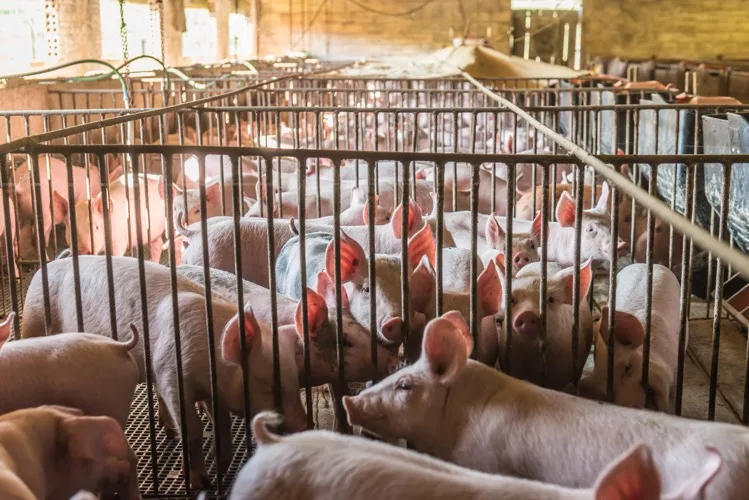 One of the major risks concerning animals is intensive farming. It is estimated that in France, around 8 animals out of 10 are reared in intensive farming systems without any access to the outdoors. When animals are born, if they do not meet the requirements, whether they be males or sometimes females, they are killed on their very first day of life. What awaits the others is not necessarily any better. The young are separated from their mothers very early on, which creates trauma. The mothers' productivity is pushed to its maximum, and they give birth far more often than nature would normally allow. For example, a hen lays close to 300 eggs a year, compared with around fifteen in the wild. When they are young, animals are mutilated so that they can live together without any problems. Beaks are trimmed, ducks' claws are removed, tails are cut off, pigs' teeth are filed down, along with plenty of other atrocities. The animals are then kept in far too great numbers within buildings, which restricts their movement.
The consequences of such treatment are, unsurprisingly, a very high mortality rate. Nearly 20% of pigs die before the day of slaughter.
If they do not die, they will be slaughtered on production lines, sometimes in horrific conditions. They will die stressed, in suffering.
- Risks to humans
Unfortunately, intensive farms are conducive to the development of certain diseases. These viruses can then be passed on to humans. We have seen this with recurring flu outbreaks or the mad cow disease scandal.
What's more, to prevent infectious diseases from spreading among their herds, farmers have to use antibiotics. In some countries, farmers even use antibiotics to speed up growth. When we eat this meat, we are consuming the antibiotics the animal has ingested. Over time, our bodies become accustomed to them. Antibiotics will therefore become ineffective within a few years.
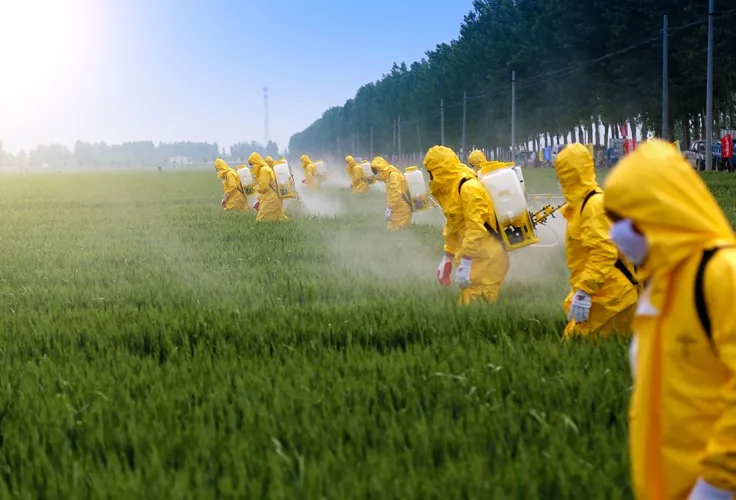
There are also other risks to human health from pesticides. These enter our bodies through skin contact, by inhalation, or more simply by ingestion.
Farmers are the first to be affected. They are sometimes in contact with these harmful products throughout their entire working lives. The long-term effects become worrying. Cancers develop, and some farmers die from them.
Unfortunately, one can sometimes inhale these products unintentionally, for instance if one lives next to a field. This becomes problematic when a woman is pregnant. Indeed, this product can have effects on the unborn baby, such as malformations.
Finally, the pesticides used on crops sometimes end up on our plates. We therefore eat them on a daily basis, and the effects can be dramatic.
Once the raw materials have been produced, unfortunately, that is not the end of it. Industry then takes over, and it is not necessarily any better.
What is industrial production?
Today, manufacturers are waging a price war. There is always pressure to produce more cheaply, to sell more cheaply, and therefore to sell more than the competition. Unfortunately, this comes at the expense of quality.
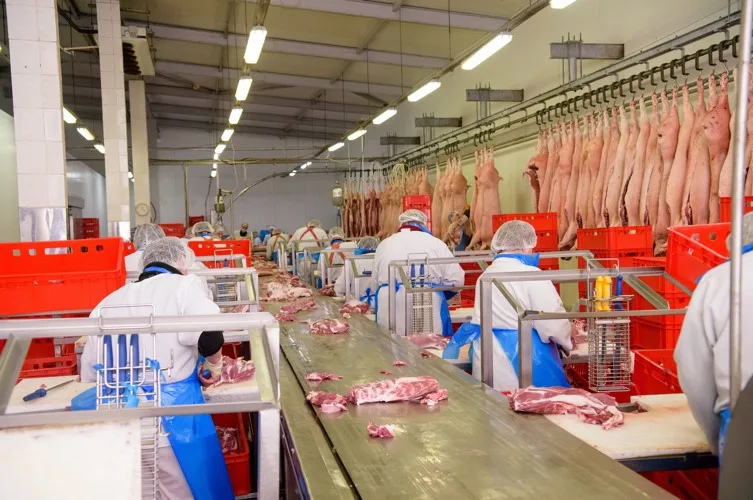
Let us take the example of industrial charcuterie. Manufacturers use raw materials from intensive farming. For a saucisson, things start off very badly. The pig is slaughtered after just 6 months. Its meat is therefore of poor quality, as it has not had time to develop properly: the muscles are too small, the flavour is very weak, and the fat is of poor quality. Moreover, to save time, and therefore money, the cuts of meat are not necessarily very well trimmed or very well cleaned, so there is a risk of unpleasant bits of sinew in the mouth.
What's more, with this poor quality of meat and preparation, the saucisson will obviously not have an attractive appearance. However, there are chemical techniques to remedy this. Firstly, the saucisson's casing is artificial and replaced with plastic. To achieve the white colour that signals authenticity, manufacturers add talc, which gives it that much sought-after look. The trouble is, this white bloom is actually what's known as the saucisson's flower, which appears after 4 weeks of ageing. As this waiting time is considered too long, talc is present in 80% of products found in supermarkets.
The deception doesn't stop there; there are now powders that they add to their meat preparation. This powder is a fraction of pig's blood which has an attractive blood-red colour and a texture similar to meat, yet is not actually meat. Manufacturers take advantage of this, as this powder is much cheaper than meat. They have therefore reworked their recipes and make products with, for example, 70% meat instead of the traditional 100%. Industrial saucisson therefore has much less flavour than a traditional saucisson.
There are, however, alternatives. Farmers and artisans are fighting against this intensive production and creating other forms of farming for the future.
France Télévision devoted a lovely report to this.
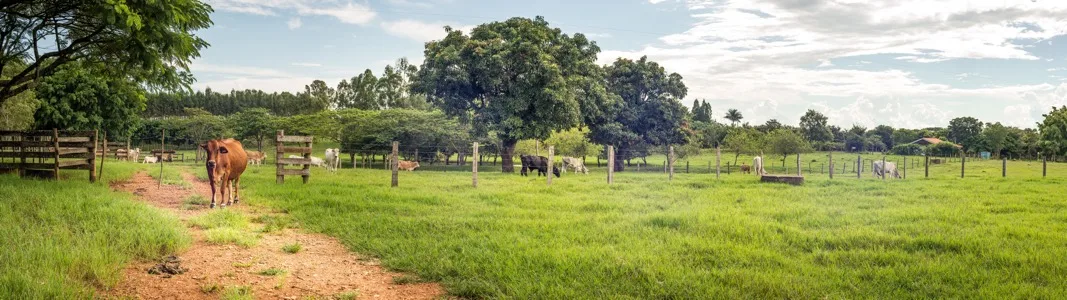
Organic farming is increasingly in demand from consumers and increasingly taken up by farmers. It consists of excluding the use of synthetic chemical products, as well as animal suffering. Organic farming is in fact a large family encompassing a multitude of different farming methods.
Integrated farming
Cette agriculture n’est pas totalement bio, mais elle a pour but de minimiser le recours aux instants extérieurs dans les exploitations agricoles. Elles n’utilisent des pesticides qu’en dernier recours. Les paysans qui pratiquent cette forme d’agriculture tentent de retrouver un cycle normal. Ils laissent la terre se régénérer en créant des cycles de rotations longs et diversifiés. Ils utilisent des déjections animales et des résidus de culture pour nourrir la terre. Ceci permet d’utiliser des produits qui proviennent de la ferme et de réduire les problèmes liés aux ravageurs et aux maladies. Ils créent donc une terre saine sans intrants extérieurs.
Ces agriculteurs ont une approche globale de la ferme ou tout peut se compléter, tout peut servir.
High nature value farming
This form of agriculture is found across Europe. The principle is to assess areas that contain rich biodiversity, and to farm them accordingly. The crops are complementary, which helps avoid the need to add chemical products.
Within this broad family that is high nature value farming, we're going to look more closely at permaculture.
Permaculture uses this holistic method, which involves designing systems inspired by natural ecology. It leaves room for wild nature and for the relationships between different ecosystems. This method is very energy-efficient and respectful of living creatures.
It aims to be sustainable and sparing in its use of energy, both mechanical and human. Nature is meant to be self-sufficient, complementing itself. The various species relate to one another, which helps protect them from outside risks and, as a result, does away with the need for chemical products.
La ferme du vieux poirier is a fine example of this type of farming. They make use of everything possible on their land, even turning its weaknesses into strengths. In time, this couple hopes to become self-sufficient thanks to the resources of the land and the animals kept there. Here's a short report on micro-farms, in which Charles and Laurianne talk about their wonderful project:
Agroforestry
It’s a model that puts the tree at the very heart of everything. On the same plot, the farmer grows trees and raises animals together. The two cannot exist without one another. The trees provide healthy feed for the animals, shelter them from predators, help retain water, and combat soil erosion.
The Padouen collective uses this technique. A group of farmers produce free-range black pork from Bigorre. The pigs feed mainly on what they find along their way. They are raised in an environment made up of meadows and forest edges that suits their needs perfectly. The pigs are also given the time to develop naturally, in the best possible conditions. The farmers allow the animals time to live, to build muscle, and to mature.
Biodynamic farming
This type of farming aims to ensure healthy soil and plants, so as to provide both people and animals with quality food. It takes a holistic view of nature. The more surprising aspect, and what sets it apart from conventional organic farming, is that it also takes subtler energies into account. It incorporates the celestial bodies and follows a lunar calendar for agricultural work. The stars are believed to influence plant growth, making them stronger and more resilient. As a result, no chemical products are used, and very strict specifications are followed.
Agrology
This farming model is a far more scientific one. The principle is to study soil microbiology in order to understand its needs, strengths, and weaknesses. Armed with this very precise information, farmers can then choose the crop best suited to their soil. They can also work out what it needs to become more fertile. These farmers seek to understand the soil so as never to overuse it, but rather to make the most intelligent use of it possible.
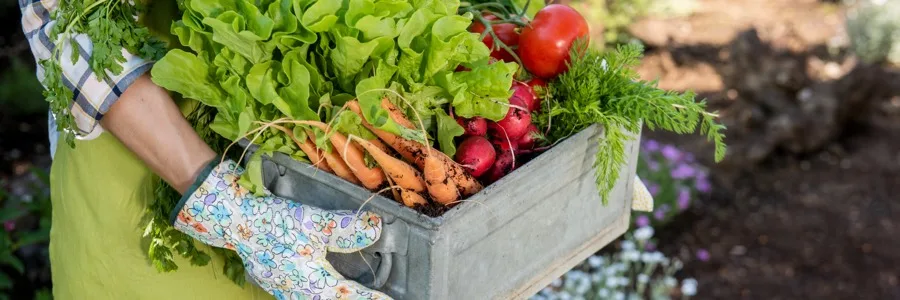
To produce organically and be recognised as such, certain specifications must be followed. These vary from one label to another.
AB and Bio Europe
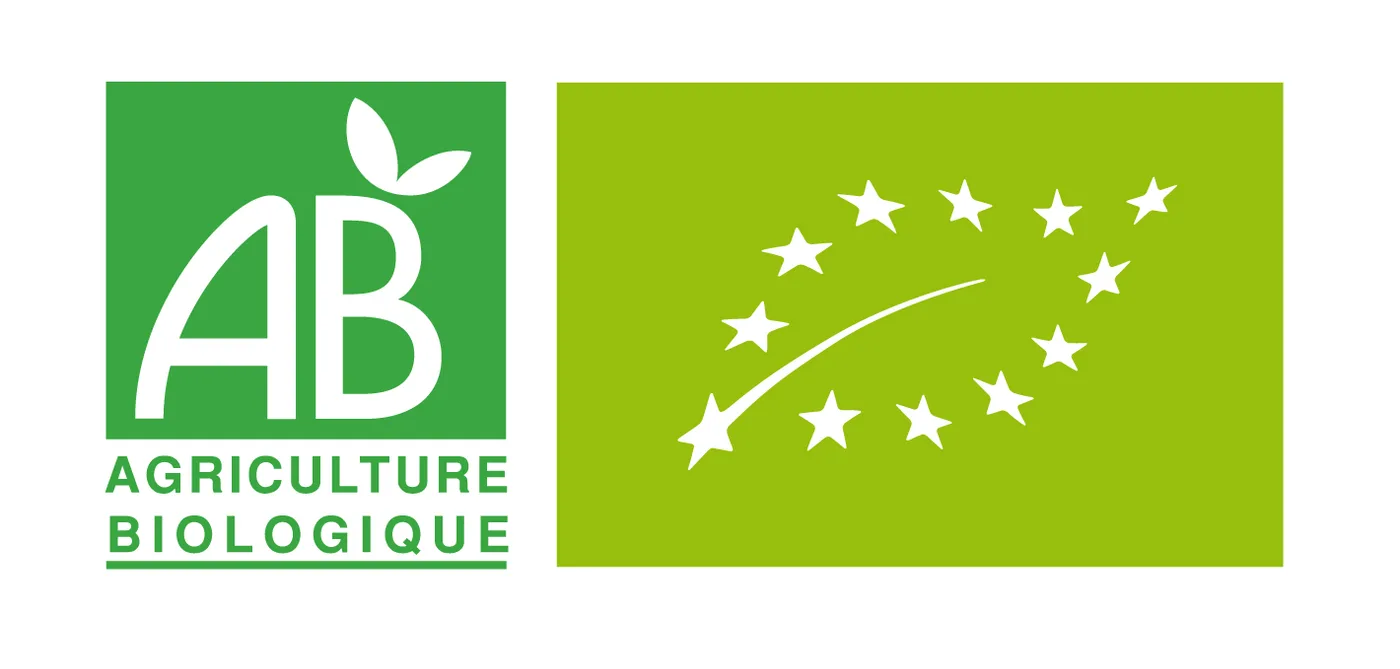
These are two very generalist logos that go hand in hand. The AB logo isn’t compulsory, but its reputation is a selling point worth adding to a product. It’s a French label. The European leaf-shaped logo, meanwhile, is compulsory for all manufacturers of products from organic farming. Manufacturers must display this logo on their packaging. The European charter imposes a total ban on pesticides and synthetic chemical fertilisers. Certain naturally-derived products may be tolerated under certain conditions. GMOs, on the other hand, are strictly forbidden. The final product must contain at least 95% of ingredients from organic farming. Farmers are also not allowed to grow the same vegetable, for example, in both organic and non-organic versions. Being 100% organic is very tricky, because of neighbouring farms which may use chemical products.Bio cohérence
The European logo shown above took precedence over the French AB label logo following the new regulation of 2010. This had the effect of loosening the criteria of the AB organic label. Some decided otherwise and created Bio cohérence. It takes up the very strict terms of the AB charter and adds a few more points. The Bio cohérence charter requires organic products to be grown, produced and processed in France. All organic farms, businesses and structures must be French, based on French soil. What’s more, they check that all employees receive a fair income. Animal welfare is also very closely monitored. It’s a logo with strong humanist values, concerned with working conditions as well as the living conditions of animals.
Bio partenaire
This logo is approved by the public authorities. It is closely linked to the Bio Équitable label. Both are based on the charter of the European label, while incorporating strong humanist values. The Bio partenaire label is built up and constantly renewed through discussions between the various players involved. The aim is to support local production and make organic stakeholders sustainable over time. Respect for the environment is one of the label’s major concerns, which also includes a notion of progress. The aim is to improve employees’ well-being and health, and to reduce their environmental impact. The Bio Équitable label concerns textile production. The charter aims to ensure a fair, respectful income for small-scale producers.Demeter
Demeter is the label for biodynamic farming. This form of farming draws on a spiritual movement called anthroposophy. As explained earlier in the article, these farmers adapt their production according to lunar and planetary cycles. The charter forbids any use of chemical products, in order to preserve the quality of plants as well as of the soil. What’s more, biodiversity is strongly encouraged in order to bolster the health of the planet. Finally, processed products wishing to obtain this label must be made up of at least 90% Demeter-certified ingredients. The remaining 10% must be certified organic. This label is therefore intended to be highly protective of our planet, and very respectful of the natural cycle of the universe.
Nature et Progrès
This charter is rather old (1964). It was created by professionals and consumers. Its charter is highly independent, standing apart from European regulations. This label is constantly evolving. It adapts to current ecological issues and new challenges. From the outset, the priority has remained to promote small-scale farming and organic agriculture. All productions wishing to be recognised by this label must be made up solely of already-labelled products. What’s more, its production must not be harmful to plants or animals. Palm oil, for example, is strictly forbidden, because even organic palm oil fails to respect people; working conditions on these plantations are dreadful. It also contributes to deforestation, which wipes out animal species and, at the same time, harms the planet.
FairTrade Max Havelaar
This label is relatively recent (2004). It fights against inequality more than it champions organic production. It focuses on raw materials. It tackles the fact that small-scale farmers from Latin America, Africa or Asia often cannot make a living from their work, and are among the first affected by malnutrition. The label’s first concern, therefore, is to check that these producers receive a fair income, allowing them to live decently. However, it can be awarded even if the products don’t come from organic farming.
USDA Organic
This label, for its part, is American. Its principle resembles that of the European label. It recognises, or not, American organic products. However, it has a very different structure. It has created three distinctions. These are, in a way, levels that determine the degree of organic content in production. Products entirely derived from organic farming receive the “100% Organic” label. Products using less than 95% organic ingredients may only use the term “Organic”. For products containing 70% organic ingredients, they are entitled to state “made with Organic ingredients”. This allows consumers to benefit from products that are completely transparent in their composition and to establish a “hierarchy of organic status”. Beyond logos and organic labels, there are also organic distinctions. In the food sector, one distinction is very well known among consumers and serves as a reference point.
Meilleur Produit Bio
This distinction is awarded by a panel of consumers. Only organic products may hope to receive it. The product must be tested by a panel of 100 consumers and score above 16/20. Present on the market since 2013, it gives consumers a guarantee of an organic product, as well as assurance of its quality, effectiveness and taste. Each year, products either receive the distinction or not. Thanks to the various labels, it’s now easy to eat organic, as products are recognisable and reliable. Nowadays, there is a real urgency to change our consumption habits. This urgency concerns, first and foremost, our planet, which intensive farming puts at risk. Animal species suffer enormous, often irreversible, consequences. Ultimately, this urgency is caused by us, humans, even as we too bear its heavy consequences.
Artisans work with passion and conviction to produce and offer consumers another way of life, a more environmentally respectful way of consuming. By protecting what is most precious to us, we also protect ourselves.
Take the example of producer Mickaël Blanc Gonnet, head of the Gaec du cuvy farm. He is a small-scale producer from Savoie who raises his own cows outdoors. They only stay indoors in winter, because of the cold. In summer, he takes them up to mountain pastures, where they graze on incomparably high-quality grass. Thanks to their milk, cheese production is possible — genuine Beaufort. With their meat, he makes an authentic saucisson. He raises his animals and then makes the products himself. He oversees every stage and ensures the quality throughout. What’s more, he is part of a Bienvenue à la ferme committee, which allows families and tourists to visit his farm and discover his products. Here is an example of a farmer who is aware of the role he has to play in today’s environmental challenges.
Tête de lard offers products from farming that respects the environment, from producers concerned about today’s challenges:
- No added chemical products
- Animal welfare
- Fair incomes
- Quality at the heart of production
- Local production
These are farmers, artisans, who deserve to be celebrated and given boundless consideration.
You can find our producers, along with their products, on our website.