Charcuterie with friends
Original homemade charcuterie board
The charcuterie board is an unshakeable classic of French-style aperitifs. But why settle for a basic assortment when it's so easy to put together a…
5 min read· By Rémi Ledu
Original homemade charcuterie board: the complete guide to a successful aperitif
The charcuterie board is an unshakeable classic of French-style aperitifs. But why settle for a basic assortment when it's so easy to put together an original homemade charcuterie board, one that's both delicious, beautiful to look at and perfectly balanced? Whether you're entertaining friends, hosting an evening apéritif or marking a special occasion, putting together your own homemade charcuterie board lets you play with flavours, textures, regional influences... and please everyone at once.
Discover how to choose the right products, take care with presentation, vary your recipes and create a truly original board, depending on your tastes, the season or the theme of your evening.
Why make your own homemade charcuterie board?
Putting together a homemade aperitif board has several advantages:
- Freedom of choice: you select only quality products, according to your own tastes or those of your guests.
- Creativity: you can dream up a theme, an atmosphere, combine influences or try out lesser-known charcuterie.
- Cost savings: buying products separately and assembling them yourself is often cheaper than a ready-made board.
- A feast for the eyes: a beautifully presented board always makes an impression, especially if you add a few unexpected touches.
And above all, it's an excellent way to showcase produce from the terroir or artisanal charcuterie, which is often tastier than industrial alternatives.
The essentials for an original charcuterie board
1. A varied selection of charcuterie
Originality starts with the choice of products. For a well-balanced board, plan for at least:
- A dry-cured saucisson (classic, with pepper, hazelnuts, cheese, herbs…)
- An aged raw ham (jambon de Savoie, Iberian, Parma…)
- A dried or smoked meat (viande des Grisons, bresaola, dried duck magret)
- A softer product (terrine, pâté, artisanal rillettes)
- One or two more unusual products: game charcuterie, génépi saucisson, chilli coppa, etc.
If possible, add charcuterie from different regions: Savoie, Corsica, Auvergne, Italy, Spain, to surprise the palate.
2. Well thought-out accompaniments
A successful home-made charcuterie board isn't limited to slices of meat. It should also offer a variety of savoury and sweet accompaniments, to balance out the richness of the charcuterie, awaken the taste buds and create contrast.
Do include:
- Cheeses: sheep's tomme, reblochon, aged goat's cheese, comté, mild blue cheese… (a maximum of 2 or 3, so as not to overshadow the charcuterie)
- Fresh fruit: grapes, figs, melon, apples, pears, pomegranate
- Dried fruit and nuts: apricots, dates, walnuts, almonds, hazelnuts
- Crunchy vegetables: radishes, gherkins, cherry tomatoes, carrot sticks
- Condiments: wholegrain mustard, onion confit, chutney, tapenade
- An assortment of bread: walnut bread, rye bread, focaccia, seeded bread, breadsticks, home-made crackers
These elements allow you to create varied mouthfuls, so that each guest can put together something to suit their own taste.
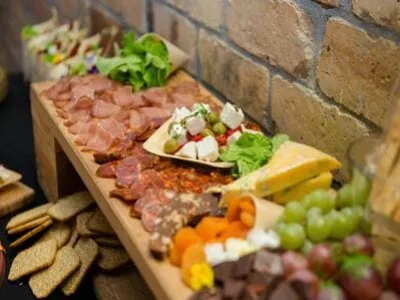
3. A carefully thought-out presentation
A charcuterie board is also enjoyed with the eyes. For a result worthy of the finest caterers, follow these simple tips:
- Alternate colours and shapes: don't place all the slices side by side.
- Roll up the ham, fold the saucisson, stack the slices or arrange them into rosettes.
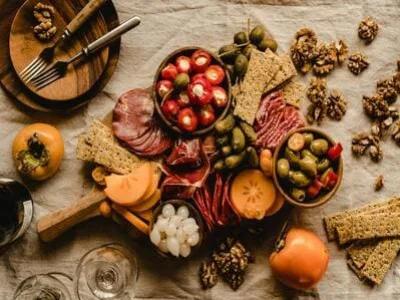
- Use props of different heights: bowls for olives, small dishes for sauces.
- Add a touch of greenery: a few sprigs of rosemary, vine leaves, or edible flowers.
- Serve on a rustic wooden board, a slate or a bamboo tray for a rustic or natural style.
Examples of original platters to put together
"Mountain and cheese" platter
- Smoked saucisson, Savoie dry-cured ham, Grisons dried beef
- Tomme, Beaufort, farmhouse reblochon
- Walnuts, blueberries, onion jam
- Rye bread and crackers
- Mondeuse or Savoie white wine
"Mediterranean summer drinks" platter
- Chorizo, coppa, Serrano ham
- Manchego, feta, marinated olives
- Melon, semi-dried tomatoes, grilled peppers
- Focaccia or olive oil bread
- Well-chilled rosé or a light Spanish red
"Artisanal discovery" platter
- Thyme saucisson, country pâté, game terrine
- Dry-cured goat's cheese, goat's blue cheese
- Dried apricots, gherkins, fig chutney
- Walnut bread, wholemeal bread
- Côtes-du-Rhône or natural red wine
"Vegetarian charcuterie-style" platter
- Plant-based saucisson, lentil terrine, homemade hummus
- Aged cheeses, marinated vegetables
- Cashew nuts, figs, black tapenade
- Homemade crackers, seeded bread
- Dry white wine, artisanal apple juice or kombucha
Quantities to plan for
For a drinks-and-nibbles evening, plan on:
- 120 to 150 g of charcuterie per person
- 80 to 100 g of cheese
- 1 to 2 slices of varied bread per type
- A few fruits and condiments for contrast
If the platter is served alongside a meal, reduce the quantities to around 60 to 80 g of charcuterie per person.
Which wine should you choose to go with a homemade charcuterie platter?
A good wine and charcuterie pairing brings out the best in every bite. Go for:
- Light red: Gamay, Pinot noir, Mondeuse, Cinsault
- Dry white: Roussette de Savoie, Apremont, Sauvignon blanc
- Characterful rosé: Côtes de Provence, Tavel
- A discreet sparkling wine: Crémant d'Alsace, méthode ancestrale
Avoid overly oaky or tannic reds (such as a heavy Bordeaux), as they overwhelm the flavours.
Pitfalls to avoid when putting together your platter
- Too many fatty or salty charcuterie items
- No fruit or fresh accompaniments
- Slices that are too thick or cut in advance (they dry out quickly)
- A platter left out at room temperature for too long
- Only one type of bread (vary the textures)
Conclusion
Creating an original homemade charcuterie board is much more than a simple assembly of products: it's a moment of sharing, a taste experience, and a way to showcase passionate artisans. By playing with pairings, textures, surprises and seasons, you transform an aperitif into a memorable moment.