Ham, and how good it is!
The different types of ham and how to tell them apart?
Raw ham, also known as dry-cured ham, is a type of ham that is not cooked. Instead, it is salted and air-dried for several months. This process allows…
5 min read· By Rémi Ledu
Les différents types de jambon :
Le jambon cru :
Qu'est-ce que le jambon cru ?
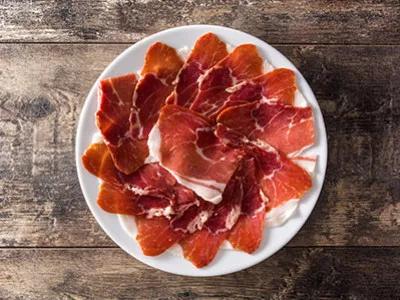
Le jambon cru, également connu sous le nom de jambon sec, est un type de jambon qui n'est pas cuit. Il est plutôt salé et séché à l'air libre pendant plusieurs mois. Ce processus permet de développer des saveurs riches et complexes.
Les caractéristiques du jambon cru :
- Goût intense : Grâce au processus de salaison et de séchage, le jambon cru offre une saveur concentrée et salée.
- Texture ferme : Le séchage à l'air donne au jambon une texture plus ferme comparée à celle du jambon cuit.
Le jambon cuit :
Qu'est-ce que le jambon cuit ?
Le jambon cuit est préparé en cuisant la viande après un processus de salaison. Cette cuisson peut être réalisée par diverses méthodes, y compris la cuisson à la vapeur, au four ou l'ébullition.
Les caractéristiques du jambon cuit :
- Goût plus doux : Le jambon cuit a généralement un goût plus doux et moins salé que le jambon cru.
- Texture tendre : La cuisson rend le jambon tendre et juteux, parfait pour les sandwiches et les salades.
Le jambon de Bayonne :
Son origine et ses caractéristiques :
Le jambon de Bayonne est une spécialité française, originaire de la région du Pays basque. Il est fabriqué à partir de porcs élevés localement et est salé avec du sel des salines de la région.
Le processus de fabrication :
- Salaison : Le jambon de Bayonne est d'abord salé et laissé à reposer pendant plusieurs semaines.
- Séchage : Après la salaison, il est séché à l'air libre pendant plusieurs mois, souvent jusqu'à un an.
Comment distinguer le jambon de Bayonne ?
- Label : Recherchez le label "Jambon de Bayonne" qui garantit l'authenticité du produit.
- Saveur douce et équilibrée : Ce jambon est réputé pour son goût délicat et équilibré, avec une texture légèrement ferme.
Le jambon ibérique :
Son origine et les types de jambon ibérique :
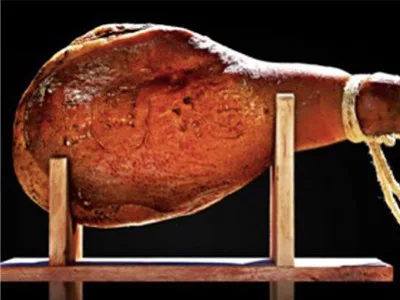
Le jambon ibérique est une spécialité espagnole, produite à partir de porcs ibériques. Les types de jambon ibérique incluent le Jamón Serrano et le plus prestigieux Jamón Ibérico de Bellota.
The production process:
- Feeding the pigs: The pigs destined for Jamón Ibérico de Bellota are fed exclusively on acorns, which gives the meat a unique flavour.
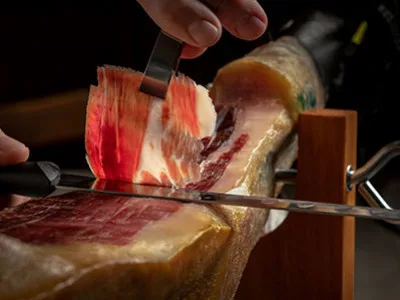
- Salting and drying: As with dry-cured ham, Iberian ham is salted and dried over long periods, often several years.
Distinguishing Iberian ham:
- Price: Iberian ham, especially Jamón Ibérico de Bellota, is generally more expensive than other types of ham.
- Rich, complex taste: It has a deep, complex flavour, with a marbled texture of fat that melts in the mouth.
Parma ham:
Its origin and characteristics:
Parma ham is an Italian speciality, famous the world over. It is produced in the region of Parma, in Italy, and is subject to strict rules of production.
The production process:
- Salting: Parma ham is lightly salted and left to rest for several months.
- Ageing: It is then aged for at least 12 months, often longer, which develops rich aromas and a melt-in-the-mouth texture.
How to distinguish Parma ham?
- Label: The ducal crown logo guarantees the authenticity of the product.
- Mild, subtle flavour: Known for its mild, slightly sweet taste, and its delicate texture.
Savoie Ham:
Its origin and characteristics:
Originating from the Savoie region in France, this ham is renowned for its rustic flavours and traditional production process.
The production process:
- Salting: Savoie ham is rubbed with salt and herbs, then left to rest.
- Drying: It is air-dried under conditions specific to the region, which gives it a unique flavour.
How to distinguish Savoie ham?
- Flavour: Characterised by a salty taste with herbaceous notes, it has a firm, slightly dry texture.
- Appearance: Its flesh is often darker than other types of ham.
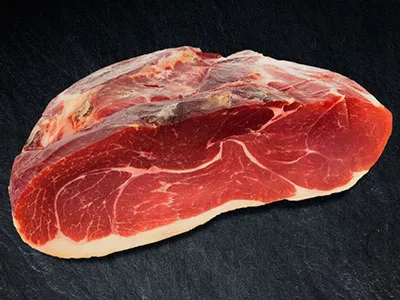
How to tell the different types of ham apart?
The different criteria for distinguishing them:
To tell the different types of ham apart, consider the following aspects:
- Geographical origin: Many hams bear the name of their region of origin, such as jambon de Bayonne or Parma ham.
- Preparation method: The salting, drying and cooking method greatly affects the taste and texture of the ham.
- Label and certification: Look for specific labels that guarantee the authenticity and quality of the product.
Tasting and texture:
- Raw ham vs. cooked ham: Raw ham has a more intense flavour and a firmer texture, whilst cooked ham is milder and more tender.
- Jambon de Bayonne vs. Iberian ham: Jambon de Bayonne has a milder, more balanced flavour, whilst Iberian ham, particularly Jamón Ibérico de Bellota, offers unrivalled richness and complexity.
FAQ:
What are the main types of ham?
The main types of ham include raw ham, cooked ham, jambon de Bayonne, and Iberian ham.
How can you tell raw ham from cooked ham?
Raw ham is air-dried and has an intense flavour and firm texture, whilst cooked ham is prepared by cooking the meat, giving it a milder flavour and a tender texture.
What makes Iberian ham special?
Iberian ham, especially Jamón Ibérico de Bellota, is special because the pigs are fed on acorns and undergo a long salting and drying process, giving a rich and complex flavour.
What is the difference between jambon de Bayonne and Parma ham?
Jambon de Bayonne is salted with salt from the salt marshes of the Basque Country region and air-dried, giving it a mild, balanced flavour. Parma ham, which comes from Italy, is lightly salted and aged for at least 12 months, known for its mild, slightly sweet taste.
How can you recognise a quality ham?
A quality ham is often certified by specific labels, has a precise geographical origin, and shows signs of a traditional preparation method.
What is the best way to serve ham?
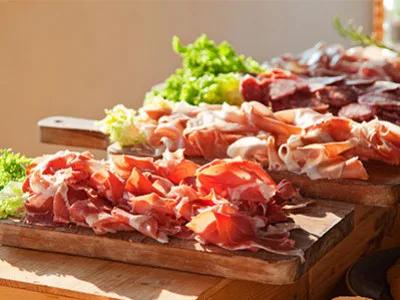
Ham can be served in many ways, including thinly sliced on a charcuterie board, in sandwiches, or as an accompaniment to cooked dishes. Be sure to serve it at room temperature to fully appreciate its flavours.
Understanding the different types of ham and knowing how to tell them apart can enrich your culinary experience and help you choose the right type of ham for every occasion. Whether you prefer the richness of Iberian ham, the delicacy of Parma ham, or the balance of jambon de Bayonne, each variety brings something unique to the table. Explore, taste and enjoy the diversity of flavours offered by these charcuterie delights.