Charcuterie with friends
What is the difference between saucisson sec and dry-cured sausage?
The world of charcuterie is as rich as it is flavoursome. Among the products most appreciated by lovers of dried meat, there are two stars: saucisson sec and dry-cured sausage…
6 min read· By Alex Foras
What is the difference between saucisson sec and dry-cured sausage? Let us explain it all.
The world of charcuterie is as rich as it is flavoursome. Among the products most appreciated by lovers of dried meat, there are two stars: saucisson sec and dry-cured sausage. They look alike, often share the same sharing board, and yet they are quite different. So, what is really the difference between saucisson sec and dry-cured sausage? Composition, production method, taste, uses…
Defining saucisson sec and dry-cured sausage
Before going into detail, it is essential to understand precisely what these two products are.
Saucisson sec
Saucisson sec is a charcuterie product made from pork, sometimes mixed with other meats such as beef, wild boar or even duck. It is stuffed into a casing (natural or artificial), seasoned, then dried for several weeks under controlled conditions. Saucisson can be plain or flavoured (pepper, hazelnuts, herbs, chilli…).
Dry-cured sausage
Dry-cured sausage is very close to saucisson in its composition. It is also made from minced meat, salted, seasoned and dried. The main difference lies in its smaller diameter, its thinner shape and often a slightly firmer texture. In some regions, it is also sometimes called “little saucisson”.
A question of size: diameter makes the difference
The most obvious distinction between saucisson sec and dry-cured sausage can be seen with the naked eye: the diameter.
- Saucisson sec is generally larger. Its diameter can vary between 5 and 8 cm depending on the recipe.
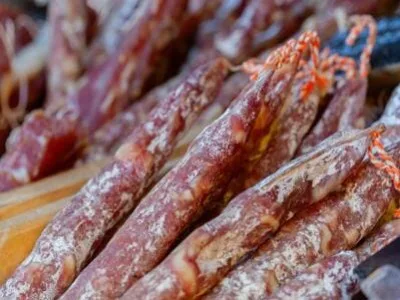
- Dry-cured sausage is thinner, with a diameter often under 4 cm.
This difference in size influences the drying time, the texture and the final taste.
Drying time: a different maturation
Drying time is another important difference.
- As saucisson sec is larger, it requires a longer drying period: generally 4 to 6 weeks, or even longer for certain artisanal saucissons.
- Dry-cured sausage, being thinner, dries more quickly: often between 2 and 4 weeks.
This drying time has a direct impact on texture: saucisson tends to stay softer at the centre, while dry-cured sausage is drier and more uniform throughout.
Composition: similar recipes, but not identical
Both products share a similar base: pork meat, pork fat, salt and pepper. But certain details vary:
- Saucisson sec can contain a wider range of ingredients: wine, spices, nuts, cheeses, herbs, even pieces of truffle or fig.
- Dry-cured sausage tends to have a simpler recipe, with fewer added ingredients. The focus is on the quality of the meat and classic seasoning.
This doesn't mean dry-cured sausage is any less good, quite the opposite: its simplicity lets the quality of the meat shine through.
Taste: subtle but real nuances
When it comes to taste, there are real differences:
- Saucisson sec often offers a rounder, sometimes milder taste thanks to its higher moisture content.
- Dry-cured sausage, being drier, has a more concentrated taste, sometimes saltier or more pronounced depending on the drying method.
These nuances are much appreciated by connoisseurs. Some prefer the melt-in-the-mouth quality of saucisson, others the firmer bite of dry-cured sausage.
Texture: softness versus firmness
As mentioned, texture is an important factor.
- Saucisson sec is softer, especially at its heart.
- Dry-cured sausage is denser, firmer and more even.
This is directly linked to the drying process, the diameter, and the final moisture level of the product. If you enjoy a tender texture, saucisson is the way to go. If you enjoy biting into something drier, sausage is ideal.
Packaging: string, casing, bloom
Another distinguishing feature: packaging and outward appearance.
- Saucisson sec is often sold tied with string, in a natural casing, and may be covered with a natural white bloom (from the development of beneficial moulds).
- Dry-cured sausage may also show this bloom, but is more often sold loose, in a pack or in a bundle, sometimes even without a casing.
Some dry-cured sausages are sold sliced into pieces or in mini formats, very handy for nibbles.
Culinary uses: nibbles, picnics, recipes
Both products are perfect for a successful aperitif. But their uses can vary:
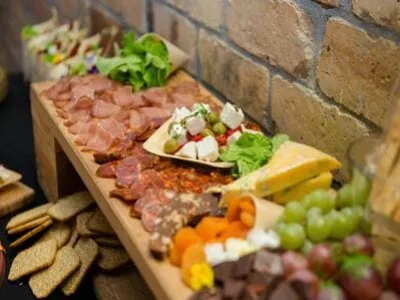
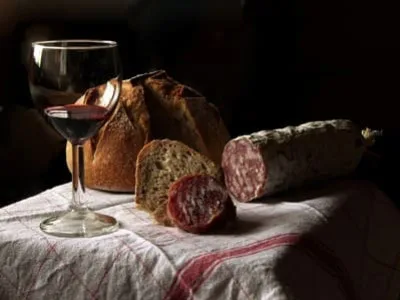
- Saucisson sec is often sliced into thin rounds and served on a charcuterie board, sometimes accompanied by bread, cheese and wine.
- Saucisse sèche, being smaller, can be eaten straight away, without slicing. It is ideal for picnics, outdoor drinks or sharing boards.
When it comes to cooking, saucisson sec is sometimes used in certain recipes (quiche, savoury cake, open sandwiches). Saucisse sèche, on the other hand, is mainly eaten as it is.
The regions of France and their traditions
France is brimming with regional charcuterie specialities.
- In Auvergne, Savoie or the South-West, you will find magnificent artisanal saucissons, sometimes aged in natural cellars.
- In Ardèche, in the Cévennes or in the South, saucisse sèche reigns supreme, particularly at producers' markets.
Certain traditional houses, such as Maison Baud in Haute-Savoie, carry on this know-how with passion. They offer both saucisson sec and saucisse sèche of artisanal quality.
Storage: how to keep them well?
Both saucisson sec and saucisse sèche keep very well if stored in good conditions.
- Avoid the fridge: it dries out the product.
- Choose a cool, dry and ventilated spot: a cellar, a pantry or a saucisson box.
- Once opened, the saucisson can be wrapped in a clean cloth.
- Saucisse sèche, if very dry, can be left out in the open air for a few days without any problem.
A good artisanal product, well kept, continues to develop its flavours.
Price: is there a difference to note?
The price depends on several factors: quality of the meat, production method, origin, label…
- Saucisson sec, often larger, is a little more expensive per unit.
- Saucisse sèche, being thinner, is cheaper, but be careful with the price per kilo: it can sometimes be similar, or even higher.
Artisanal or labelled products (IGP, Label Rouge) will obviously be more expensive than industrial products, but the taste pleasure is simply not comparable.
Saucisson sec or saucisse sèche: how to choose?
It all depends on your tastes, the occasion and how you intend to use it:
- For a sharing board with friends: the two can complement each other perfectly.
- For a snack while out hiking: opt for a dry-cured sausage, which is more practical.
- For a proper tasting experience, choose an artisanal saucisson sec, which will reveal the full richness of its ageing.
Conclusion: two stars of charcuterie, one shared pleasure
In short, saucisson sec and dry-cured sausage are two very similar products but with some notable differences: size, texture, taste, uses. Saucisson is larger, often softer, with a more varied range of aromas. The sausage is thinner, drier, and more practical.
Either way, both these products bring great joy to lovers of good charcuterie. To fully enjoy their flavours, always choose artisanal products, made with care and in keeping with tradition.
So why not try a comparative tasting at home? A saucisson sec on one side, a dry-cured sausage on the other… and a good bottle to go with it all!