Never without my saucisson!
Traditional French saucisson
Saucisson comes from the pig, whose ancestor is the wild boar
4 min read· By Rémi Ledu
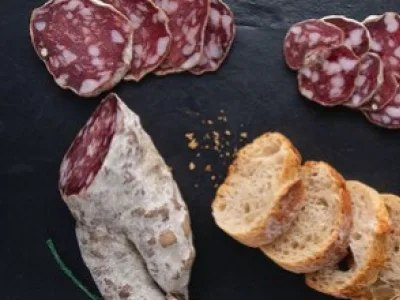
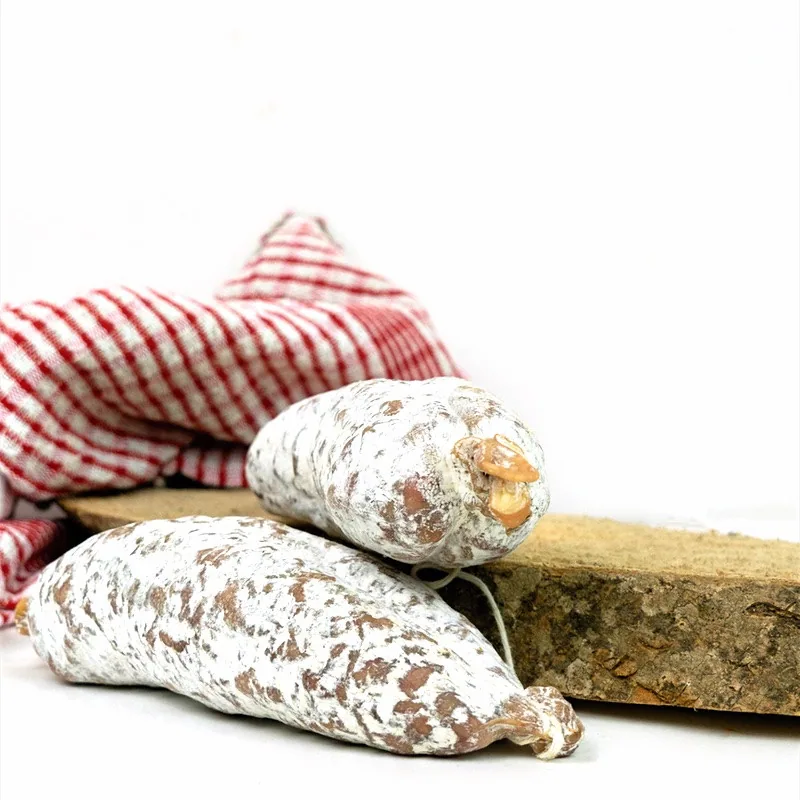
Here is an example of pure-pork saucisson produced using natural casings, with no nitrites or preservatives.
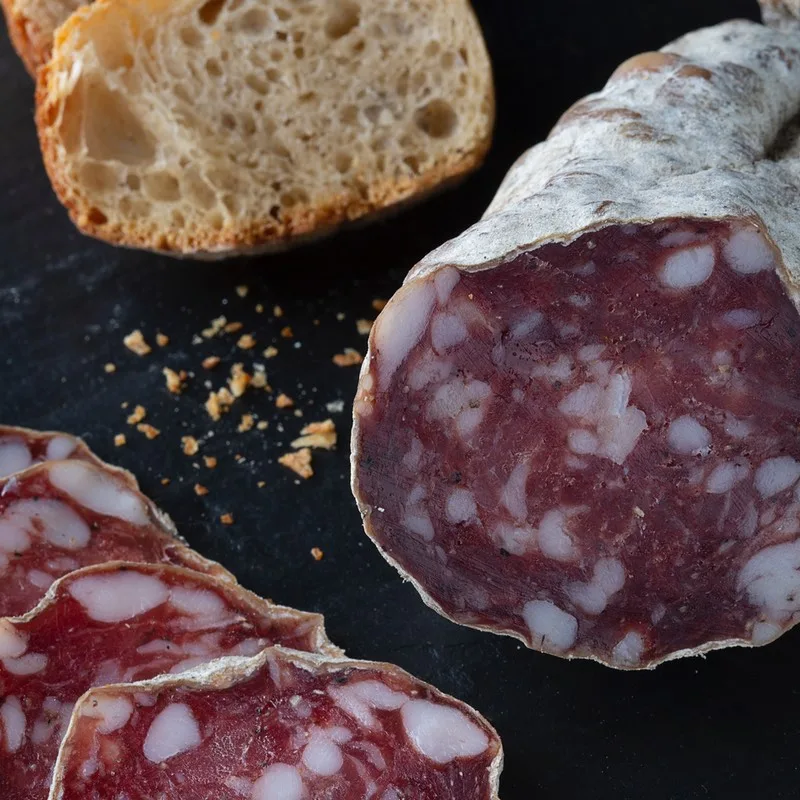
Saucisson comes from the pig, whose ancestor is the wild boar
Saucisson in Antiquity
Saucisson in the Middle Ages
Saucisson in literature
The history of the invention of saucisson.
Saucisson comes from the pig, whose ancestor is the wild boar.
The pig has its origins in the wild boar; the latter was domesticated by man in the Near East around 8,500 years ago.
In ancient mythology, the pig had a place at the table of the Gods, and was an animal that was very much part of popular legends.
For the Celts, the
pigwas an essential and respected animal, often depicted as statues or on silver or bronze coins.

Half-wild herds of pigs were kept by the Gauls, who fed them oak acorns, beech mast, roots, herbs or small animals. Indeed, the pig is an omnivorous animal, meaning its diet is highly varied.
In Roman times, a special law dictated strict rules for rearing, feeding, cutting and preparing pigs.
The pig was preserved by smoking, by layers of salt, or under a thick layer of fat.
Pigs have always been popular, carefully reared and fed, as a single pig could feed an entire family for several months. The pig is one of the historic food staples of our civilisation.
Saucisson in Antiquity.
The history of saucisson and dry sausage goes back more than 2000 years, to the Gallo-Roman era. It was the pooling of the know-how of Gaulish pig farmers and Roman salt-curers that gave rise to pork saucisson. For the Romans, Gaulish pigs were much sought after; they enjoyed a great reputation. This, like salted or smoked pork and dry-cured ham, was an essential staple food at the time. In Rome, there were butchers who specialised in pork, but also butchers who specialised in beef. Butchers specialising in pork were organised into two guilds: the salsamentarii (dealers in salted meats) and the botularii (dealers in blood sausages and sausages).
Indeed, according to linguists, the word "saucisson" comes from the Latin words "salsus"/"salcisia", meaning "salted". Salt is indeed an excellent preservative, preventing the growth of bacteria. Combined with drying techniques, carried out in an artisanal way in the sun or in the open air, it allowed the water contained in the saucisson to be removed. It could thus be kept for longer. So the invention of saucisson met a real need, as our ancestors used these methods essentially to preserve meat, transport it and sell it.
Since that time, saucisson spread throughout Ancient Europe; this charcuterie was already very popular.
The large saucisson, called "pendulus", was made using the pig's caecum. The thin saucisson, called "hilla", was prepared with pig's small intestine, much like mountain dry sausages. The saucisson made from a mixture of pork and beef, coming from Cisalpine Gaul, was called "tuccetini".
Saucisson in the Middle Ages.
During the Middle Ages, the production and sale of saucisson diversified and intensified. Indeed, a new trade appeared in the 13th century, that of "chaircuitier", literally "flesh-cooker", who, over time, developed and refined their techniques for crafting saucisson. This trade was distinct from that of butcher. They thus invented new types of saucisson with new flavours. They had so much imagination in curing and preparing saucisson that the authorities had to forbid adding anything other than "salt, fennel and other spices". These "chaircuitiers" turned saucisson into an artisanal industry; they managed to sell it commercially and export it. It was during this period that the various saucissons became associated with a particular town or European terroir, depending on its recipe, seasoning and preparation. This is why we have saucisson from Lyon, from Strasbourg, from Arles, from the Ardennes, or even from Cambridge, each with its own distinctive taste characteristics. They also learnt to make saucisson with meats other than pork (lean meats from donkey, bull, and so on).
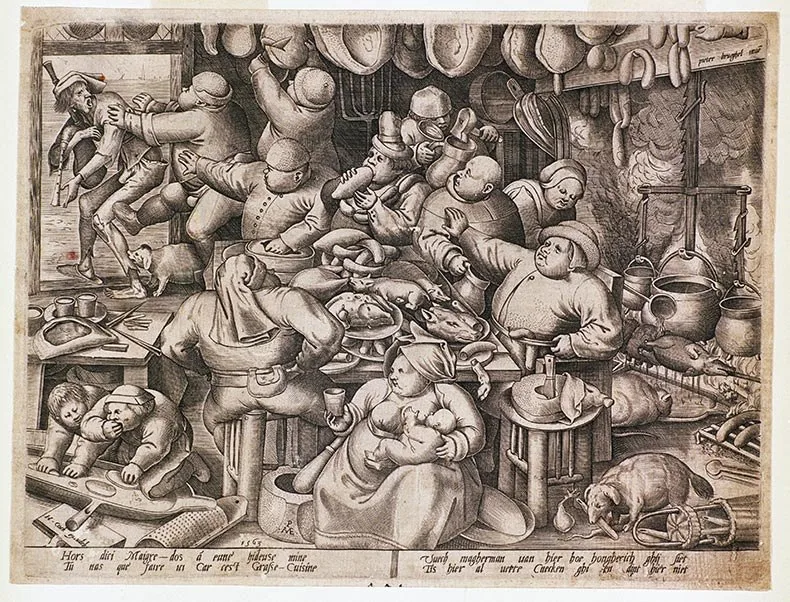
Saucisson in literature.
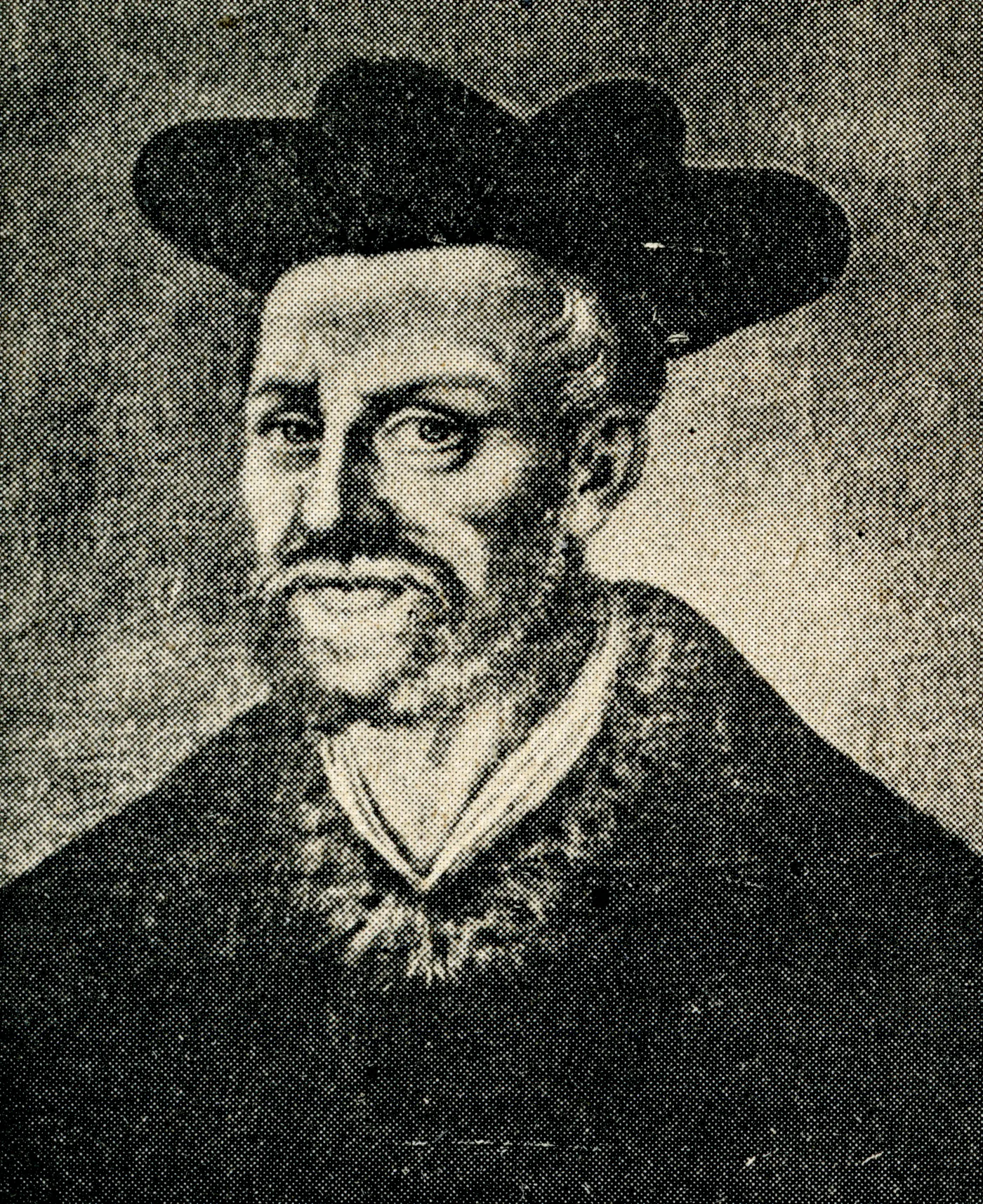
It was in 1546 that the word "saucisson" was mentioned for the very first time by Rabelais in his work the Tiers Livre. This work recounts the heroic deeds and sayings of the noble Pantagruel: composed by M. François Rabelais, Doctor of Medicine, and Calloier of the Isles of Hyères.
In 1870, Alexandre Dumas paid tribute to saucisson, gathering them all together in a great book of French recipes and gastronomy.
You'll also find the complete ranking of the best French artisanal saucissons. This ranking was put together by our Têtes de Lard team together with their community!