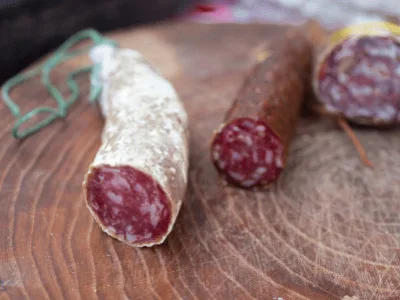
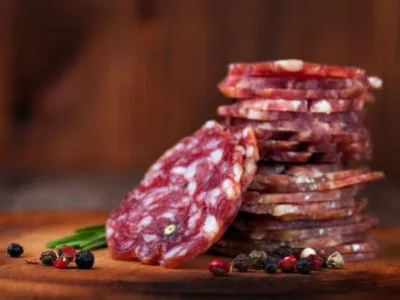
Never without my saucisson!
The ultimate guide to choosing the saucisson you need!
Saucisson sec is a type of charcuterie that has been dried for an extended period, offering a firm texture and a concentrated flavour. Ideal for aperitifs and picnics, it…
4 min read· By Rémi Ledu
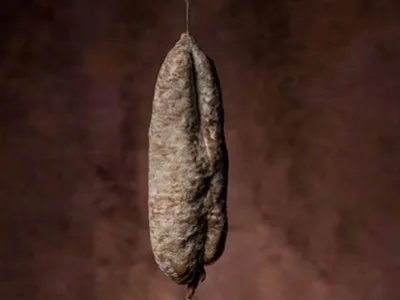
Understanding the different types of saucisson:
- Dry-Cured Saucisson:
The saucisson sec is a type of charcuterie that has been dried over an extended period, giving it a firm texture and a concentrated flavour. Perfect for aperitifs and picnics, it pairs beautifully with bread and wine.
- Saucisson with Garlic:
Fragrant and full of flavour, saucisson à l'ail is an excellent choice for those who enjoy intense aromas. It lends itself well to hot dishes and mixed salads.
- Saucisson with Hazelnuts:
The hazelnuts add a crunchy texture and a mild flavour to the saucisson. This type is perfect for sophisticated tastings and charcuterie boards.
- Rosette de Lyon:
This saucisson, hailing from Lyon, is renowned for its melt-in-the-mouth texture and subtle aromas. It is ideal for elegant aperitifs and refined dinners.
- Wild Boar Saucisson:
With a stronger flavour and a robust texture, saucisson de sanglier is an excellent option for those looking for something a little different and more rustic.
How to Recognise a Good Saucisson:
- The Texture:
The texture varies depending on the type of saucisson, but generally speaking, it should be firm without being too hard. A saucisson that is too soft may indicate insufficient drying or poor quality.
- The Smell:
A quality saucisson should give off an appetising, slightly spiced aroma. An unpleasant or overly strong smell may be a sign of a spoiled product.
- The Flavour:
The flavour should be well balanced, with a good blend of meat, fat and spices. Too much salt or too many spices could mask the quality of the meat.
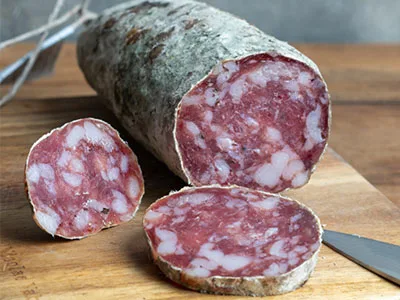
Choosing Your Saucisson According to the Occasion
- For an Aperitif with Friends:
Opt for a variety of saucissons, such as saucisson sec, garlic saucisson or indeed rosette de Lyon. They pair beautifully with a variety of cheeses and wines.
- For a Family Picnic:
Choose saucissons that are easy to carry and slice, such as saucisson sec and hazelnut saucisson. They're practical and delicious even out of doors.
- For a Refined Tasting:
For a more sophisticated experience, choose saucissons with unique flavours, such as wild boar saucisson or black pork saucisson. Pair them with fine wines and artisanal breads.
Tips for Storing Saucisson:
- Temperature and Humidity:
Saucisson should be kept somewhere cool and dry. A charcuterie cellar is ideal, but a well-ventilated refrigerator will also do nicely.
- Wrapping:
Wrap the saucisson in a clean tea towel or greaseproof paper to let the air circulate while protecting it from excess moisture.
- Shelf Life:
A saucisson sec can keep for several months, even over a year, if stored properly. Once started, it should be enjoyed within the following weeks to preserve its flavours.
How to Slice and Serve Saucisson
- The Necessary Tools:
Use a well-sharpened knife and a clean chopping board. For very thin slices, a saucisson slicer can come in handy.
- The Slicing Technique:
Cut the saucisson into thin, even slices for an elegant presentation and the best tasting experience. For certain saucissons, it's best to remove the skin before slicing.
- The Presentation:
Arrange the slices of saucisson on a platter, accompanied by cheeses, an assortment of breads, and a few dried or candied fruits for a touch of sweetness.
Mistakes to Avoid:
- Neglecting Quality:
Do not choose saucisson based on price alone. The quality of the meat and spices makes all the difference to the final taste.
- Forgetting About Pairings:
A poorly matched saucisson can spoil the tasting experience. Take the time to choose your accompaniments carefully.
Frequently Asked Questions
- How can you tell if a saucisson is still fit to eat?
Check the smell, colour and texture. If it gives off an unpleasant smell or feels too soft, it is best not to eat it.
- Can you freeze saucisson?
It is possible to freeze saucisson, but this may alter its texture and taste. It is recommended to enjoy it fresh for the best experience.
- What is the difference between a saucisson and a salami?
Saucisson is a French charcuterie, while salami originates from Italy. Their production processes and spices vary, offering distinct flavours.
- How long can an opened saucisson be kept?
Once opened, a saucisson should be eaten within 2 to 3 weeks, kept well wrapped and in a cool place.
- When is the best time to enjoy saucisson?
Saucisson can be enjoyed at any time, but it is particularly appreciated during aperitifs, picnics and meals shared with friends or family.
- Can you eat the skin of the saucisson?
The skin of the saucisson is edible, but it can be a little tough. You may remove it before slicing the saucisson if you prefer.
Choosing the best saucisson takes a little knowledge and experimentation, but the result is well worth it. By understanding the different types of saucisson, learning to recognise quality, and taking into account the occasion and accompaniments, you can turn every tasting into a memorable culinary experience. Enjoy the rich and varied flavours of saucisson to delight your palate and that of your guests.