Charcuterie with friends
How to enjoy an artisanal saucisson
Artisanal saucisson is a must-have on charcuterie boards, at convivial aperitifs and during gourmet moments. However, to fully savour all its nuances of flavour and texture, it…
5 min read· By Alex Foras
How to enjoy an artisanal saucisson
Artisanal saucisson is a must-have on charcuterie boards, at convivial aperitifs and during gourmet moments. However, to fully savour all its nuances of flavour and texture, it is essential to enjoy it properly. Here is our complete guide to help you appreciate this delight in the proper way.
Why choose an artisanal saucisson?
Artisanal saucisson, unlike its industrial counterparts, is made with care and according to traditional methods. This allows it to retain all the richness of its taste and aromas. Made with quality ingredients, such as selected pork or beef, fine spices and a natural drying process, it offers an incomparable tasting experience. But you still need to know how to enjoy it to make the most of it.
The steps to tasting artisanal saucisson
1. Choosing the right artisanal saucisson
Before talking about tasting, it is important to choose your saucisson carefully. Depending on everyone's preferences, several types exist: pork saucisson, beef saucisson, or even saucissons flavoured with spices such as pepper or enriched with dried fruit. Each variety offers a different experience: a pork saucisson is juicier and fattier, whereas a beef saucisson is firmer and leaner.
2. Letting the saucisson rest
An artisanal saucisson must be kept in a cool, dry place. Before tasting it, let it rest at room temperature for 20 to 30 minutes. This allows the aromas to develop and the texture to soften, which will enhance the tasting experience.
3. Slicing the saucisson correctly
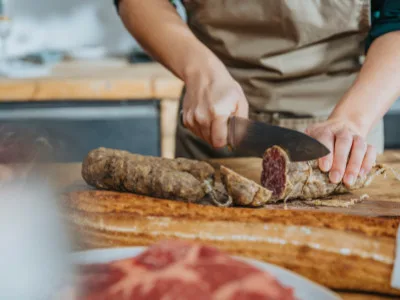
Slicing the saucisson properly is essential to enjoying it fully. Use a nice sharp knife, and cut slices about 2 to 3 millimetres thick. If the slices are too thin, they risk losing their flavour, while slices that are too thick won't let you savour the full richness of the saucisson. If the saucisson is wrapped in a natural casing, it's best to leave the skin on, as it protects the saucisson and contributes to its flavour. However, if the casing isn't natural, you can easily remove it.
4. Looking at the saucisson
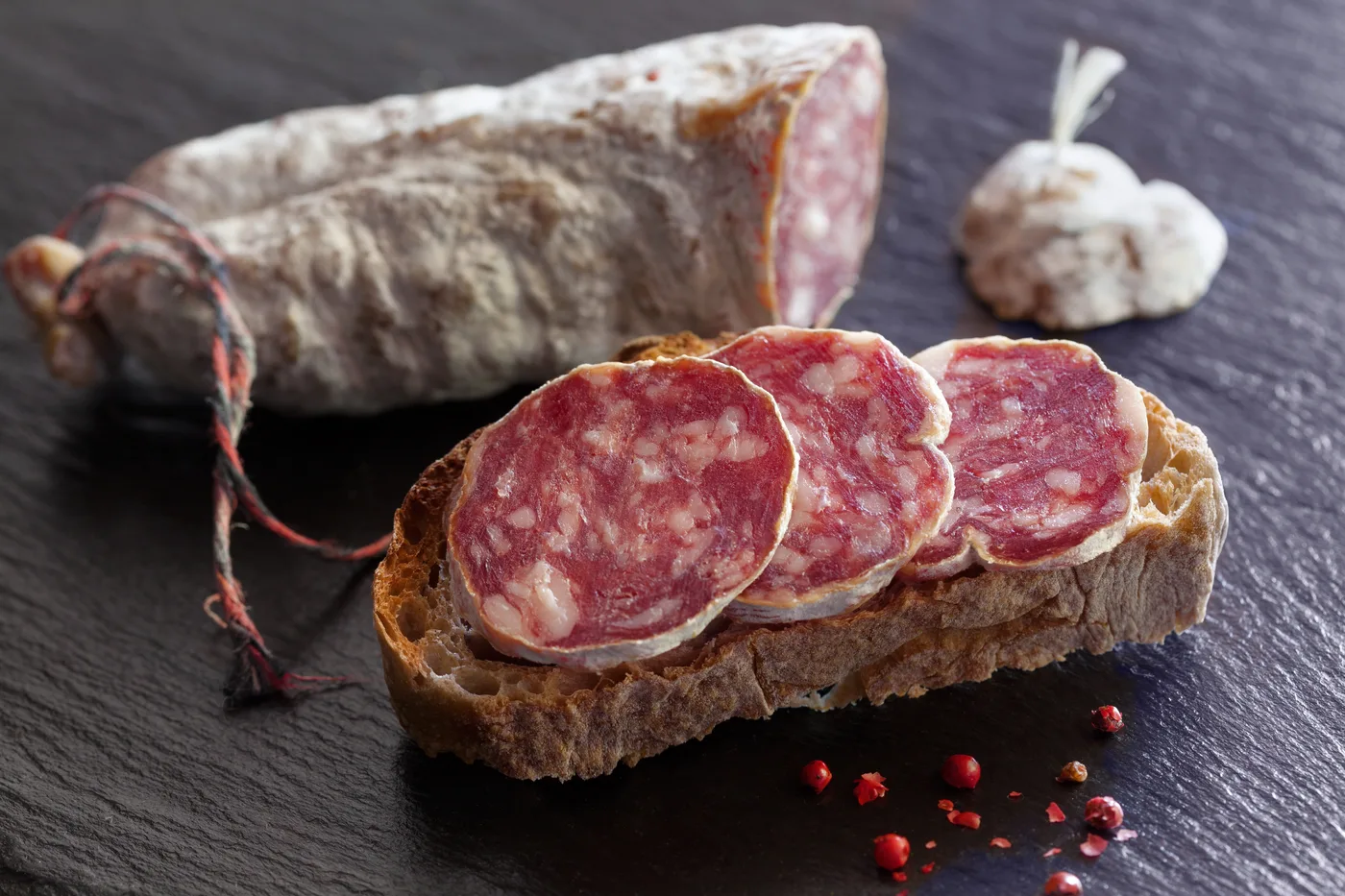
Before tasting, take a moment to look at the saucisson. The colour of the meat should be even and slightly pink. A well-made artisanal saucisson will often be marbled with little droplets of fat, which contribute to its soft texture and delicious flavour. Spices such as pepper or dried fruits (like hazelnuts or figs) should be visible throughout, not buried within.
5. Smelling the aromas
Before tasting, take a moment to smell your saucisson. This olfactory stage helps prepare you for the tasting. An artisanal saucisson gives off complex aromas that vary depending on the ingredients and the length of maturation. Take the time to appreciate the scent of the meat, the spices and the aromas it releases.
The ideal accompaniments for an artisanal saucisson
For a perfect tasting, an artisanal saucisson can be served with various products that complement its flavours. Here are a few suggestions:
Wine
A good wine is an excellent companion for a saucisson. A light red wine or a dry white wine will pair perfectly with the saucisson. Wines such as Beaujolais, Côtes du Rhône or a Pinot Noir go very well with the subtle aromas of the saucisson. If you prefer white wine, choose a dry one such as a Chablis or a Sauvignon Blanc.
Bread
Bread is the traditional accompaniment to saucisson. We recommend a country-style loaf or a fresh baguette to go with the slices of saucisson. Avoid bread that's too sweet or has overly pronounced flavours, as this may mask the taste of the saucisson.
Condiments
To add a little extra dimension to your tasting, you might also serve your saucisson with a few condiments such as gherkins or olives. This will bring a touch of freshness and acidity that perfectly complements the richness of the saucisson.
How to pair different types of saucisson with drinks
Pork saucisson
Pork saucisson is a great classic that pairs well with a variety of light to medium-bodied red wines, such as a Pinot Noir or a Gamay. Its tender texture and depth of flavour make it an excellent match for fruitier wines. If you prefer beer, a lager or a wheat beer will suit it perfectly, with their lightly fruity and refreshing aromas.
Beef saucisson
Beef saucisson, being leaner and firmer, pairs well with more robust red wines, such as a Bordeaux or a Cabernet Sauvignon. The richness of the beef and its firmer texture will balance beautifully with full-bodied wines. For beer lovers, an amber or brown ale, with its malty, slightly sweet aromas, will soften the firmness of the saucisson.
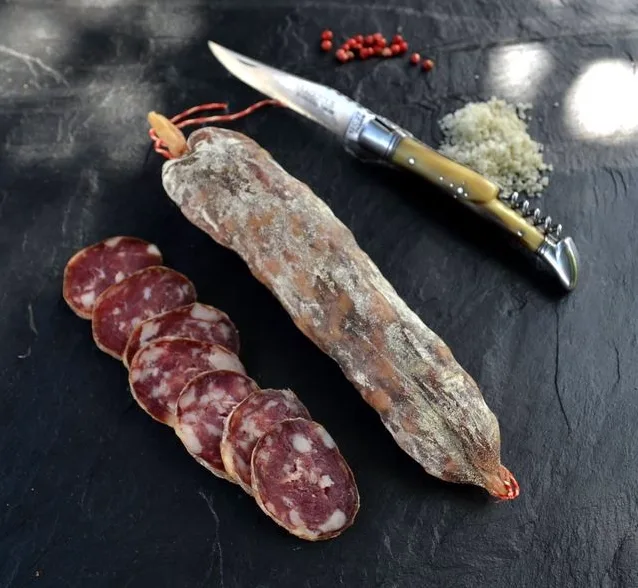
Peppered saucisson
Saucisson flavoured with pepper adds a spicy dimension that pairs well with bolder red wines or beers with more assertive flavours. A Syrah or a Malbec, with their peppery notes, will heighten the warming sensation of the pepper. An IPA (India Pale Ale), with its bitter, hoppy aromas, can also offer an interesting contrast.
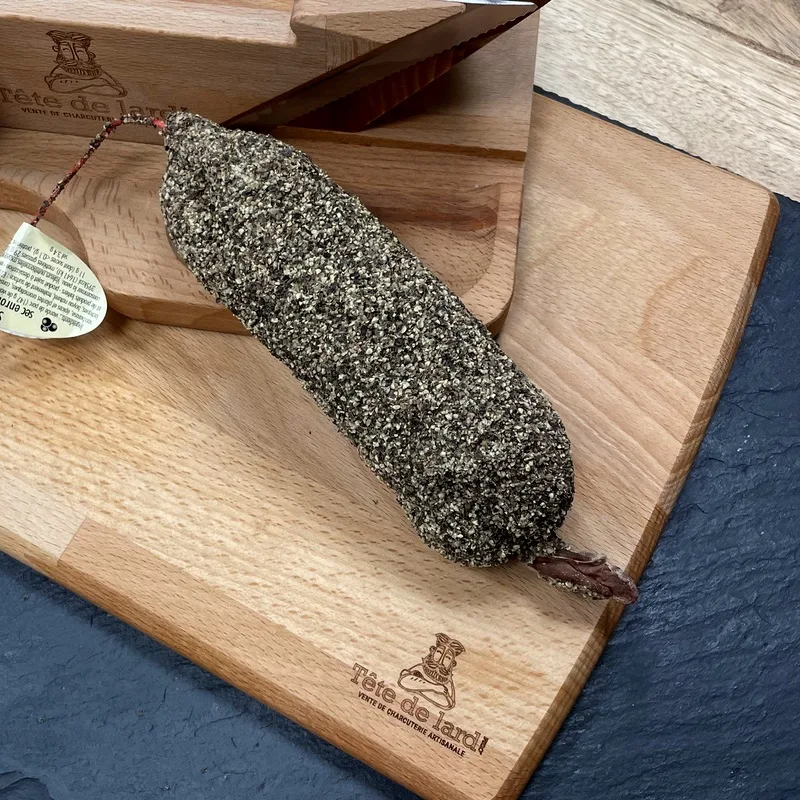
Saucisson with dried fruit (figs, hazelnuts, etc.)
Saucissons with dried fruit, such as fig or hazelnut varieties, bring a touch of sweetness that pairs well with sweet or lightly fruity wines. A Muscat or a dessert wine will go perfectly with this variation of saucisson, while a soft wheat beer can also create a lovely balance between the sweetness of the fruit and the saltiness of the saucisson.
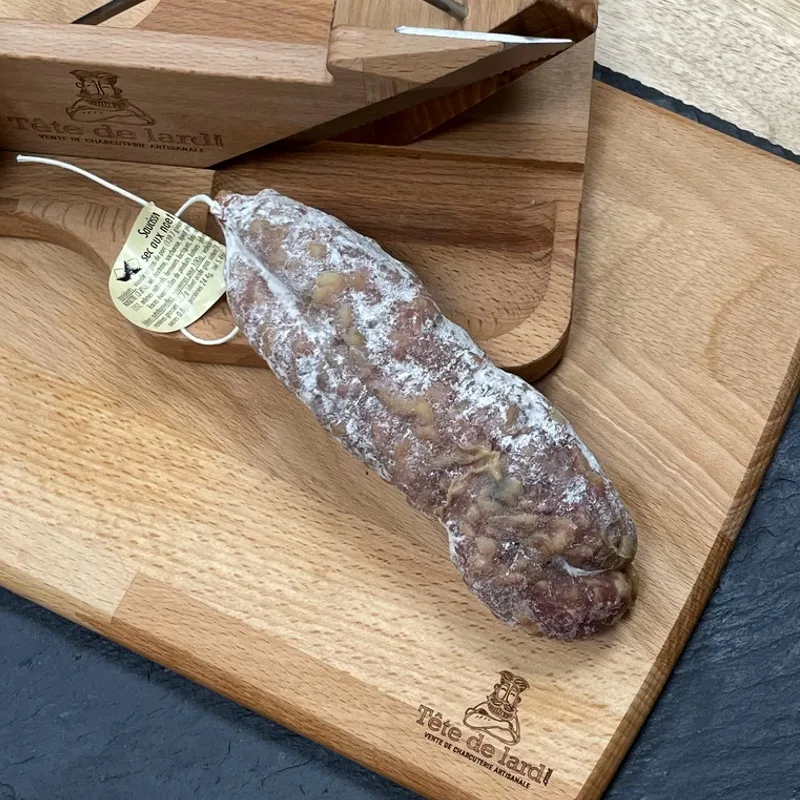
Conclusion: The art of enjoying an artisanal saucisson
Tasting an artisanal saucisson is a true sensory experience. The key lies in the quality of the product, but also in the way you go about enjoying it. By taking care to choose your saucisson well, pairing it with the right food and drink, and following the proper tasting steps, you'll be able to fully savour this delicious speciality. So, knives at the ready, and enjoy your meal!